
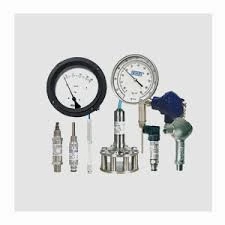
Accurate pressure measurement is a foundational requirement across process industries, manufacturing, oil and gas, power generation, and utilities. Selecting the right instrumentation partner matters as much as selecting the right instrument. As a WIKA Pressure Gauge Supplier, Evaflux provides engineers, technicians, and procurement teams with access to precision-engineered pressure gauges built to internationally recognized quality standards, supported by documentation and logistics suited to projects of any scale, anywhere in the world.
This article outlines the technical characteristics of WIKA pressure gauges, their construction, performance specifications, and the industries where they are routinely specified, so that buyers can make an informed procurement decision.
Why the Choice of Supplier Matters
Pressure gauges appear to be simple mechanical devices, but their performance under real operating conditions depends heavily on manufacturing tolerances, material selection, and calibration integrity. A gauge that reads incorrectly, even by a small margin, can lead to inefficient process control, unplanned downtime, or in more serious cases, safety incidents involving overpressure events.
Working with an established WIKA Pressure Gauge Supplier reduces this risk. Genuine WIKA instruments are manufactured under ISO 9001-certified quality systems, tested against international standards such as EN 837 and ASME B40.100, and traceable through documented calibration records. Evaflux sources and supplies these instruments with full documentation, helping buyers avoid the risks associated with counterfeit or uncalibrated alternatives that circulate in some regional markets.
Product Overview: WIKA Pressure Gauges
WIKA manufactures a broad range of mechanical and electronic pressure measurement instruments, and Evaflux’s catalog reflects this breadth. The core product lines typically include:
- Bourdon tube pressure gauges – the most common design, using a curved elastic tube that straightens proportionally to applied pressure, driving a pointer across a calibrated dial.
- Diaphragm pressure gauges – suited to low-pressure ranges and applications involving viscous, crystallizing, or contaminated media.
- Capsule pressure gauges – designed for very low-pressure and vacuum measurement.
- Differential pressure gauges – used to measure the pressure difference between two points, common in filtration and flow monitoring systems.
- Digital and electronic pressure gauges – combining mechanical robustness with digital readouts and, in some cases, output signals for remote monitoring.
Each product category is engineered to address specific process conditions, and Evaflux’s role as a supplier includes helping buyers match the correct gauge type to their application rather than defaulting to a generic selection.
Technical Specifications
Pressure gauges from WIKA are available across a wide range of configurable parameters, allowing precise alignment with process requirements:
- Measuring ranges: from vacuum and low-pressure ranges (a few millibars) up to high-pressure applications exceeding 1,000 bar, depending on the series selected.
- Accuracy classes: commonly available from Class 0.6 (high-precision applications such as test and calibration work) to Class 1.6 and 2.5 for standard industrial monitoring, in accordance with EN 837-1.
- Dial sizes: typically ranging from 40 mm to 250 mm, selected based on readability requirements and panel or pipeline mounting constraints.
- Wetted parts materials: options include brass, stainless steel (such as 316L), and Monel, chosen according to the corrosiveness and chemical compatibility of the process medium.
- Case materials: stainless steel, aluminum, or thermoplastic housings, with liquid-filled versions available to dampen vibration and pulsation in dynamic environments.
- Process connections: a range of thread standards including NPT, BSP, and metric connections, to suit regional piping conventions.
- Temperature ratings: ambient and process temperature limits vary by model, with high-temperature variants available for applications involving steam or heated fluids.
- Ingress protection: ratings up to IP65 or IP66 for gauges intended for outdoor or washdown environments.
Buyers working with Evaflux can specify these parameters individually or request configuration support based on their process data sheets.
Reliability and Precision in Practice
Reliability in pressure gauges comes down to two engineering factors: mechanical durability and measurement stability over time.
WIKA’s Bourdon tube gauges use precision-formed tube geometry and movement mechanisms designed to minimize hysteresis and friction, which directly affects repeatability. Liquid-filled variants add a further layer of reliability in environments with mechanical vibration, such as near pumps or compressors, by damping needle flutter and reducing wear on internal components.
Precision is expressed through accuracy class, and WIKA gauges are tested and certified to meet their stated class across the full measuring range, not only at a single calibration point. This matters for procurement managers evaluating total cost of ownership, since a gauge that maintains its accuracy over a longer service interval reduces the frequency of recalibration or replacement, and lowers the long-term cost of instrumentation across large facilities.
Typical Use Cases
Pressure gauges supplied through Evaflux are specified across a wide range of industrial sectors:
- Oil and gas: upstream wellhead monitoring, pipeline pressure tracking, and refinery process control, often requiring gauges rated for higher pressures and corrosive media.
- Chemical and petrochemical processing: applications involving aggressive fluids where stainless steel or Monel wetted parts are specified for chemical compatibility.
- Power generation: boiler and steam system monitoring, where high-temperature-rated gauges are required.
- Water and wastewater treatment: filtration and pump monitoring, frequently using differential pressure gauges.
- Manufacturing and heavy industry: compressed air systems, hydraulic circuits, and general utility monitoring.
- HVAC and building services: low-pressure gauges for chilled water and steam systems.
- Pharmaceutical and food processing: hygienic-design gauges meeting sanitary process requirements.
Across all these sectors, the underlying requirement is consistent: dependable, accurately calibrated pressure readings that support safe and efficient operations.
Worldwide Availability and Relevance
Industrial procurement today is rarely confined to a single region. Multinational engineering firms, EPC contractors, and industrial operators frequently need to source identical or equivalent instrumentation across multiple countries to maintain consistency in their process specifications. As a WIKA Pressure Gauge Supplier, Evaflux supports this need by offering a catalog structured around globally recognized WIKA product series, with documentation and specifications presented in formats familiar to engineering teams worldwide.
This global relevance extends to regulatory alignment as well. WIKA gauges are manufactured to standards recognized internationally, including EN, ASME, and various national equivalents, which simplifies compliance documentation for projects spanning multiple jurisdictions. For procurement managers coordinating supply across regions, working with a single, consistent instrumentation partner reduces administrative complexity and supports standardization across a facility’s instrumentation base.
Selecting the Right Gauge: Practical Guidance
When specifying a pressure gauge, buyers should evaluate the following before placing an order:
- Process medium – to determine compatible wetted-part materials.
- Maximum operating and expected working pressure – to select an appropriate range, generally targeting normal operation at 50–75% of the gauge’s full scale.
- Ambient and process temperature – to confirm the instrument’s rated operating limits.
- Vibration or pulsation levels – to determine whether a liquid-filled case is warranted.
- Mounting configuration and connection size – to ensure compatibility with existing piping or panel infrastructure.
- Required accuracy class – balancing precision needs against cost, particularly for custody transfer or calibration-critical applications.
Evaflux’s technical team can assist buyers in working through this checklist to arrive at the correct specification before purchase.
Conclusion
Pressure gauges are a small but critical part of process safety and operational efficiency. Sourcing genuine, correctly specified instruments from an established WIKA Pressure Gauge Supplier gives engineers and procurement teams confidence in both the initial accuracy and long-term reliability of their measurement infrastructure. Evaflux supports this requirement globally, offering the full range of WIKA pressure gauge technologies alongside the technical guidance needed to specify them correctly for any industrial application.
Frequently Asked Questions
1. What is the difference between a Bourdon tube gauge and a diaphragm gauge?
A Bourdon tube gauge uses a curved tube that straightens under pressure, and is suited to a broad range of medium-to-high pressures. A diaphragm gauge uses a flexible membrane and is better suited to low-pressure ranges and viscous or contaminated media.
2. What accuracy class should I choose for general industrial monitoring?
Class 1.6 or 2.5 is typically sufficient for standard process monitoring. Class 0.6 or better is generally reserved for calibration, testing, or custody transfer applications requiring higher precision.
3. Why choose a liquid-filled pressure gauge?
Liquid-filled gauges dampen needle vibration and reduce internal wear in environments with mechanical vibration or pressure pulsation, such as near pumps or compressors, extending service life and improving readability.
4. Are WIKA pressure gauges suitable for corrosive or hazardous media?
Yes. WIKA offers gauges with stainless steel, Monel, and other corrosion-resistant wetted parts, along with process isolators and diaphragm seals for applications involving aggressive or hazardous fluids.
5. Can Evaflux supply WIKA pressure gauges internationally?
Yes. Evaflux, as a WIKA Pressure Gauge, supports sourcing and delivery for projects across multiple regions, with documentation aligned to internationally recognized standards.
6. How often should a pressure gauge be calibrated?
Calibration intervals depend on application criticality and site quality procedures, but a common industry practice is annual calibration, with more frequent checks for safety-critical or high-precision applications.