
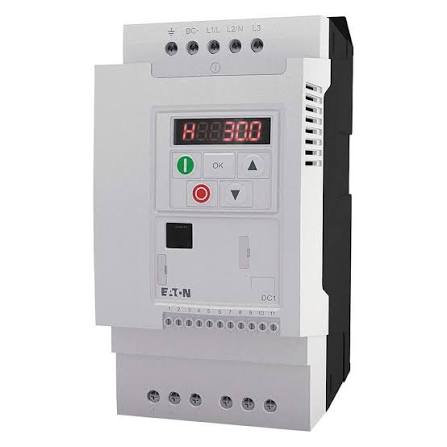
Variable Frequency Drives (VFDs) are a core component in modern motor control systems, enabling precise speed regulation, energy efficiency, and process control across industries ranging from water treatment to heavy manufacturing. For engineers, technicians, and procurement managers sourcing dependable motor control equipment, working with a qualified Eaton VFD Supplier ensures access to drives engineered for consistent performance under demanding industrial conditions. This article provides a factual, technical breakdown of Eaton VFDs, their specifications, and their applicability to industrial buyers worldwide.
What Is an Eaton VFD?
An Eaton Variable Frequency Drive is an electronic controller that regulates the speed and torque of an AC induction or synchronous motor by varying the frequency and voltage supplied to it. Eaton’s VFD product lines — including the PowerXL series (DG1, DC1, DE1) — are designed for applications requiring precise motor control, reduced mechanical stress, and lower energy consumption compared to fixed-speed motor operation.
As a recognized supplier of these drives, evaflux.com provides access to Eaton VFDs for buyers who require documented technical compliance, consistent stock availability, and support across multiple voltage and power configurations used in different regional grids.
Technical Specifications
Eaton VFDs are available across a range of power and voltage classes to accommodate different motor sizes and applications:
- Power range: Typically from 0.25 kW to 800 kW (varies by series)
- Voltage classes: 200–240V, 380–480V, and 500–690V configurations to match regional power standards
- Control methods: Scalar (V/Hz) control and sensorless vector control for improved torque response
- Communication protocols: Modbus RTU, BACnet, PROFIBUS, EtherNet/IP, and PROFINET, depending on model
- Enclosure ratings: IP20 to IP66, suitable for both cabinet-mounted and harsh environment installations
- Overload capacity: Commonly rated at 110–150% for defined durations, supporting variable and constant torque loads
- Built-in features: Integrated EMC filters, DC chokes, safe torque off (STO) functionality, and programmable I/O
These specifications allow engineers to select a drive configuration appropriate to the motor size, load type, and control architecture of a given installation, whether in a single pump station or a distributed industrial network.
Reliability and Build Quality
Reliability is a primary consideration for procurement managers evaluating motor control equipment, particularly in continuous-process industries where unplanned downtime carries significant cost. Eaton VFDs are manufactured with conformally coated circuit boards in select models, designed to resist humidity, dust, and corrosive atmospheres. Thermal management is achieved through heat sink design and, in higher-power units, forced-air cooling systems that maintain component temperatures within rated operating limits.
Eaton drives undergo testing aligned with IEC 61800-5-1 (electrical, thermal, and energy) and IEC 61800-3 (EMC requirements), which are relevant standards for buyers who must document compliance for regulatory or client-facing purposes. Working with an established Eaton VFD Supplier gives buyers traceability on unit certification, batch documentation, and warranty terms — details that matter during audits or when integrating drives into safety-rated systems.
Precision and Control Performance
Precision in speed and torque regulation is central to the value VFDs provide over fixed-speed motor starters. Eaton VFDs use pulse-width modulation (PWM) switching, typically at carrier frequencies between 2 kHz and 16 kHz, to shape the output waveform delivered to the motor. Sensorless vector control algorithms allow the drive to estimate motor flux and torque without external encoder feedback, which is suitable for applications such as conveyors, fans, and pumps where moderate dynamic response is acceptable.
For applications demanding tighter control — such as machine tool spindles, cranes, or extrusion lines — closed-loop vector control with encoder feedback is available on select Eaton drive platforms, offering speed regulation accuracy typically within 0.01% of set point and improved torque response at low speeds.
Typical Use Cases
Eaton VFDs are deployed across a broad range of industrial and commercial applications:
- Water and wastewater treatment: Pump speed control to match flow demand, reducing energy consumption and mechanical wear
- HVAC systems: Fan and pump modulation in commercial buildings to maintain airflow and temperature setpoints efficiently
- Manufacturing and processing: Conveyor systems, mixers, extruders, and packaging line motors requiring variable speed control
- Oil and gas: Pump and compressor control in upstream and midstream operations, often specified with hazardous-location-rated enclosures
- Marine and offshore: Motor control for auxiliary systems where compact footprint and vibration tolerance are required
- Mining and heavy industry: High-power drive applications for crushers, mills, and material handling equipment
Because these use cases span multiple sectors and geographies, buyers frequently look for a supplier capable of supporting cross-border procurement, technical documentation in multiple languages, and consistent lead times regardless of project location.
Worldwide Applicability
Industrial buyers today often manage multi-site or multi-country projects, requiring equipment specifications that are consistent regardless of regional voltage standards or regulatory frameworks. Eaton VFDs are engineered to support multiple global voltage classes (200V, 400V, and 690V systems), making them applicable across North America, Europe, the Middle East, Asia-Pacific, and other regions with differing grid standards.
For procurement teams managing international supply chains, sourcing through a single, established EatonVFDsimplifies vendor management, reduces the complexity of multi-region compliance documentation, and helps standardize spare parts inventory across facilities in different countries. This is particularly relevant for organizations building out a centralized product category page for VFD sourcing, where consistency in specifications, certifications, and support terms across regions is a practical requirement rather than a marketing consideration.
Selecting the Right Eaton VFD
When specifying a VFD, engineers and procurement managers typically evaluate the following factors:
- Motor compatibility — horsepower/kW rating, voltage class, and torque requirements
- Environmental conditions — ambient temperature, altitude, humidity, and enclosure rating needs
- Control requirements — scalar vs. vector control, need for encoder feedback
- Communication integration — compatibility with existing PLC or SCADA network protocols
- Regulatory compliance — regional certification requirements (UL, CE, or other applicable marks)
- Availability and lead time — particularly relevant when sourcing through a distributed or international project timeline
A qualified supplier can help match these requirements against the appropriate Eaton drive series and configuration, reducing the risk of under- or over-specifying equipment for a given application.
Conclusion
Eaton VFDs offer a documented, standards-tested option for industrial motor control across a wide range of power ratings, voltage classes, and control architectures. Their design supports both simple variable-torque applications and more demanding precision control requirements. For engineers and procurement managers evaluating sourcing options, partnering with a knowledgeable Eaton VFD Supplier provides access to technical support, compliance documentation, and consistent global availability needed to specify and deploy these drives with confidence across regions and industries.
Frequently Asked Questions
Q: What is the difference between scalar and vector control in Eaton VFDs?
A: Scalar (V/Hz) control adjusts voltage and frequency proportionally and is suitable for simple variable-torque loads like fans and pumps. Vector control estimates or measures motor flux and torque directly, offering better performance at low speeds and under variable load conditions.
Q: Are Eaton VFDs compatible with different regional voltage standards?
A: Yes. Eaton VFD product lines are available in multiple voltage classes, including 200–240V, 380–480V, and 500–690V configurations, to accommodate different regional electrical grid standards.
Q: What communication protocols do Eaton VFDs support?
A: Depending on the model, Eaton VFDs support protocols including Modbus RTU, BACnet, PROFIBUS, EtherNet/IP, and PROFINET, allowing integration with most industrial control and building automation networks.
Q: What industries commonly use Eaton VFDs?
A: Common applications include water and wastewater treatment, HVAC systems, manufacturing, oil and gas, marine, and mining, wherever variable-speed motor control is needed for efficiency or process accuracy.
Q: Why source VFDs through a specialized supplier rather than directly from multiple vendors?
A: A specialized Eaton VFD supplier can provide consolidated documentation, consistent lead times, and standardized parts availability across multiple regions, which simplifies procurement for multi-site or international projects.
Q: What standards do Eaton VFDs comply with?
A: Eaton VFDs are commonly tested to IEC 61800-5-1 for electrical, thermal, and energy performance, and IEC 61800-3 for electromagnetic compatibility (EMC), among other applicable regional certifications.