
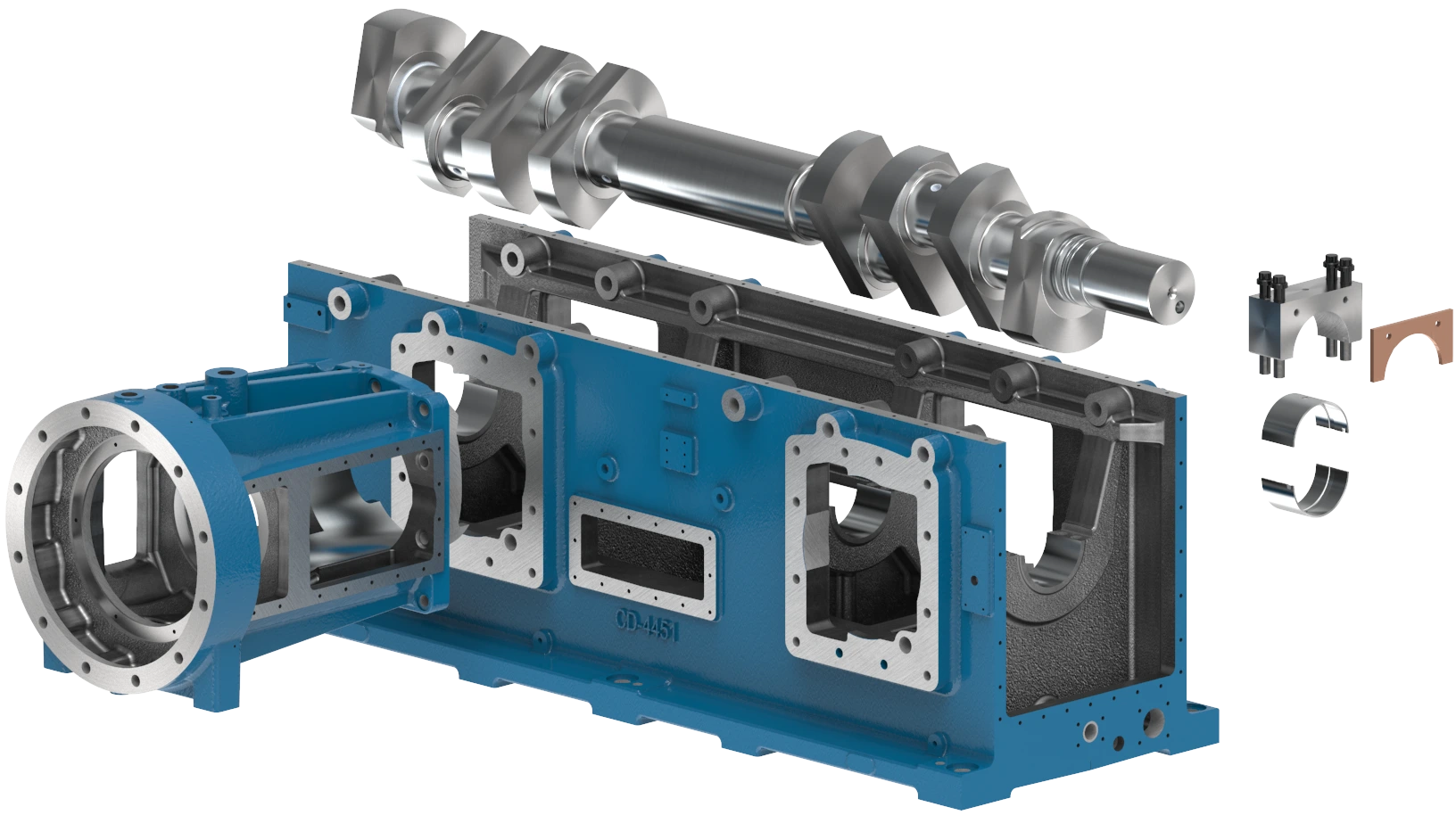
Reciprocating gas compressors form the backbone of gas gathering, gas lift, gas injection, and pipeline transmission systems across the world’s oil and gas producing regions. Among the many compressor platforms in service today, the Ariel JGT frame has earned a well-documented reputation for durability, serviceability, and consistent performance in medium-speed, separable compressor applications. For operators, maintenance engineers, and procurement teams sourcing replacement parts, understanding the technical makeup of Ariel JGT Compressor Components is essential to keeping compression assets running safely and efficiently. This overview outlines the core specifications, engineering features, and sourcing considerations relevant to buyers across the Middle East, including the United Arab Emirates (UAE), where gas processing and midstream infrastructure continue to expand.
What Is the Ariel JGT Compressor Platform?
The JGT is part of Ariel Corporation’s mid-size compressor lineup, designed for continuous-duty service in gas and oil industry applications. It is a balanced-opposed, separable reciprocating compressor built around a horizontal frame that pairs with gas engines, turbines, or electric motor drivers. The JGT frame is offered in 2-, 4-, and 6-throw configurations, allowing it to scale across a range of horsepower and flow requirements while sharing design principles with the closely related JGK and JGE frames. Because the frame has been in continuous production for several decades, a large installed base exists globally, which keeps demand for genuine JGT parts steady among distributors and end users who need reliable replacement components for scheduled overhauls or unplanned maintenance.
Technical Specifications
Buyers evaluating replacement parts for this frame should be familiar with its rated performance envelope, since component selection (pistons, rods, bearings, valves) is tied directly to these parameters.
- Configurations: 2, 4, or 6 throws
- Rated power: approximately 1,300 BHP (2-throw) up to roughly 3,900 BHP (6-throw), or about 969 kW to 2,908 kW
- Stroke length: 4.5 inches (114 mm)
- Maximum speed: up to 1,500 RPM
- Piston speed: approximately 1,125 ft/min (5.72 m/s)
- Total rod load capacity: approximately 74,000 lbs (329,168 N), split across tension and compression ratings
- Average unit weight (with cylinders): ranging from roughly 9,900 lbs for a 2-throw frame up to about 29,500 lbs for a 6-throw frame
These figures illustrate why component tolerances matter. A frame rated for high rod loads and sustained piston speeds requires parts machined to precise dimensional standards; any deviation in bearing clearance, piston-to-bore fit, or valve timing can shorten service intervals or cause premature wear.
Core Components and Engineering Features
These parts typically fall into several functional categories, each contributing to the frame’s overall reliability:
Crankshaft and running gear. The JGT uses a forged or ductile design crankshaft supported by precision-fit main bearings. Full-pressure lubrication, delivered by a frame-driven lube oil pump through a full-flow oil filter, supplies cooled oil to all moving parts within the frame, reducing friction-related wear over long duty cycles.
Crossheads and connecting rods. Ariel crossheads are one-piece and long-life, fitted with hardened, ground steel crosshead pins and direct full-pressure lubrication at both the top and bottom for minimum wear. This design supports continuous operation without frequent disassembly.
Pistons and piston rods. The JGT platform features wear-resistant ductile or gray iron pistons paired with precision-ground alloy steel piston rods and locking crosshead nuts. This combination is engineered to withstand repeated compression cycles while maintaining sealing integrity.
Cylinders and valves. Cylinders are available in forged steel or ductile iron, selected according to bore size and pressure class, allowing the JGT frame to be configured for a wide range of discharge pressures and gas compositions. Valve assemblies are matched to established low-valve-velocity standards to reduce wear and improve compression efficiency.
Distance pieces and packing. Standard configurations include a long, single-compartment distance piece, with short two-compartment and API-618 Type C long two-compartment distance pieces available as options for applications with stricter sealing or gas-containment requirements.
Lubrication and monitoring hardware. Force-feed lubricator pumps with block distribution systems, cycle indicators, and no-flow shutdown devices are standard on JGT-class frames, supporting condition monitoring and reducing the risk of lubrication-related failures.
Reliability and Precision in Field Operation
Reliability on the JGT platform stems from a combination of standardized parts across the JGT, JGK, and JGE product lines, and a serviceability-focused design where major components remain accessible for inspection and replacement without extensive disassembly. Precision-machined crankshafts, hardened crosshead pins, and alloy steel piston rods are manufactured to tight tolerances, which is a key reason genuine or precisely matched replacement parts are preferred over generic substitutes. Using components that do not meet original dimensional and material specifications can affect rod load ratings, vibration behavior, and long-term seal life, ultimately increasing the risk of unplanned downtime.
Typical Use Cases
The JGT frame and its associated components are commonly deployed in:
- Gas gathering and gas lift systems at wellhead and central processing facilities
- Gas injection for enhanced oil recovery operations
- Pipeline boosting and transmission compression stations
- Vapor recovery and process gas compression in refining and petrochemical plants
- Associated gas handling in upstream production facilities
Because these applications often run continuously in remote or harsh environments, the availability of dependable spare and replacement parts directly affects uptime and total cost of ownership.
UAE Applicability and Regional Relevance
The UAE’s energy sector, spanning onshore and offshore gas processing, gas injection projects, and expanding downstream petrochemical capacity, relies heavily on reciprocating compression equipment, much of which includes Ariel-frame compressors installed over multiple decades of infrastructure development. For maintenance teams and procurement managers based in the UAE and the wider GCC region, sourcing Ariel JGT Compressor Components locally or through a supplier with regional logistics capability reduces lead times for turnaround maintenance and emergency repairs. Given the operating conditions common in the region, including high ambient temperatures and demanding duty cycles, component quality and dimensional accuracy are particularly important to avoid accelerated wear. A supplier positioned to serve the UAE market with verified, application-matched parts supports both planned maintenance schedules and urgent replacement needs for facilities across Abu Dhabi, Dubai, and the broader Emirates.
Sourcing Considerations for Procurement Teams
When evaluating suppliers for JGT-frame replacement parts, procurement managers should confirm part traceability, material certification, and dimensional compliance with original frame specifications. Cross-referencing part numbers against the specific JGT frame configuration (2-, 4-, or 6-throw) and cylinder bore size helps avoid compatibility issues. Working with a supplier that maintains documented sourcing and quality verification processes reduces the risk of receiving mismatched or substandard components, which is especially important for rod load–critical parts like crankshafts, connecting rods, and piston assemblies.
Frequently Asked Questions
What frame sizes are available for the Ariel JGT Compressor Components?
The JGT is available in 2-, 4-, and 6-throw configurations, with rated power ranging from approximately 1,300 BHP to 3,900 BHP depending on the number of throws.
How does the JGT differ from the Ariel JGK frame?
Both frames share a similar design philosophy and many interchangeable components, but the JGT has a shorter stroke (4.5 inches versus 5.5 inches) and a higher maximum operating speed (1,500 RPM versus 1,200 RPM), making it suited to somewhat different horsepower and speed combinations.
Are these components interchangeable with other Ariel frames?
Ariel designs many components to be standardized across related frame families, including the JGE, JGK, and JGT lines, though exact interchangeability depends on the specific part and cylinder configuration, so part numbers should always be verified before ordering.
What lubrication system does the JGT use?
The JGT uses full-pressure lubrication via a frame-driven lube oil pump and full-flow oil filter, supplemented by a force-feed lubricator with block distribution for cylinder bores and rod packing.
Can Evaflux supply Ariel JGT Compressor Components for facilities in the UAE?
Yes, Evaflux sources genuine and application-matched industrial and compressor components for customers across the UAE and the wider GCC region, supporting both scheduled maintenance and urgent replacement needs.