
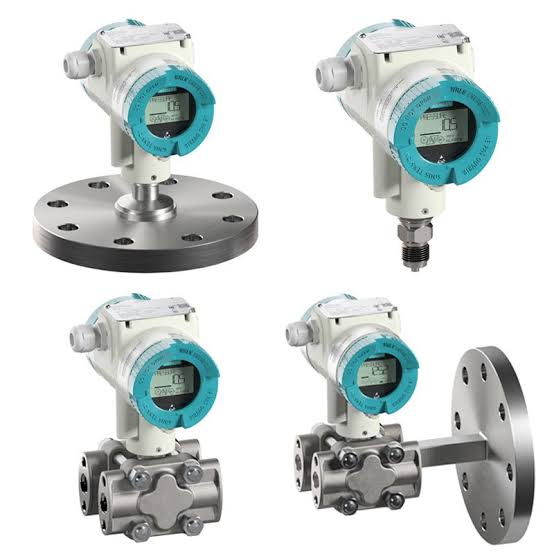
Accurate pressure measurement is a foundational requirement across nearly every process industry, from oil and gas refineries to pharmaceutical manufacturing plants. Among the instruments engineers and procurement managers rely on globally, the Siemens SITRANS Pressure Transmitter stands out as a proven solution for gauge, absolute, and differential pressure measurement. This article provides a factual, technical overview of the product line, its specifications, reliability characteristics, and the industries where it is commonly deployed worldwide.
What Is the Pressure Transmitter?
The Pressure Transmitter family is a series of process instruments designed to measure gauge pressure, absolute pressure, and differential pressure, with extended capability for flow and level measurement through differential pressure calculation. The product line includes models such as the SITRANS P320 and SITRANS P420, which were developed as successors to the earlier SITRANS P DS III series, while retaining backward compatibility for plants upgrading existing installations.
These transmitters operate on a two-wire, loop-powered 4–20 mA signal with HART communication protocol support, and select models also offer PROFIBUS PA and FOUNDATION Fieldbus connectivity. This allows integration into a wide range of distributed control systems (DCS), programmable logic controllers (PLC), and supervisory control and data acquisition (SCADA) platforms already installed in facilities around the world.
Technical Specifications
Understanding the technical specifications of the Siemens SITRANS Pressure Transmitter is essential for engineers selecting the correct model for a given application.
Measurement Ranges:
- Gauge pressure (SITRANS P320): adjustable span from approximately 0.12 inH₂O up to 10,153 PSI
- Differential pressure: adjustable span from approximately 0.4 inH₂O to 435 PSID
- SITRANS P420 (high-end model): turn-down ratio of up to 40:1, with the smallest measuring span as low as 0.25 mbar / 25 Pa / 0.1 inH₂O
Accuracy:
- SITRANS P320: reference accuracy of 0.065% of calibrated span
- SITRANS P420: reference accuracy of 0.04% of calibrated span, suited for high-precision applications
Communication Protocols: 4–20 mA with HART, PROFIBUS PA, and FOUNDATION Fieldbus, depending on model configuration
Housing and Enclosure: Diecast aluminum or precision-cast stainless steel electronics housing rated NEMA 4X / IP66 / IP68, suitable for outdoor and washdown environments
Operating Temperature: Process media temperatures typically ranging from -40°C to 100°C (-40°F to 212°F), depending on the fill fluid and diaphragm material selected
Display and Configuration: Optional integral HMI display with four-button local configuration, quick-start commissioning wizard, and diagnostic messaging in accordance with NAMUR NE107
Approvals: Certifications including FM, CSA, ATEX, and SIL 2/3 functional safety ratings, supporting use in hazardous and safety-instrumented applications
Data Logging: Onboard trend recording of up to 1,500 measured values on select models, supporting long-term process monitoring and diagnostics
These specifications make the Pressure Transmitter adaptable to a broad spectrum of process conditions, from ultra-low differential pressure applications in HVAC systems to high-pressure hydraulic and steam applications in heavy industry.
Reliability and Precision
Reliability is one of the defining characteristics of the SITRANS pressure transmitter line. The instruments are engineered for long-term measurement stability, with proof-test intervals extending up to 15 years on SIL-rated models. This reduces the frequency of manual safety testing required in safety-instrumented systems, lowering both maintenance labor and process downtime.
Precision is supported by robust sensor design and digital signal processing that minimizes drift over time and temperature fluctuation. The modular construction of the transmitter allows individual components, such as the electronics module or terminal block, to be replaced without recalibrating the entire unit in many cases, which simplifies field servicing and reduces total cost of ownership.
Remote diagnostic and configuration capability is another factor contributing to operational reliability. Technicians can access device status, trend data, and safety-relevant parameters from the control room using HART or SIMATIC PDM software, reducing the need for personnel to physically enter hazardous or hard-to-access areas for routine checks.
Typical Use Cases
The versatility of the Pressure Transmitter allows it to serve a wide range of industrial applications, including:
- Oil and gas: Upstream wellhead monitoring, pipeline pressure control, and refinery process measurement in corrosive and high-pressure environments
- Chemical and petrochemical processing: Pressure and differential pressure measurement in reactors, separators, and distillation columns where SIL-rated safety performance is required
- Power generation: Boiler pressure monitoring, steam system measurement, and turbine control loops
- Water and wastewater treatment: Level measurement via differential pressure in tanks and clarifiers, and pump station pressure monitoring
- Pharmaceutical and food and beverage: Hygienic process pressure measurement where accuracy and clean-in-place compatibility are required
- HVAC and building automation: Low differential pressure measurement for airflow and filter monitoring
Because the transmitter supports gauge, absolute, and differential pressure measurement within a single product family, plant engineers can often standardize on one transmitter platform across multiple process functions, simplifying spare parts inventory and technician training.
Worldwide Applicability
The Siemens SITRANS Pressure Transmitter is manufactured to meet international standards and regional hazardous area approvals, including ATEX for the European Union, FM and CSA for North America, and other regional certifications required in Asia-Pacific and Middle Eastern markets. This makes the product suitable for multinational engineering, procurement, and construction (EPC) projects where a single instrument specification must satisfy differing regulatory requirements across project sites.
The two-wire, loop-powered design and standard communication protocols (HART, PROFIBUS PA, FOUNDATION Fieldbus) ensure compatibility with control systems commonly deployed by global automation vendors, reducing integration complexity for multinational plant operators. For procurement managers sourcing instrumentation for projects spanning multiple countries, this consistency in specification and certification supports standardized purchasing and reduces the administrative burden of qualifying region-specific alternatives.
Evaflux supplies the Pressure Transmitter to industrial buyers globally, supporting procurement teams that require documented specifications, certification records, and lead-time information for cross-border industrial projects.
Selecting the Right Model
When specifying a Pressure Transmitter, engineers should evaluate:
- Process media and compatibility with wetted parts (stainless steel, Hastelloy, or other alloys)
- Required accuracy class relative to the process control tolerance
- Hazardous area classification and the corresponding certification needed (ATEX, FM, CSA)
- Communication protocol compatibility with the existing control system
- Safety integrity level (SIL) requirements, if the transmitter will be used in a safety-instrumented function
Consulting the specific datasheet for the selected model (such as SITRANS P320 or P420) is recommended to confirm exact performance figures for the intended application, as specifications can vary by configuration and measuring cell option.
Final Thoughts
The Pressure Transmitter combines accurate measurement, configurable communication protocols, and durable construction, making it a widely specified instrument in process industries around the world. Its combination of documented accuracy, extended proof-test intervals, and broad regulatory approval supports its use across sectors ranging from oil and gas to water treatment and pharmaceuticals. For engineers and procurement managers evaluating pressure measurement instrumentation for global projects, the Siemens SITRANS Pressure Transmitter offers a well-documented, standards-compliant option worth including in the evaluation process.