
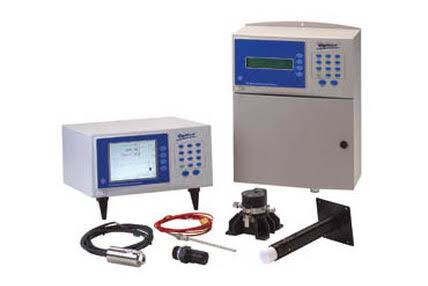
Reliable gas measurement is a core requirement across process industries, from oil and gas production to power generation and environmental monitoring. Among the instruments engineers rely on for this task, the Panametrics XGM Gas Analyzer stands out for its ultrasonic measurement principle, wide operating range, and low-maintenance design. This article provides a factual, technical overview of the instrument to help engineers, technicians, and procurement teams evaluate whether it fits their application.
What Is This Instrument?
This ultrasonic transit-time gas flow measurement system is engineered to determine the flow rate of virtually any gas, including hydrocarbon gases, vent gases, biogases, digester gases, fuel gases, waste gases, incinerator air flow, vapor recovery streams, and stack gases. The instrument uses a pair (or two pairs, in dual-path configurations) of ultrasonic transducers mounted on a spool piece or clamped externally on a pipeline. By measuring the difference in transit time between ultrasonic pulses sent upstream and downstream through the gas stream, the analyzer calculates gas velocity, which is then converted to volumetric or standard flow rate.
Because the measurement is non-intrusive, this analyzer introduces no obstruction into the gas path. This means no pressure drop across the measurement point and no moving parts subject to wear, fouling, or mechanical failure — a significant advantage for continuous, unattended operation.
Technical Specifications
Understanding the core specifications is essential for procurement and design engineers comparing gas measurement options.
- Measurement Principle: Ultrasonic transit-time (Doppler-independent) flow measurement
- Accuracy: Typically within ±1–2% of reading under standard conditions; up to ±0.5% of reading achievable with in-situ process calibration
- Repeatability: ±0.2% to ±0.5% of reading
- Velocity Range: Bidirectional measurement from approximately -46 m/s to +46 m/s (-150 ft/s to +150 ft/s)
- Turndown Ratio (Rangeability): Up to 1500:1, allowing accurate measurement across very low to very high flow conditions without recalibration
- Pressure Rating: Configurations available for operation up to 240 bar (3,480 psig), suitable for high-pressure pipeline applications
- Temperature Range: Standard and high-temperature transducer options to accommodate elevated process temperatures
- Communication Interfaces: Standard RS232, with optional RS485 (multi-drop), HART protocol, and Modbus protocol for integration with plant control systems
- Data Logging: Optional onboard memory supporting logging of over 150,000 data records (linear and/or circular logging modes)
- Configuration Options: Single-channel and dual-channel (two-path) models; dual-channel configurations allow either two independent measurement paths on separate pipes or two paths on a single pipe for enhanced accuracy
- Enclosure Rating: Weatherproof, Type 4X-rated electronics enclosure suitable for outdoor and harsh environments, with options certified for hazardous area classifications
These specifications position the analyzer as a versatile instrument capable of serving both custody-adjacent and general process measurement needs, though it should be noted that true custody transfer applications may require additional certification and calibration documentation specific to the regulatory jurisdiction.
Reliability and Precision
Reliability is one of the defining characteristics of ultrasonic gas measurement technology, and the design of this instrument reflects this priority in several ways:
No Moving Parts. Since the measurement relies entirely on acoustic transit time rather than mechanical rotation or displacement, there are no bearings, turbines, or vanes to wear out, jam, or require lubrication.
Tolerance to Dirty or Variable Gas Streams. The instrument is designed to maintain measurement stability even in gas streams containing particulates or variable composition, which is common in applications such as digester gas, flare vent gas, and waste gas monitoring.
Drift-Free, Long-Term Operation. Because the ultrasonic sensing elements are not subject to mechanical degradation, the analyzer is built to deliver consistent output over extended operating periods, reducing the frequency of recalibration and unplanned maintenance interventions.
Straight-Run Sensitivity. As with all ultrasonic flow instruments, accuracy is influenced by the upstream and downstream straight-pipe run relative to the sensor. Specifications generally assume a fully developed flow profile, typically achieved with approximately 20 diameters of straight run upstream and 10 diameters downstream, though flow-profile correction can reduce this requirement in constrained installations.
Precision is further supported by the instrument’s ability to compensate for gas composition, molecular weight, and temperature, all of which affect the speed of sound through the gas and, in turn, measurement accuracy. Engineers configuring the instrument for a specific application should account for these variables during commissioning to achieve the stated performance figures.
Typical Use Cases
The versatility of this analyzer supports deployment across a wide range of industrial sectors:
- Oil and Gas Production and Processing — measuring fuel gas, associated gas, and vent gas streams at wellheads, gathering stations, and processing facilities
- Flare and Vent Gas Monitoring — supporting environmental compliance reporting by quantifying gas routed to flare systems
- Wastewater Treatment — measuring digester gas output for biogas capture and utilization projects
- Power Generation — monitoring fuel gas supply to turbines and boilers
- Chemical and Petrochemical Plants — tracking process gas flows across a variety of pipe sizes and pressures
- Waste-to-Energy and Incineration Facilities — measuring incinerator air flow and combustion gas streams
- Vapor Recovery Systems — quantifying recovered vapor volumes for regulatory and efficiency reporting
Across these applications, the common requirement is dependable, low-maintenance measurement in conditions where mechanical meters would be prone to fouling, wear, or inaccuracy.
Worldwide Applicability
The Panametrics XGM Gas Analyzer is deployed across upstream, midstream, and downstream operations globally, spanning regions with diverse regulatory frameworks, climates, and pipeline infrastructure standards. Its wide temperature range, high-pressure rating, and hazardous-area certification options make it suitable for installations in extreme environments — from arctic gas fields to high-humidity tropical processing plants and high-temperature desert pipelines.
For procurement teams sourcing instrumentation on a multi-region basis, this consistency in performance specification across environmental extremes simplifies standardization efforts, reduces the need for site-specific instrument variants, and supports centralized spare-parts planning. Communication protocol options such as HART and Modbus further support integration into varied plant control architectures used internationally, from legacy SCADA systems to modern distributed control systems (DCS).
This combination of environmental adaptability, protocol flexibility, and broad gas-type compatibility is why this instrument continues to be specified in projects across North America, Europe, the Middle East, and Asia-Pacific.
Installation and Maintenance Considerations
Proper installation directly affects long-term measurement performance. Key considerations include:
- Pipe Preparation — ensuring the internal pipe diameter and wall thickness measurements used in configuration match the actual installation, and checking for dents, weld irregularities, or eccentricity that could affect acoustic path integrity.
- Straight-Run Requirements — allowing adequate upstream and downstream straight pipe length, or applying flow-profile correction where space is limited.
- Transducer Cabling — using cable types and lengths consistent with manufacturer specifications, particularly for coaxial transducer connections, to avoid signal degradation over long cable runs.
- Temperature and Pressure Compensation — installing optional temperature and pressure transmitters where standard (as opposed to actual) flow rate reporting is required.
Because the instrument has no moving parts, routine maintenance is largely limited to periodic verification of transducer condition, cable integrity, and electronics enclosure sealing, rather than component replacement.
Conclusion
The Panametrics XGM Gas Analyzer offers a well-documented combination of wide rangeability, high-pressure capability, and low-maintenance operation that makes it a practical choice for gas flow measurement across diverse industrial settings. Its non-intrusive ultrasonic design minimizes pressure loss and mechanical wear, while its configurable communication and data-logging options support integration into modern process control environments. For engineers and procurement managers evaluating gas measurement instrumentation for global operations, the specifications and application history outlined above provide a factual basis for further technical assessment and vendor consultation.
Frequently Asked Questions
Q: What gases can this analyzer measure?
A: It is designed to measure virtually any gas, including hydrocarbon gases, vent gases, biogases, digester gases, fuel gases, waste gases, incinerator air flow, vapor recovery streams, and stack gases.
Q: What is the accuracy of this instrument?
A: Standard accuracy is typically within ±1–2% of reading, with accuracy up to ±0.5% of reading achievable through in-situ process calibration.
Q: What is the maximum operating pressure?
A: Certain configurations support operation at pressures up to 240 bar (3,480 psig), depending on the model and transducer selection.
Q: Does the analyzer require regular maintenance?
A: Because it has no moving parts, maintenance needs are minimal, generally limited to periodic checks of transducer condition, cabling, and enclosure integrity rather than component replacement.
Q: Is the instrument suitable for hazardous areas?
A: Yes, hazardous-area certified configurations and weatherproof (Type 4X) enclosures are available for use in classified industrial environmen.
Q: Can it be used for custody transfer applications?
A: It can support custody-adjacent measurement, but true custody transfer use may require additional certification, calibration, and documentation specific to local regulatory requirements. Consult the manufacturer or a qualified engineer for application-specific compliance.
Q: What communication protocols does it support?
A: Standard RS232, with optional RS485, HART, and Modbus protocols for integration into plant control and SCADA systems.
Q: Is this analyzer available for use worldwide?
A: Yes, its wide temperature range, high-pressure rating, and multiple certification options make it suitable for deployment across varied climates and regulatory regions globally.