
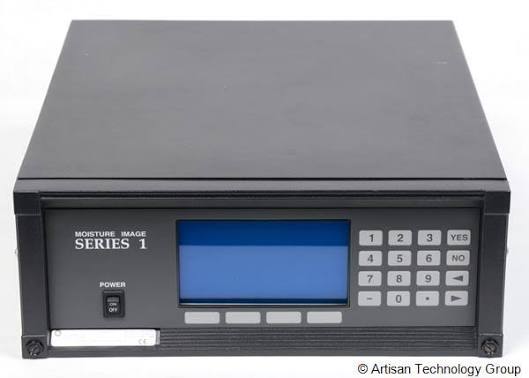
Accurate moisture measurement is a core requirement in industrial gas and liquid processing, where even trace levels of water vapor can compromise product quality, corrode equipment, or create safety hazards. The Panametrics Moisture Analyzer family, manufactured by Baker Hughes, is widely used across global industries to deliver dependable moisture and dew point measurement in demanding process environments. This article provides a technical overview of the product category, its underlying measurement technologies, typical specifications, and application scope for engineers, technicians, and procurement teams evaluating instrumentation for their facilities.
What Is This Instrument?
This product category is a class of process instrumentation designed to measure trace moisture, humidity, and dew point in gases and non-aqueous liquids. Depending on the model and sensing technology selected, these analyzers can detect moisture content ranging from low parts-per-billion (ppb) levels up to percentage-level relative humidity, making them suitable for both ultra-dry gas applications and general industrial humidity monitoring.
The product line covers several sensing principles, including aluminum oxide (Al₂O₃) moisture sensors, chilled mirror hygrometry, and Tunable Diode Laser Absorption Spectroscopy (TDLAS). Each technology addresses different accuracy, response time, and maintenance requirements, allowing procurement teams to match the instrument to the specific process demands of their facility.
Core Technologies Behind the Analyzer
Aluminum Oxide Sensor Technology
Aluminum oxide probes remain one of the most established sensing methods in the Panametrics portfolio. These sensors are compact, resistant to contamination, and capable of operating across a wide dew point range, making them a practical choice for continuous online monitoring in natural gas pipelines, industrial gas systems, and heat-treating furnace atmospheres.
Chilled Mirror Hygrometry
Chilled mirror analyzers offer fundamental, NIST-traceable dew point measurement by physically detecting the condensation point on a cooled mirror surface. This method is often selected as a reference-grade or calibration-verification technique because it does not rely on secondary sensor drift characteristics, offering high repeatability over long service intervals.
TDLAS (Tunable Diode Laser Absorption Spectroscopy)
TDLAS-based moisture analyzers use laser absorption spectroscopy to measure moisture concentration without physical contact between the sensor and the process gas. This non-contact approach reduces the need for frequent recalibration and improves measurement stability in applications involving corrosive or contaminated gas streams, such as natural gas custody transfer and hydrocarbon processing.
Technical Specifications Overview
While exact specifications vary by specific model and configuration, this product category generally offers the following characteristics:
- Measurement Range: From low ppb trace moisture levels to percentage-level relative humidity, depending on sensor type
- Dew Point Range: Typically spans from extremely dry conditions (well below -70°C dew point) to near-ambient humidity levels
- Output Signals: Standard 4–20 mA analog outputs, digital communication protocols (HART, Modbus), and Ethernet connectivity on select models
- Enclosure Ratings: Intrinsically safe and explosion-proof configurations available for hazardous area classification (ATEX, IECEx, CSA, FM)
- Sample Conditioning: Compatible with pressure and flow-controlled sample systems for representative gas or liquid extraction
- Calibration Traceability: Reference-grade models offer NIST-traceable calibration for regulatory and custody transfer applications
These specifications make the analyzer suitable for both fixed installation in process piping and portable field verification use, depending on the configuration selected.
Reliability and Precision
Reliability is a defining characteristic of this product line, which has been engineered and field-tested across decades of industrial deployment. Sensor designs prioritize resistance to process contaminants, minimal drift over extended operating periods, and consistent performance under variable pressure and temperature conditions. Many models include automatic pressure compensation to preserve measurement accuracy when process conditions fluctuate.
Precision is achieved through a combination of factory calibration, application-specific sensor selection, and, where required, on-site verification against chilled mirror reference standards. For custody transfer and regulatory compliance applications, this traceability is essential to ensure measurements meet contractual and legal accuracy requirements between trading partners.
Typical Use Cases
The Panametrics Moisture Analyzer is deployed across a broad range of industrial sectors, including:
- Natural Gas Transmission and Storage: Monitoring moisture content to prevent pipeline corrosion and hydrate formation
- Custody Transfer: Providing traceable moisture measurement for contractual gas quality verification
- Petrochemical and Refining: Protecting process integrity by detecting moisture ingress in hydrocarbon streams
- Semiconductor Manufacturing: Ensuring ultra-dry process gases meet stringent purity requirements
- Power Generation: Monitoring moisture in compressed air and instrument gas systems
- Furnace and Heat-Treating Applications: Controlling atmosphere composition to maintain metallurgical quality
- Pharmaceutical and Industrial Gas Production: Verifying gas dryness for quality assurance and packaging processes
This range of applications reflects the versatility of the analyzer platform, which can be configured for continuous online monitoring, portable spot-checking, or laboratory-based verification depending on operational needs.
Worldwide Applicability
The Panametrics Moisture Analyzer is engineered to meet international industrial standards, making it applicable across regions with differing regulatory and environmental requirements. Hazardous area certifications such as ATEX (Europe), IECEx (international), CSA (North America), and FM (United States) allow the same core product family to be deployed in facilities across Europe, the Middle East, Asia-Pacific, and the Americas without redesign. This global certification coverage is particularly relevant for multinational operators standardizing instrumentation across multiple facilities and for procurement teams sourcing equipment for projects in varied regulatory environments.
Because moisture control is a universal requirement in gas and liquid processing regardless of geography, it serves as a consistent, globally recognized solution for facilities ranging from offshore platforms to inland gas processing plants and manufacturing sites.
Selecting the Right Configuration
Procurement and engineering teams evaluating this instrument should consider several factors before specifying a model: the required measurement range and detection limit, the process media (gas or liquid), hazardous area classification requirements, output and communication protocol compatibility with existing control systems, and whether continuous online monitoring or portable verification is the primary use case. Consulting technical datasheets and application engineers ensures the selected configuration aligns with both current process requirements and future scalability needs.
Maintenance planning is another important consideration. Aluminum oxide sensors typically require periodic recalibration or sensor replacement depending on process contamination levels, while TDLAS-based systems are designed to minimize routine maintenance through their non-contact measurement approach. Chilled mirror systems, while highly accurate, generally require more operator attention due to their mechanical cooling components. Facilities with limited on-site instrumentation expertise may prioritize lower-maintenance technologies, while laboratories or calibration facilities may prefer the fundamental accuracy of chilled mirror systems despite the additional upkeep.
Budget and lifecycle cost should also factor into the decision. While initial purchase price is a visible cost, total cost of ownership includes calibration services, spare parts availability, sensor replacement intervals, and technical support responsiveness. Given the global footprint of Baker Hughes service and support infrastructure, procurement teams operating across multiple countries can generally expect consistent access to calibration services, spare parts, and application engineering support regardless of project location, which simplifies long-term instrument lifecycle management for multinational operations.
Conclusion
The Panametrics Moisture Analyzer represents a well-established category of process instrumentation built for accuracy, reliability, and adaptability across diverse industrial environments. With multiple sensing technologies, global certification coverage, and a track record across natural gas, petrochemical, semiconductor, and power generation industries, it remains a practical choice for organizations that require dependable trace moisture measurement anywhere in the world. For engineers and procurement managers evaluating moisture measurement solutions, it offers a technically proven platform backed by decades of field deployment.
Frequently Asked Questions
1. What does a Panametrics measure?
It measures trace moisture, humidity, and dew point levels in gases and non-aqueous liquids, with detection ranging from low ppb concentrations to percentage-level relative humidity depending on the sensor technology used.
2. What sensing technologies are used in Panametrics?
The product line includes aluminum oxide sensors, chilled mirror hygrometry, and TDLAS (Tunable Diode Laser Absorption Spectroscopy), each suited to different accuracy and maintenance requirements.
3. Is the Panametrics suitable for hazardous areas?
Yes. Many models are available in intrinsically safe or explosion-proof configurations certified to ATEX, IECEx, CSA, and FM standards for use in classified hazardous environments.
4. Can the analyzer be used for custody transfer applications?
Yes. Reference-grade models offer NIST-traceable calibration, making them suitable for custody transfer and regulatory compliance applications where measurement traceability is required.
5. What industries commonly use Panametrics?
Common industries include natural gas transmission, petrochemical and refining, semiconductor manufacturing, power generation, pharmaceutical production, and industrial gas supply.
6. Are portable versions of the Panametrics available?
Yes. Portable and handheld configurations are available for field spot-checking and analyzer validation, in addition to fixed, continuous online monitoring models.
7. Is the Panametrics available globally?
Yes. With multiple international hazardous area certifications, the analyzer platform is deployed across facilities in Europe, North America, the Middle East, and Asia-Pacific.