
Industrial fans and blowers manufactured by Howden are widely used across power generation, oil and gas, cement, marine, and process industries. Because these fans operate continuously under demanding conditions — high temperature, particulate-laden airflow, and extended duty cycles — the availability of genuine Howden Fan Spare Parts is critical to maintaining plant uptime and operational safety. This article provides a technical overview of these components, their specifications, and their relevance to buyers operating in the UAE.
What These Components Include
This category refers to the range of replacement and maintenance components designed specifically for Howden-manufactured centrifugal and axial fans. It includes impellers, shafts, bearings, seals, dampers, casings, drive couplings, and inlet cones. Each part is manufactured to match original equipment specifications, ensuring dimensional accuracy, balance tolerances, and material compatibility with the original fan assembly.
Because industrial fans are often custom-engineered for a specific process — such as flue gas handling, forced draft, induced draft, or cooling tower ventilation — replacement components must be matched precisely to the original design. Using non-conforming parts can lead to imbalance, vibration, premature bearing failure, or reduced airflow efficiency.
Technical Specifications
The technical characteristics of these components vary depending on the fan model and application, but common specification categories include:
Impellers
- Material options: carbon steel, stainless steel, or high-chrome alloy for abrasive service
- Blade configurations: backward-curved, radial, or airfoil, depending on static pressure requirements
- Dynamic balancing to ISO 21940 standards to minimize vibration at operating speed
- Coatings such as ceramic or polyurethane lining for erosion resistance in dust-laden airflows
Shafts
- Manufactured from forged alloy steel for torsional strength
- Precision-machined to tight tolerances for coupling and bearing fit
- Surface treatments to resist fatigue and corrosion under continuous load
Bearings
- Anti-friction or sleeve bearings rated for high-temperature and high-speed operation
- Sealed or re-greasable designs depending on maintenance access
- Load ratings aligned with fan duty class (light, medium, or heavy industrial duty)
Seals and Gaskets
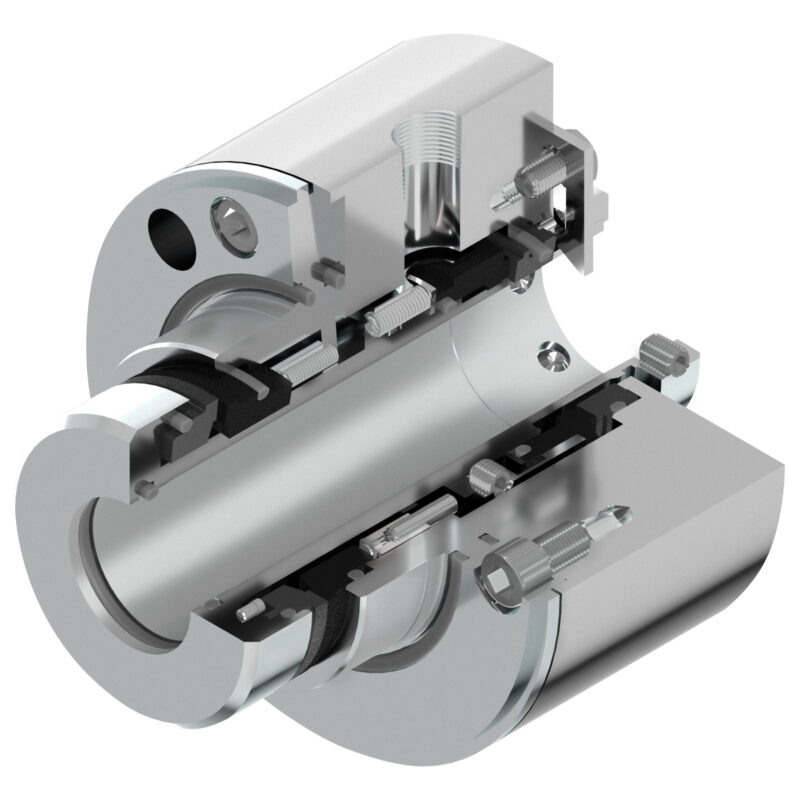
- Labyrinth or mechanical seals to prevent gas or dust leakage at the shaft penetration
- Temperature-rated elastomers or graphite-based materials for high-temperature flue gas applications
Casings and Housings
- Fabricated steel construction with reinforced stiffeners
- Designed to match original fan pressure and flow curves
Reliability and Precision
Reliability is the central value proposition of genuine Howden Fan Spare Parts. Because these components are produced to the original design intent, they preserve the aerodynamic performance and mechanical balance of the fan assembly. This reduces the risk of:
- Vibration-induced bearing wear
- Airflow performance degradation
- Unplanned shutdowns due to component mismatch
- Accelerated wear from incompatible materials
Precision manufacturing — particularly in impeller balancing and shaft machining — is essential because industrial fans typically operate at high rotational speeds where even minor imbalance can generate significant mechanical stress. Parts sourced to original specifications help plants maintain predictable maintenance intervals and avoid cascading failures in connected equipment such as motors, couplings, and gearboxes.
Typical Use Cases
These components are used across a range of industrial applications, including:
- Power generation plants — forced draft (FD) and induced draft (ID) fans for boiler airflow management
- Cement manufacturing — kiln exhaust fans and raw mill ventilation systems
- Oil and gas facilities — process gas blowers and cooling fans in refineries
- Marine and offshore platforms — engine room ventilation and HVAC fan systems
- District cooling and HVAC — large-scale air handling fans in commercial and industrial buildings
- Steel and metal processing — furnace combustion air fans
In each of these sectors, timely access to compatible replacement components directly affects production continuity, making sourcing reliability as important as part quality.
Relevance for Buyers in the UAE
The UAE’s industrial base — spanning oil and gas, power and water desalination, cement, and district cooling — relies heavily on large-scale rotating equipment, much of which includes Howden-manufactured fans installed over past decades of infrastructure development. For plant engineers and procurement managers based in the UAE, several factors make sourcing these components locally or regionally particularly relevant:
- Reduced downtime: Regional stock availability shortens lead times compared to importing directly from overseas manufacturers, which is critical for plants operating on continuous production schedules.
- Climate considerations: UAE’s high ambient temperatures and dust conditions increase wear on bearings, seals, and impeller coatings, making periodic replacement with correctly specified parts important for sustained performance.
- Compliance with maintenance contracts: Many UAE facilities operate under strict maintenance and safety audit requirements, where documented use of OEM-matched components supports compliance records.
- Support for aging infrastructure: A number of UAE power and industrial plants have fans that are 15–25 years old, where matching original component specifications ensures continued compatibility without requiring a full fan replacement.
For procurement teams evaluating suppliers, verifying that a vendor can provide technical drawings, material certificates, and balancing reports alongside the physical part is a practical way to confirm authenticity and specification match.
Selecting the Right Spare Parts Supplier
When evaluating a supplier for these Howden fan components, technical buyers in the UAE typically assess the following:
- Documentation availability — material test certificates, dimensional drawings, and balance reports
- Cross-referencing capability — ability to match parts to original fan tag numbers or drawing references
- Lead time and regional stock — availability of commonly replaced items such as bearings and seals
- Quality assurance processes — inspection and testing protocols prior to dispatch
- After-sales technical support — access to engineering guidance for installation and commissioning
A supplier that can address these five criteria reduces procurement risk and supports long-term fan reliability.
Conclusion
Howden Fan Spare Parts play a central role in maintaining the operational reliability of industrial fans used across power, cement, oil and gas, and marine sectors. Their technical specifications — covering impellers, shafts, bearings, seals, and casings — are engineered to preserve the original performance characteristics of the fan assembly. For engineers, technicians, and procurement managers operating in the UAE, sourcing these components with verified documentation and regional availability supports both operational continuity and compliance with maintenance standards. As UAE industries continue to expand their power, cooling, and process infrastructure, dependable access to precisely specified replacement parts remains a practical priority for plant reliability planning.
Frequently Asked Questions
1. What types of components in this category are most commonly replaced?
Bearings, seals, and impeller coatings are typically the most frequently replaced items due to continuous operating wear, particularly in high-temperature or dust-laden environments.
2. Are these components interchangeable across different fan models?
No. Parts are generally specific to a fan’s model, size, and design configuration. Buyers should reference the original fan tag number or drawing to confirm compatibility.
3. Why is dynamic balancing important for replacement impellers?
Industrial fans operate at high rotational speeds, so even small imbalances can cause excessive vibration, bearing wear, and reduced service life. Balancing to recognized standards helps maintain mechanical stability.
4. How does UAE’s climate affect wear rates on these parts?
High ambient temperatures and airborne dust can accelerate bearing wear, seal degradation, and impeller erosion, often requiring more frequent inspection and replacement compared to temperate climates.
5. What documentation should buyers request when purchasing these parts?
Material test certificates, dimensional drawings, and balancing reports are commonly requested to confirm that the part matches original equipment specifications.
6. Can components in this category be sourced for older or legacy fan installations?
Yes, provided the original fan specifications, drawings, or tag numbers are available for cross-referencing, suppliers can often source or fabricate compatible parts for legacy installations.