
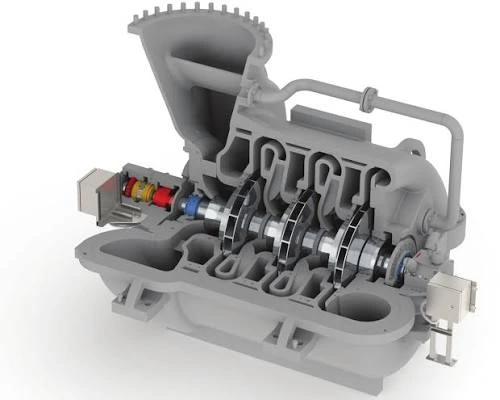
Centrifugal compressors are central to gas processing, petrochemical, HVAC, and marine applications across the UAE, and the performance of these machines depends heavily on the quality of their internal components. This guide reviews Howden Centrifugal Compressor Parts, covering their technical construction, reliability characteristics, and the industries in the UAE where they are most commonly specified.
Understanding Howden Centrifugal
Howden centrifugal compressors are widely used in oil and gas processing plants, refineries, desalination facilities, and industrial air separation units. The compressor’s performance, efficiency, and service life depend on a set of precision-manufactured components, including impellers, diffusers, volutes, shaft seals, bearings, labyrinth seals, balance drums, and diaphragm assemblies. Howden Centrifugals are engineered to tight tolerances so that rotating and stationary elements interact with minimal clearance loss, preserving aerodynamic efficiency across the compressor’s operating range.
Each component is manufactured to match the original equipment design intent, meaning replacement or overhaul parts must correspond precisely to rotor dynamics, thermal expansion behavior, and material specifications of the original assembly. This is particularly important in multi-stage centrifugal compressors, where even minor dimensional deviation in one stage can affect surge margin and overall efficiency.
Technical Specifications
Buyers evaluating Howden Centrifugal Compressor Parts typically assess the following technical criteria:
- Materials: Forged alloy steel, stainless steel, and duplex stainless steel are common for impellers and shafts, selected based on the process gas composition (sour gas, hydrocarbon, or corrosive service). Bearing housings and diaphragms are often cast iron or carbon steel.
- Impeller design: Open or closed impellers, precision CNC-machined or 5-axis milled from solid billet, balanced to ISO 21940 standards for rotordynamic stability.
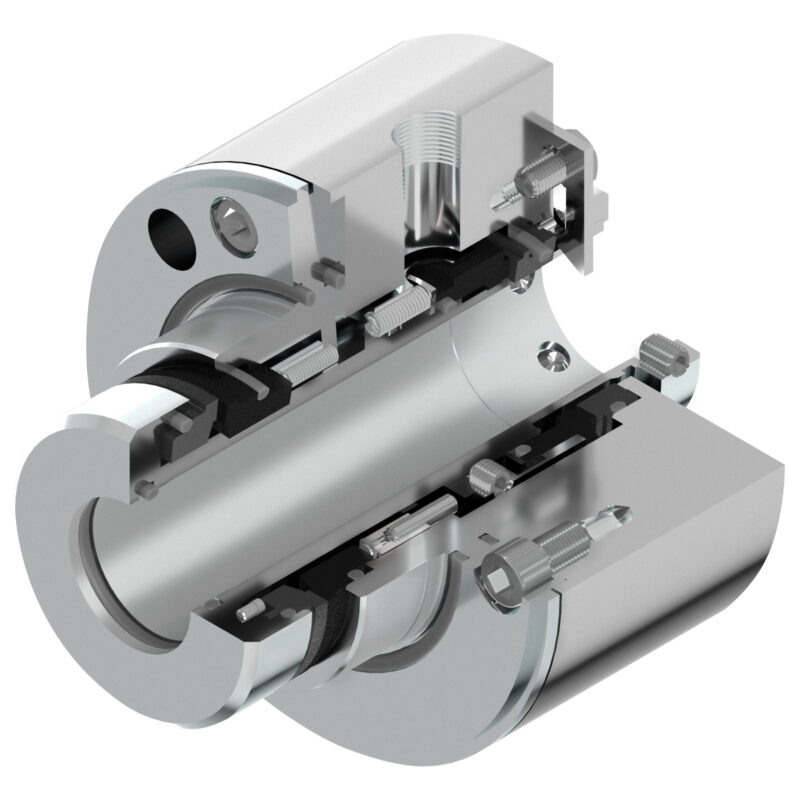
- Sealing systems: Dry gas seals, labyrinth seals, and oil film seals rated for specific differential pressures and gas compositions.
- Bearings: Tilting-pad journal and thrust bearings designed for high-speed rotation, typically rated for operating speeds from 3,000 to over 20,000 RPM depending on compressor frame size.
- Tolerances: Dimensional tolerances typically held within microns for critical rotating clearances, verified through coordinate measuring machine (CMM) inspection.
- Balancing standards: Components are dynamically balanced in accordance with API 617 and ISO 1940 requirements for high-speed rotating equipment.
- Surface treatments: Corrosion-resistant coatings, nitriding, or chrome plating applied depending on service conditions such as humidity, salt exposure, or sour gas environments.
These specifications matter directly to UAE operators, where ambient temperatures, high humidity near coastal facilities, and sour gas service in upstream operations place additional demand on material selection and coating integrity.
Reliability and Precision
Reliability in centrifugal compressor operation is closely tied to component precision. Howden Centrifugal are manufactured with repeatable dimensional accuracy, which supports:
- Consistent clearance control between rotating and stationary parts, reducing the risk of rubbing or premature wear.
- Stable rotordynamic behavior across the compressor’s full speed range, minimizing vibration-related failures.
- Reduced unplanned downtime, since components manufactured to original specifications integrate correctly during overhauls without requiring field modification.
- Longer service intervals when paired with correct lubrication, sealing gas quality, and monitoring practices.
For facilities running continuous or near-continuous operation — common in UAE refineries, gas plants, and utility compressor stations — this level of precision reduces the frequency of unscheduled shutdowns and supports predictable maintenance planning.
Typical Use Cases
Centrifugal compressors fitted with these parts serve a range of applications:
- Oil and gas processing: Gas injection, gas gathering, and re-injection compressors in upstream and midstream operations.
- Petrochemical plants: Process gas compression for ethylene, ammonia, and refinery off-gas systems.
- Air separation units: Oxygen, nitrogen, and industrial gas production facilities.
- Desalination and water treatment: Compressed air and process gas systems supporting large-scale desalination plants, a significant infrastructure category in the UAE.
- HVAC and district cooling: Large-scale centrifugal chillers used in district cooling networks common across UAE commercial and residential developments.
- Power generation: Auxiliary compressed air systems and turbine-related compression equipment.
UAE Market Relevance
The UAE’s industrial base — spanning Abu Dhabi’s upstream and downstream oil and gas sector, Dubai’s district cooling infrastructure, and Sharjah’s petrochemical facilities — relies on centrifugal compressor reliability to maintain continuous production and utility service. Howden Centrifugal Compressor Parts sourced through regional suppliers reduce lead times compared to importing directly from overseas manufacturing locations, which is a practical consideration for plants operating on tight turnaround schedules.
Local availability also supports faster response during planned turnarounds and unplanned outages, where compressor downtime translates directly into production or utility service loss. For procurement teams managing multi-site operations across the UAE, working with a supplier that maintains regional stock and technical documentation for Howden-compatible parts simplifies vendor qualification and audit requirements under ADNOC, ENOC, and other operator-specific procurement standards.
Coastal and desert operating environments in the UAE also introduce specific engineering considerations — high ambient temperatures affecting bearing lubrication, sand and dust ingress affecting seal life, and humidity affecting corrosion rates on exposed metal surfaces. Parts specified for UAE service should account for these environmental factors during material and coating selection.
Selecting the Right Parts
When specifying replacement or overhaul components, engineers and procurement managers should verify:
- Compressor frame size, stage configuration, and original OEM drawing references.
- Process gas composition and operating pressure/temperature range.
- Required material certification and traceability documentation (mill test certificates, NDT reports).
- Balancing and inspection reports confirming compliance with API 617 or equivalent standards.
- Warranty terms and technical support availability from the regional supplier.
Working with a supplier that provides full documentation and technical support reduces the risk of specification mismatches during installation.
Conclusion
Howden Centrifugal play a defined role in maintaining the operational reliability of centrifugal compression systems used across oil and gas, petrochemical, desalination, and district cooling applications in the UAE. Their manufacturing precision, material selection, and adherence to recognized industry standards directly influence compressor uptime and maintenance planning. For engineers and procurement teams sourcing these components, verifying technical specifications, certification, and regional supplier support remains central to a sound purchasing decision.
Frequently Asked Questions
Q1: What are the most commonly replaced Howden centrifugal compressor parts?
Impellers, shaft seals, bearings, diaphragms, and labyrinth seals are the components most frequently replaced during scheduled overhauls, as they experience the highest wear from continuous rotation and gas contact.
Q2: How do I confirm a replacement part matches my original Howden compressor specification?
Cross-reference the compressor’s frame size, serial number, and original OEM drawings with the supplier’s part documentation, and request material certificates and dimensional inspection reports before installation.
Q3: Are Howden-compatible parts suitable for sour gas service in UAE upstream operations?
Yes, provided the correct material grade (such as duplex or NACE-compliant stainless steel) and sealing system are specified for the sour gas composition and pressure conditions of the specific application.
Q4: What standards govern balancing and manufacturing tolerances for these parts?
Balancing is typically performed to ISO 1940 and API 617 standards, which define acceptable residual unbalance limits for high-speed rotating equipment used in centrifugal compressors.
Q5: Why source Howden Centrifugal regionally rather than importing directly?
Regional sourcing in the UAE reduces lead time during turnarounds, simplifies customs and logistics, and allows for faster technical support response compared to direct overseas procurement.
Q6: What environmental factors affect part selection in UAE installations?
High ambient temperature, humidity, sand/dust ingress, and coastal salinity all influence material coating, seal type, and lubrication requirements for compressors operating in UAE conditions.