
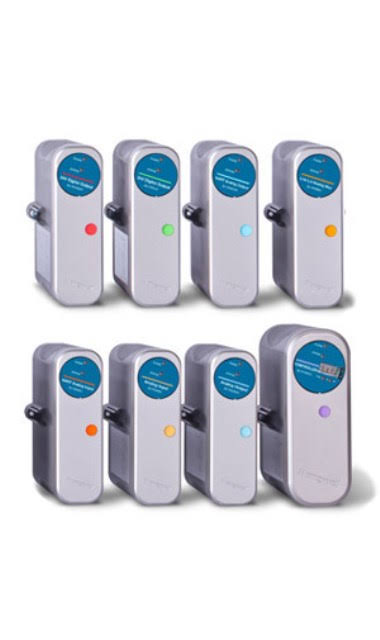
Process industries operating across continents require automation platforms that behave consistently regardless of geography, regulatory environment, or plant configuration. Honeywell Experion PKS is one of the most widely deployed distributed control systems (DCS) in the world, used across oil and gas, petrochemicals, power generation, pulp and paper, life sciences, and metals processing. This article provides a technical overview of the platform, its architecture, and the operational contexts in which it is typically specified.
What Is Experion PKS?
Experion PKS (Process Knowledge System) is a distributed control system developed by Honeywell Process Solutions to unify control, safety, and information management within a single operating environment. Unlike legacy DCS platforms that isolate control logic from plant-wide data systems, this platform integrates process control, asset management, alarm management, and advanced applications into one architecture. This consolidation reduces the number of disparate systems an operations team must monitor, which in turn lowers integration overhead and long-term maintenance costs.
The system is built around a client-server architecture with redundant controllers, servers, and network paths, allowing it to be scaled from a single-unit skid application to a multi-site enterprise deployment spanning thousands of I/O points.
Technical Specifications and Architecture
Procurement teams and engineers evaluating this platform typically assess the following core components:
- Controllers: The C300 and C300 PM (Process Manager) controllers form the control execution layer, supporting redundant configurations for high-availability applications. Controllers communicate over the Control Firewall (CF) and Fault Tolerant Ethernet (FTE) network.
- Fault Tolerant Ethernet (FTE): A dual-redundant, self-healing network topology that maintains communication integrity even if one network path fails, which is a critical requirement for continuous process operations.
- I/O Systems: Experion supports both traditional wired I/O modules and Universal I/O, which allows a single hardware channel to be configured as analog input, analog output, digital input, or digital output — reducing spare parts inventory and engineering time.
- Servers: Experion Servers (ES) host the real-time database, historian, and human-machine interface (HMI) services. These can be deployed in physical or virtualized environments.
- Station and Operator Interfaces: Experion Station provides the operator HMI, with configurable graphics that follow ISA-101 high-performance HMI guidelines to reduce operator workload during abnormal situations.
- Integration Protocols: The platform supports OPC UA, Modbus, PROFIBUS, and other industrial protocols, enabling interoperability with third-party instrumentation and legacy control systems.
- Safety System Integration: Experion can integrate with Honeywell’s Safety Manager or other SIL-rated safety instrumented systems (SIS) while maintaining logical separation between control and safety functions, in line with IEC 61511 guidance.
These specifications make Honeywell Experion PKS applicable to both greenfield installations and brownfield migrations from older DCS platforms.
Reliability and Precision
Reliability in a DCS is measured by uptime, failover behavior, and data integrity under fault conditions. Experion PKS is engineered with redundancy at multiple layers — controller, network, server, and power — so that a single point of failure does not interrupt process control. Controller failover is designed to be bumpless, meaning the backup controller assumes control without introducing a step change in output that could disturb the process.
Precision is achieved through high-resolution I/O scanning, deterministic control execution cycles, and tight time synchronization across the control network. For applications such as batch processing, combustion control, or turbine sequencing, this level of determinism is necessary to maintain product quality and avoid safety trips caused by timing drift.
Because the system logs continuous process history through its integrated historian, engineers can perform root-cause analysis on process upsets using time-stamped data that is synchronized across the entire control system, rather than reconciling separate logs from disconnected subsystems.
Typical Use Cases
The platform is specified across a range of industrial sectors:
- Oil and Gas — Upstream separation, gas processing, and midstream pipeline monitoring, where remote asset visibility and long-distance network reliability are priorities.
- Refining and Petrochemicals — Continuous process units such as distillation, cracking, and polymerization, where tight process control directly affects yield and safety margins.
- Power Generation — Boiler-turbine-generator control in conventional and combined-cycle plants, including coordination with plant-level safety systems.
- Pulp, Paper, and Metals — Batch and continuous processes requiring precise sequencing and quality control across multiple production lines.
- Life Sciences — Regulated manufacturing environments where data integrity, audit trails, and validation documentation are required to meet regulatory expectations.
Each of these industries requires slightly different configurations of the same underlying platform, which is one reason Experion PKS has maintained broad adoption: the base architecture does not need to be replaced when a facility’s process requirements evolve.
Worldwide Applicability
Honeywell Experion PKS is deployed across every major industrial region, including North America, Europe, the Middle East, Asia-Pacific, and Latin America. This global footprint means the platform is designed to comply with a range of regional and international standards, including IEC 61508/61511 for functional safety, ISA-95 for enterprise-control integration, and regional cybersecurity requirements such as IEC 62443.
For organizations sourcing automation equipment for multi-site operations, this consistency matters. A control philosophy, operator training program, and spare parts strategy built around this platform in one region can typically be extended to facilities in another region with minimal re-engineering. This reduces the total cost of ownership for multinational operators and simplifies technical support coordination, since engineering teams across different countries work within the same system logic and terminology.
Local support availability, spare parts sourcing, and Honeywell-certified system integrators exist in most major industrial hubs, which further supports the platform’s use in globally distributed capital projects.
Selecting the Right Experion PKS Configuration
When evaluating this system for a project, procurement and engineering teams typically consider:
- Required I/O count and expected future expansion
- Redundancy level needed (controller, network, server)
- Integration requirements with existing safety and third-party systems
- Regulatory and industry-specific compliance requirements
- Availability of local system integration and lifecycle support
Because the platform is modular, a facility can start with a base configuration and scale up controllers, servers, or I/O capacity as production requirements change, without a full system replacement.
Conclusion
Honeywell Experion PKS remains a widely specified distributed control system due to its combination of redundant architecture, deterministic control performance, and broad industry applicability. For engineers, technicians, and procurement managers evaluating automation platforms for global operations, understanding its technical architecture — controllers, FTE networking, I/O flexibility, and integration capability — is central to making an informed sourcing decision. Its consistent deployment model across regions makes it a practical choice for organizations managing multi-site or multinational process operations.
Frequently Asked Questions
What industries commonly use this platform?
It is used in oil and gas, refining, petrochemicals, power generation, pulp and paper, metals, and life sciences manufacturing, among other continuous and batch process industries.
Can Experion PKS integrate with third-party instrumentation?
Yes. The platform supports standard industrial protocols including OPC UA, Modbus, and PROFIBUS, allowing integration with instrumentation and legacy systems from other vendors.
How does Experion PKS handle system redundancy?
Redundancy is available at the controller, network (via Fault Tolerant Ethernet), and server levels, allowing bumpless failover so that a single component failure does not interrupt process control.
Is Experion PKS suitable for both new installations and system upgrades?
Yes. It is commonly used in greenfield projects as well as brownfield migrations, where it replaces or interfaces with older control systems while preserving existing process logic where possible.
What standards does Experion PKS support for compliance?
It supports alignment with IEC 61508/61511 functional safety standards, ISA-95 enterprise integration standards, and cybersecurity frameworks such as IEC 62443.
Does system configuration vary by region?
The core architecture remains consistent worldwide, though specific configurations may be adjusted to meet regional regulatory, safety, or environmental requirements.