
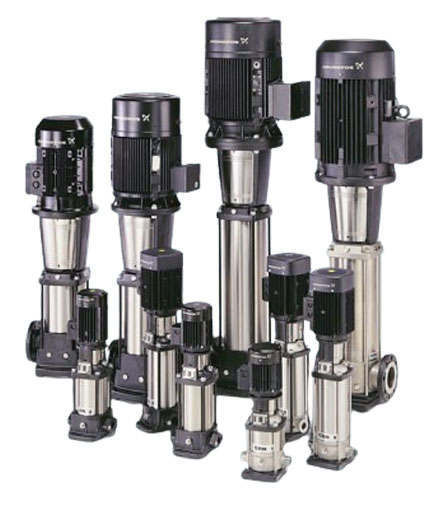
Multistage centrifugal pumps are a core component in industrial water systems, process plants, and high-pressure fluid transfer applications. Among the manufacturers producing this equipment, Grundfos remains one of the most widely specified names in engineering procurement documents. As a Grundfos Multistage Pump Supplier, Evaflux works with engineers, technicians, and procurement teams across multiple regions to source, specify, and deliver this equipment for projects of varying scale. This article outlines the technical characteristics of Grundfos multistage pumps, their operating principles, and the use cases where they are typically deployed.
What Is a Multistage Pump?
A multistage pump uses two or more impellers arranged in series within a single casing. Fluid entering the pump passes through the first impeller, which raises its pressure before discharging it into the eye of the second impeller, and so on through each subsequent stage. Because pressure builds incrementally across stages, multistage pumps can achieve significantly higher discharge heads than single-stage centrifugal pumps of comparable size, without requiring a proportionally larger motor or footprint.
This design principle is what makes Grundfos multistage ranges — including the CR, CRN, MTR, and CRE series — suitable for applications where high head and stable flow are required simultaneously, such as boiler feed, reverse osmosis pre-treatment, and multi-story water distribution.
Technical Specifications
Grundfos multistage pumps are manufactured to defined hydraulic and mechanical tolerances, which allow them to be specified against known performance curves rather than estimated output. Typical specification parameters include:
- Flow rate range: Approximately 1 to 180 m³/h, depending on series and impeller configuration.
- Head range: Up to 300+ meters in high-stage configurations such as CR and CRN vertical multistage pumps.
- Materials of construction: Stainless steel (AISI 304 or AISI 316) wetted parts are standard across most series, offering resistance to corrosion in water, mildly aggressive chemicals, and food-grade fluids.
- Motor options: IE3 and IE5 efficiency-rated motors, with power ratings from fractional horsepower up to several hundred kilowatts in larger CR configurations.
- Connection types: Flanged or threaded connections depending on pump size, compliant with ISO and ANSI standards where required.
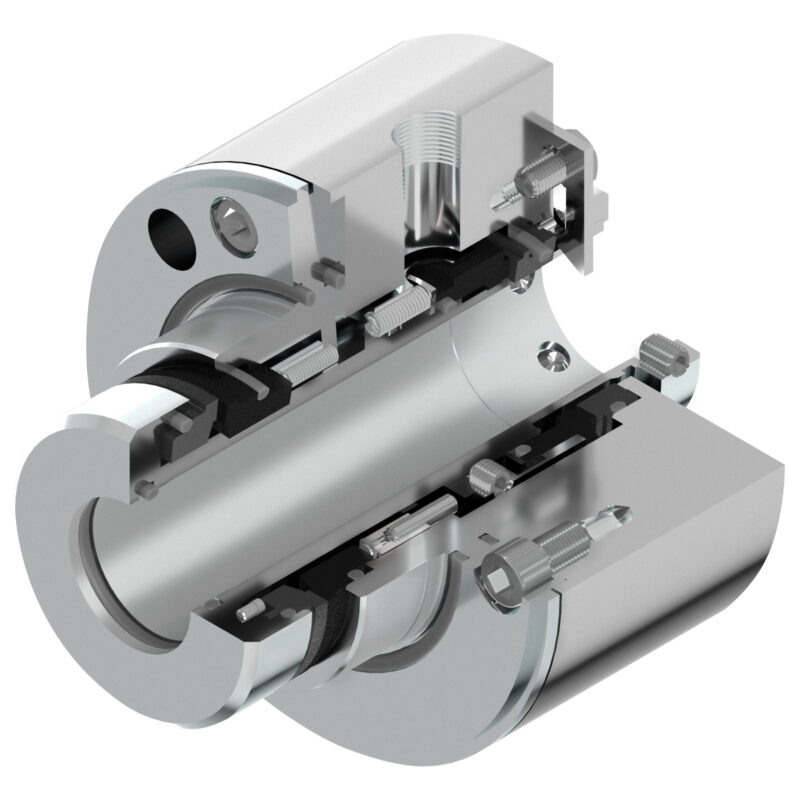
- Seal configuration: Mechanical shaft seals as standard, with options for cartridge seals in demanding duty cycles.
- Maximum operating temperature: Typically -20°C to +120°C, with variants rated for higher temperatures in process applications.
- Maximum working pressure: Up to 33 bar or higher, depending on stage count and casing rating.
These figures vary by exact model and configuration, and Evaflux, in its role as a Grundfos Multistage Pump Supplier, provides documentation and curve data for each unit at the point of quotation so buyers can confirm suitability against their system requirements before purchase.
Reliability and Precision in Operation
Multistage pumps are frequently installed in systems where downtime carries a direct operational or financial cost — municipal water supply, HVAC pressure boosting, and industrial process feed among them. Reliability in this context is a function of both mechanical design and manufacturing consistency.
Grundfos units are built with hydraulically balanced impeller assemblies, which reduce axial thrust load on bearings and shaft seals. This balancing reduces wear over the pump’s operating life and contributes to more predictable maintenance intervals. Precision-machined impellers and diffusers are manufactured to consistent tolerances across production batches, which supports repeatable performance when pumps are replaced or run in parallel within multi-pump skid systems.
For applications requiring variable flow control, several models integrate with electronically controlled motors (E-series), enabling speed adjustment in response to system demand. This reduces unnecessary energy consumption during periods of lower demand and can extend component life by limiting operation at the extremes of the performance curve.
Typical Use Cases
Grundfos multistage pumps are specified across a broad range of industrial and municipal sectors, including:
- Water supply and pressure boosting: Delivering consistent pressure in mid- and high-rise buildings, campuses, and municipal distribution networks.
- Reverse osmosis and desalination: Providing high-pressure feed to membrane systems in water treatment plants.
- Irrigation: Supplying pressurized water for agricultural systems, particularly where source elevation is limited.
- Boiler feed applications: Delivering feedwater against high system back-pressure in steam-generating plants.
- Industrial process water: Circulating and transferring water and compatible fluids in manufacturing environments.
- Fire protection systems: Certain models are used in pressure-boosting roles within fire suppression networks, subject to local code compliance.
Each of these applications places different demands on flow stability, pressure consistency, and material compatibility, which is why matching the correct series and configuration to the intended duty is a key part of the specification process.
Worldwide Applicability
Grundfos multistage pumps are used across a wide range of climates, water qualities, and regulatory environments, from municipal utilities in Northern Europe to industrial facilities in the Middle East, Southeast Asia, and the Americas. Evaflux operates as a GrundfosMultistageserving procurement teams across these regions, supporting projects that require documentation aligned with local and international standards, including ISO, CE, and ANSI compliance where applicable.
Because multistage pump specifications are typically drawn from standardized performance curves, engineers working on projects in different countries can reference the same technical data regardless of project location. This consistency is a practical advantage for multinational firms managing procurement across several sites, and it is a core reason buyers continue to search for a reliable, established supplier capable of supporting cross-border delivery, technical documentation, and after-sales parts availability.
Selecting the Right Configuration
Choosing an appropriate multistage pump involves reviewing several variables together rather than in isolation: required flow rate, total dynamic head, fluid temperature, chemical compatibility of wetted materials, available electrical supply, and installation orientation (horizontal or vertical). Procurement teams working with a Grundfos Multistage Pump Supplier typically request performance curve data, material certificates, and dimensional drawings before finalizing a purchase order, particularly for projects subject to engineering sign-off or regulatory inspection.
Evaflux supports this process by providing technical datasheets, cross-reference support for replacement units, and guidance on selecting between standard and electronically controlled models based on the buyer’s operating profile.
Frequently Asked Questions
What distinguishes a multistage pump from a single-stage pump?
A multistage pump uses multiple impellers in series to build pressure incrementally, allowing it to achieve higher heads than a single-stage pump of similar size and motor rating.
Which materials are used in Grundfos multistage pump construction?
Wetted components are commonly manufactured from AISI 304 or AISI 316 stainless steel, chosen for corrosion resistance in water and compatible process fluids.
Can Grundfos multistage pumps be used in high-pressure boiler feed applications?
Yes. Certain CR and CRN series models are rated for high back-pressure conditions and are commonly specified for boiler feed and similar process applications.
Do these pumps support variable speed operation?
Select models are available with integrated electronically controlled motors, allowing speed adjustment based on real-time system demand.
How does Evaflux support international procurement for these pumps?
As a Grundfos multistage pump supplier operating across multiple regions, Evaflux provides technical documentation, curve data, and logistics support to align with local project and compliance requirements.
What maintenance considerations apply to multistage pumps?
Routine maintenance typically includes seal inspection, bearing checks, and monitoring for changes in vibration or flow performance, with intervals depending on duty cycle and fluid characteristics.