
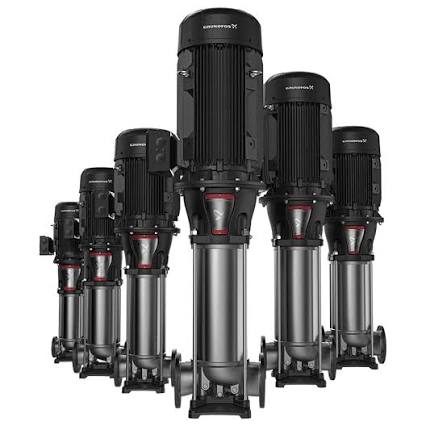
Vertical multistage centrifugal pumps are the backbone of countless industrial, commercial, and municipal water systems, and among these, the Grundfos CR series stands as one of the most widely specified platforms in the world. For engineers, technicians, and procurement teams keeping these systems running, sourcing reliable Grundfos CR Pump Parts is a recurring, often time-critical requirement. This guide provides a factual, technical overview of the CR pump platform and what buyers should know when specifying or replacing parts, wherever their facility is located.
What Is the Grundfos CR Pump Series?
The Grundfos CR range is a family of vertical, in-line, multistage centrifugal pumps designed to transfer clean, non-aggressive, and, depending on material selection, mildly aggressive liquids. The “CR” designation refers to the standard stainless-steel construction line, while related variants such as CRI (composite/stainless hydraulics) and CRN (fully stainless steel, including the housing) extend the platform to more demanding applications. The pumps share a common architectural principle: a stack of hydraulic chambers, each containing an impeller and diffuser, arranged in series along a single shaft. Because the liquid passes through multiple stages, the pump achieves high discharge heads even at moderate flow rates, making it suitable for pressure boosting, process transfer, and circulation duties alike.
Sourcing genuine Grundfos CR Pump Parts ensures that this staged hydraulic design continues to perform as engineered, since even small deviations in chamber geometry or impeller balance can affect efficiency and vibration levels across the entire stack.
Technical Specifications and Design Overview
Understanding the CR platform’s specifications helps buyers correctly identify the parts they need:
- Pump type: Non-self-priming, vertical, in-line, multistage centrifugal pump.
- Construction: <cite index=”6-1″>The base has suction and discharge ports on the same level (in-line), and the motor stool houses the pump-motor coupling</cite>, with the chamber stack and outer sleeve secured between the pump head and base using staybolts.
- Materials: Standard wetted components are typically AISI 304 stainless steel, with AISI 316 stainless steel, titanium, and cast-iron/stainless combinations available for corrosive or high-purity applications.
- Liquid temperature range: <cite index=”6-1″>From –20°C to +120°C, and in certain shaft seal configurations from –30°C to +150°C</cite>, depending on the seal type fitted.
- Maximum operating pressure: Up to 25 bar for standard CR pumps, with higher-pressure variants available for specialized duty.
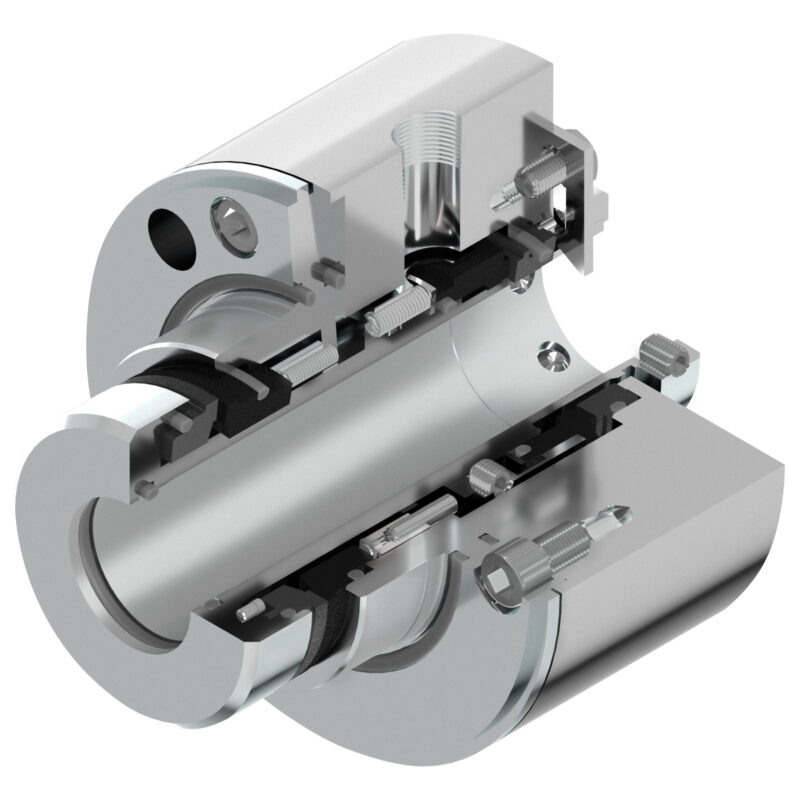
- Shaft seal type: <cite index=”6-1″>A maintenance-free mechanical shaft seal of the cartridge type, dimensioned to DIN 24960</cite>, allowing straightforward replacement without disturbing the motor coupling.
- Flow range: From fractional litres per minute in the smallest CR 1s models up to several hundred litres per minute in larger CR 45 and above frames.
- Connections: Oval-flange, NPT, ANSI, or DIN counter-flange connections, ordered separately from the base pump in many configurations.
Because the platform spans such a wide range of frame sizes, from CR 1s through CR 90 and beyond, replacement components must be matched precisely to the pump’s model code, stage count, and material variant to guarantee correct fit and hydraulic performance.
Core Components and Common Replacement Parts
A typical CR pump breaks down into several serviceable assemblies:
- Chamber stack and impellers – House the individual hydraulic stages; each chamber contains a diffuser and impeller machined to tight clearances. Wear here, often from abrasive particles or cavitation, is a leading cause of reduced pump head and efficiency.
- Shaft and coupling – Connects the impeller stack to the motor. Manufactured to strict tolerances, since even minor runout can introduce vibration and premature seal wear.
- Mechanical shaft seal – A cartridge-type wear component and the most frequently replaced item on the pump; correct selection depends on the pumped liquid, temperature, and pressure.
- Base and pump head – Structural components housing the suction and discharge ports and anchoring the staybolts that hold the chamber stack under compression.
- O-rings and gaskets – Elastomer seals (EPDM, FKM, and others) that must be compatible with the pumped liquid.
- Motor and motor stool – Often supplied as part of a complete unit but can be sourced separately for rebuilds or motor upgrades.
Reliability and Precision Engineering
The CR platform’s reputation for reliability stems from its modular, staged hydraulic design combined with tight manufacturing tolerances. Because each stage performs a portion of the total head generation, the pump can be engineered to a precise duty point by adjusting the number of chambers rather than redesigning the hydraulic profile from scratch. This modularity also extends to serviceability: individual chambers, impellers, and seals can generally be replaced without a complete pump replacement, provided genuine Grundfos CR Pump Parts are used to preserve the original hydraulic balance.
Precision matters most at the impeller-diffuser interface, where clearances are held tight to minimize internal recirculation losses. Non-matched or generic components at this interface can measurably reduce efficiency and increase the risk of vibration-induced bearing or seal failure, so technicians rebuilding a CR pump should match the original stage count, material grade, and hydraulic code stamped on the nameplate.
Typical Use Cases
The CR series is deployed across a broad spectrum of applications worldwide, including:
- Water supply and pressure boosting in residential, commercial, and high-rise buildings
- Boiler feed and condensate systems in heating and steam plants
- Industrial process transfer, including washing systems, cooling circuits, and manufacturing liquid transfer
- Water treatment and reverse osmosis pressurization, particularly with CRN variants for corrosive media
- District energy and HVAC circulation systems requiring consistent head and flow
- Irrigation and agricultural water distribution, where multistage designs handle variable elevation changes
Because these applications exist in virtually every climate and infrastructure context, from municipal utilities in temperate regions to industrial plants in arid or tropical zones, the demand for dependable replacement components is consistent across markets rather than confined to any single geography.
Global Availability and Sourcing Considerations
For procurement managers, sourcing continuity is a key consideration. CR pumps are installed across manufacturing plants, utilities, and commercial buildings on nearly every continent, and unplanned downtime during a parts search can be costly. Buyers should confirm the following before ordering:
- Exact pump model code and stage count, found on the nameplate.
- Material variant (standard stainless, 316L, titanium, or cast-iron combination), as parts are not always interchangeable.
- Shaft seal type, since multiple seal codes exist for different liquid and temperature combinations.
- Regional voltage and frequency standards for motor components, as 50 Hz and 60 Hz configurations differ.
- Certification requirements, such as ATEX, WRAS, or NSF, depending on the destination country.
A supplier with international shipping capability and a catalog organized by pump model, rather than generic part descriptions, reduces the risk of ordering an incompatible component, particularly for facilities operating multiple CR pump generations.
Maintenance Best Practices
Routine inspection extends the service life of any CR installation:
- Monitor for unusual vibration or noise, which often signals early bearing or seal wear.
- Check discharge pressure against the original pump curve to detect chamber or impeller wear.
- Replace mechanical shaft seals proactively during scheduled maintenance rather than waiting for visible leakage.
- Verify alignment after any motor or coupling replacement.
- Keep a record of the pump’s original nameplate data to streamline future ordering.
Frequently Asked Questions
What components are covered under this category?
It covers all serviceable components of the CR platform, including impellers, chamber stacks, shafts, couplings, mechanical shaft seals, O-rings, bases, pump heads, and motor stools.
Are CR and CRN parts interchangeable?
Generally, no. CR pumps use a composite or 304 stainless base, while CRN pumps are fully stainless steel throughout. Hydraulic components may share dimensions, but material grades differ, so parts should match the specific series.
How do I identify the correct part for my pump?
The pump nameplate lists the model code, stage count, and material variant. This information should be provided when requesting a quote to ensure hydraulic and material compatibility.
What is the typical liquid temperature range for CR pumps?
Depending on the shaft seal fitted, CR pumps typically operate between –20°C and +120°C, with certain high-temperature seal configurations extending this range further.
Can parts be sourced for older pump generations?
In many cases, yes. Suppliers with broad inventory coverage can often source parts for both current and legacy CR pump models, though lead times may vary for discontinued configurations.
Is the mechanical shaft seal a routine maintenance item?
Yes. It is a wear component and is commonly replaced during scheduled maintenance to prevent unplanned downtime from leakage.
Conclusion
The Grundfos CR series remains one of the most extensively used vertical multistage pump platforms across industrial, commercial, and municipal applications worldwide. Its modular, staged design supports precise hydraulic customization, while its documented reliability under continuous duty makes it a preferred choice for engineers and facility managers alike. For procurement teams keeping these systems operational, having access to a reliable, well-documented source of Grundfos CR Pump Parts is essential to minimizing downtime and preserving the pump’s original performance, regardless of the region or application in which it is installed.