
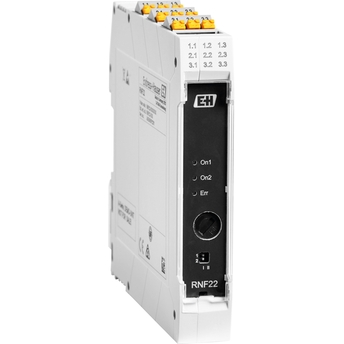
Industrial process plants around the world depend on pressure instrumentation that performs consistently under demanding conditions. The Endress Hauser Cerabar PMP71 is a digital pressure transmitter built for exactly this purpose — accurate, reliable measurement of gauge and absolute pressure in liquids, gases, and vapors, across industries ranging from oil and gas to chemical processing, power generation, and water treatment. This article provides a factual, technical overview of the device to help engineers, technicians, and procurement teams evaluate it for their applications.
What Is the Cerabar PMP71?
The Cerabar PMP71 is a metallic-diaphragm pressure transmitter engineered for process pressure, level, volume, and mass measurement in liquids and gases. Unlike ceramic-cell transmitters designed for lower-pressure or hygienic duty, the PMP71 uses a metal sensor, which makes it suitable for high-pressure environments and processes where a ceramic membrane would not be appropriate. Available in a two-chamber aluminum or 316L stainless steel housing, the transmitter is designed to withstand harsh plant environments while remaining serviceable in the field. This construction is a core reason the Endress Hauser Cerabar PMP71 is specified so widely across heavy industrial sectors.
Technical Specifications
Below is a summary of the key specifications engineers should review when selecting the device for a project:
| Parameter | Specification |
| Measuring principle | Absolute and gauge pressure, metallic diaphragm |
| Measuring range | Approximately -1/0 bar up to 700 bar (-15/0 psi to 10,500 psi), depending on sensor variant |
| Process temperature | -40°C to +125°C (-40°F to +257°F); up to +400°C (+752°F) with a diaphragm seal |
| Accuracy | Standard performance up to 0.05% of span; higher-precision variants available up to 0.025% |
| Housing material | Aluminum or 316L stainless steel, two-chamber design |
| Process connections | Threaded and flanged connections |
| Output/communication | 4–20 mA with HART, PROFIBUS PA, or FOUNDATION Fieldbus |
| Safety rating | Designed to IEC 61508, suitable for SIL2/SIL3 safety instrumented systems |
| Certification | ATEX, IECEx, CSA, NEPSI, INMETRO, and other regional explosion-protection approvals; marine and NSF drinking-water approvals available |
| Wetted materials | 316L, Alloy C, Tantalum, Monel, PTFE, or gold-plated options depending on configuration |
These specifications illustrate why this transmitter is positioned as a high-pressure, high-integrity instrument rather than a general-purpose sensor. The wide range of wetted-material options and process connections also allows the device to be configured for corrosive, abrasive, or high-purity media.
Reliability and Precision
Reliability in pressure measurement is not only about the sensor’s raw accuracy — it is about how consistently that accuracy is maintained over years of operation in the field. The transmitter is described by the manufacturer as overload-resistant and function-monitored, meaning the electronics continuously check the health of the sensor and signal path rather than relying solely on periodic manual verification. This self-monitoring capability reduces the risk of undetected drift or failure in critical loops.
Newer variants of the platform incorporate Heartbeat Technology, which allows plant personnel to verify device health while the process continues running, without interrupting production for a manual proof test. This is particularly valuable in safety-instrumented systems where periodic proof testing is a compliance requirement, since it can shorten testing time and reduce the need to take the loop out of service.
The modular design — separating sensor, display, and electronics — is another contributor to long-term reliability. If one module needs replacement, technicians can typically swap that component rather than replacing the entire transmitter, which reduces both maintenance cost and plant downtime. Combined with a HistoROM data management module that retains configuration and diagnostic history, the instrument is built to simplify commissioning, troubleshooting, and eventual recalibration or replacement.
Typical Use Cases
Given its pressure range and construction, the transmitter is deployed across a broad set of industrial applications, including:
- Oil and gas production and refining, where high static pressures and demanding safety requirements are common
- Chemical and petrochemical processing, particularly where corrosive or abrasive media require alternative wetted materials
- Power generation, including boiler and steam system pressure monitoring
- Water and wastewater treatment, for level and pressure monitoring in tanks and pipelines
- Custody transfer applications, supported by MID-certified variants suitable for fiscal measurement
- Level, volume, and mass measurement in closed or pressurized vessels, using hydrostatic pressure as an indirect measurement method
Because it supports HART, PROFIBUS PA, and FOUNDATION Fieldbus communication, the transmitter can be integrated into most existing distributed control systems (DCS) or SCADA architectures without requiring a change in plant communication standards.
Worldwide Applicability
Process industries operate under different regional codes, hazardous-area classifications, and certification regimes, and instrumentation must be able to meet all of them without redesign. The Endress Hauser Cerabar PMP71 is certified for hazardous-area use under ATEX (Europe), IECEx (international), CSA (North America), NEPSI (China), and INMETRO (Brazil), among other regional schemes, along with marine and drinking-water approvals for specialized sectors. This breadth of certification is what allows the same instrument platform to be specified consistently on projects spanning multiple countries and regulatory jurisdictions, from a refinery in the Middle East to a chemical plant in Europe or a water treatment facility in Latin America.
For procurement teams sourcing instrumentation for multinational projects, this global certification coverage simplifies vendor qualification and reduces the risk of needing region-specific substitutes. It also means that spare parts, calibration services, and technical documentation for this transmitter are generally available through a well-established international support network, which matters for plants that need to minimize instrumentation downtime regardless of location.
Why Specify the Cerabar PMP71 Through Evaflux
For engineering and procurement teams sourcing pressure instrumentation, working with a supplier that understands both the technical specification and the certification requirements of a given project is important. Evaflux supports sourcing of this instrument with attention to the correct sensor range, wetted materials, communication protocol, and hazardous-area certification for the intended application and region, helping buyers avoid mismatched configurations that can delay commissioning.
Frequently Asked Questions
What is the maximum pressure range of the Cerabar PMP71?
Depending on the sensor variant selected, the measuring range extends up to approximately 700 bar (10,500 psi), making it suitable for high-pressure process applications.
What is the accuracy of the Cerabar PMP71?
Standard accuracy is up to 0.05% of span, with higher-precision variants available up to 0.025%, depending on the configuration ordered.
Is the Cerabar PMP71 suitable for use in safety instrumented systems?
Yes. The transmitter is designed according to IEC 61508 and is suitable for SIL2 and SIL3 safety systems, with instrument-guided proof testing supported on newer variants.
What communication protocols does the Cerabar PMP71 support?
It supports 4–20 mA with HART, PROFIBUS PA, and FOUNDATION Fieldbus, allowing integration with most standard DCS and SCADA platforms.
What materials are available for the wetted parts?
Depending on the process media, wetted-part options include 316L stainless steel, Alloy C, Tantalum, Monel, PTFE, and gold-plated variants.
Is the Cerabar PMP71 certified for use in different countries?
Yes. It carries multiple regional hazardous-area and safety certifications, including ATEX, IECEx, CSA, and NEPSI, supporting deployment across multiple regulatory jurisdictions worldwide.
What is the difference between the Cerabar PMP71 and the Cerabar PMC71?
The PMP71 uses a metallic diaphragm sensor suited to high-pressure applications up to 700 bar, while the PMC71 uses a ceramic sensor better suited to lower-pressure and hygienic applications up to around 40 bar.
For a full configuration matching your process conditions, procurement teams and engineers evaluating the Endress Hauser Cerabar PMP71 are encouraged to consult detailed datasheets or contact a qualified instrumentation supplier before finalizing an order.