
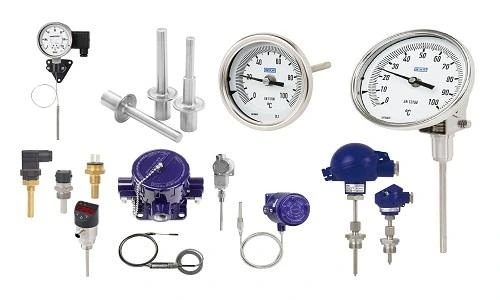
Accurate measurement is the backbone of every process industry, from oil and gas refineries to pharmaceutical manufacturing lines. WIKA Industrial Instrumentation provides engineers, technicians, and procurement teams with a dependable range of pressure, temperature, level, and force measurement devices designed to perform consistently across demanding industrial environments. This overview outlines the technical characteristics, reliability standards, and application scope of these instruments, offering a factual reference for buyers evaluating measurement solutions for plants and facilities worldwide.
What Is This Product Range?
WIKA is a long-established manufacturer of measurement instruments used across process industries, energy production, chemical processing, and manufacturing. Its product range covers pressure gauges, pressure transmitters, temperature sensors, thermowells, level switches, differential pressure instruments, and calibration equipment. Each product line is engineered to meet recognized international standards, including ISO 9001 for quality management and ATEX/IECEx certifications for hazardous-area applications, making these instruments suitable for regulated industrial settings across multiple regions.
The instrumentation is built for integration into existing process control systems, with output signals compatible with common industrial protocols such as 4–20 mA, HART, Profibus PA, and Foundation Fieldbus. This compatibility allows facilities to incorporate the devices into both legacy systems and modern digital process control architectures without extensive redesign.
Technical Specifications
Specifications vary by product family, but the following ranges are representative of typical offerings within the catalog:
- Pressure Measurement Range: From vacuum conditions up to 15,000 bar, depending on the transmitter or gauge series selected.
- Accuracy Class: Standard accuracy of 0.5% of span, with precision models achieving 0.1% or better for calibration and reference applications.
- Temperature Range: Process temperature measurement typically spans -200°C to +1,600°C, depending on sensor type (RTD, thermocouple, or resistance-based).
- Process Connections: Threaded, flanged, and sanitary tri-clamp connections to match varied piping and vessel configurations.
- Housing Materials: Stainless steel (316L), and other corrosion-resistant alloys for aggressive media compatibility.
- Ingress Protection: IP65 to IP68 ratings, suitable for outdoor installations, washdown areas, and submerged applications.
- Output Signals: Analog 4–20 mA, digital HART, and fieldbus protocols for seamless SCADA and DCS integration.
- Certifications: ATEX, IECEx, SIL (Safety Integrity Level) ratings for use in explosive or safety-critical environments.
These specifications reflect the range of options available; specific models should be selected based on the process media, environmental conditions, and regulatory requirements of the installation site.
Reliability and Precision Engineering
Reliability in industrial measurement depends on consistent performance under fluctuating pressure, temperature, and vibration conditions. These devices are manufactured using robust construction methods, including welded diaphragm seals, shock-resistant housings, and temperature-compensated sensor elements, to minimize measurement drift over extended operating periods.
Precision is achieved through factory calibration procedures traceable to national and international measurement standards. Many instruments undergo multi-point calibration before dispatch, and calibration certificates are available for facilities that require documented traceability for quality audits or regulatory compliance. This level of documentation is particularly relevant for industries such as pharmaceuticals, food and beverage processing, and oil and gas, where measurement accuracy directly affects product quality and safety outcomes.
Long-term reliability is further supported by design features such as overpressure protection, liquid-filled gauges for vibration damping, and materials selected for resistance to corrosion and chemical attack. These design choices reduce maintenance frequency and extend service intervals, which contributes to lower total cost of ownership for facilities operating continuous processes.
Typical Use Cases
WIKA Industrial Instrumentation is applied across a broad range of industrial sectors, including:
- Oil and Gas: Pressure and temperature monitoring in upstream extraction, midstream pipelines, and downstream refining operations, including hazardous-area installations requiring ATEX or IECEx-rated devices.
- Chemical and Petrochemical Processing: Corrosion-resistant instrumentation for handling aggressive media, acids, and solvents within reactors, storage tanks, and piping systems.
- Power Generation: Temperature and pressure monitoring in boilers, turbines, and steam systems, where accuracy and durability under high thermal loads are essential.
- Food and Beverage Manufacturing: Sanitary-grade instruments with tri-clamp connections for hygienic processing lines, meeting food safety compliance requirements.
- Pharmaceutical Production: Calibrated instruments supporting Good Manufacturing Practice (GMP) environments, where traceable accuracy is a regulatory requirement.
- Water and Wastewater Treatment: Level and pressure instrumentation for monitoring treatment stages, pumping stations, and distribution networks.
- General Manufacturing: Process monitoring across compressed air systems, hydraulic equipment, and machine tooling applications.
Each of these sectors requires instrumentation capable of operating reliably under sector-specific conditions, and the breadth of the product range allows procurement teams to source appropriate devices for varied operational requirements from a single manufacturer.
Worldwide Applicability and Relevance
Industrial facilities operate under differing regional standards, climates, and regulatory frameworks, and measurement instrumentation must be adaptable to these variations. WIKA Industrial Instrumentation is manufactured to meet multiple international certification schemes, including European (ATEX, PED), North American (UL, CSA), and international (IECEx) standards, allowing the same product families to be specified for projects located in different regions without requiring separate product lines.
This global consistency is particularly relevant for multinational engineering, procurement, and construction (EPC) firms and industrial buyers sourcing instrumentation for facilities across multiple countries. Standardizing on a single, internationally recognized instrumentation range simplifies technical documentation, spare-parts inventory management, and technician training, since the same specifications, calibration procedures, and mounting configurations apply regardless of installation location.
Availability through distribution partners such as Evaflux further supports this global reach, giving procurement managers access to documented technical data, certification records, and product specifications needed to evaluate instrumentation for projects in any region, whether for a single facility or a multi-site industrial rollout.
Selecting the Right Instrument
When specifying instrumentation, engineers and procurement managers should consider several factors:
- Process Media Compatibility: Confirm that wetted materials resist corrosion or chemical attack from the specific process fluid.
- Pressure and Temperature Range: Select a device rated appropriately above expected operating conditions, with margin for transient spikes.
- Certification Requirements: Verify that hazardous-area or safety-integrity certifications match the installation’s regulatory classification.
- Output and Communication Protocol: Ensure compatibility with existing control system architecture (analog, HART, or fieldbus).
- Environmental Conditions: Match ingress protection ratings to installation exposure, including outdoor, washdown, or submerged conditions.
Careful specification at this stage reduces the likelihood of instrument failure, measurement error, or costly retrofitting after installation.
Frequently Asked Questions
What industries commonly use WIKA industrial instrumentation?
These instruments are used across oil and gas, chemical processing, power generation, food and beverage, pharmaceuticals, water treatment, and general manufacturing sectors.
What accuracy levels are available?
Standard devices typically offer 0.5% of span accuracy, while precision-grade models can achieve 0.1% accuracy or better for calibration-critical applications.
Are these instruments suitable for hazardous areas?
Many models carry ATEX and IECEx certifications, making them suitable for explosive atmosphere classifications when the correct certified variant is selected.
What output signals do the instruments support?
Common outputs include 4–20 mA analog, HART digital communication, and fieldbus protocols such as Profibus PA and Foundation Fieldbus.
Can the same product range be used across different countries?
Yes. The instrumentation is certified to multiple international standards, allowing consistent specification across projects in different regions.
How is calibration traceability handled?
Instruments can be supplied with factory calibration certificates traceable to national and international measurement standards, supporting audit and compliance documentation.
Conclusion
For engineers, technicians, and procurement managers evaluating measurement solutions, WIKA Industrial Instrumentation offers a technically documented, internationally certified product range suited to a wide variety of process conditions. Its combination of precision engineering, verified reliability, and multi-standard certification makes it a practical choice for facilities seeking consistent measurement performance across regional and global operations. Buyers can consult detailed technical datasheets and certification records through Evaflux to confirm the correct instrument selection for their specific application.