
Introduction
Industrial automation depends on accurate, dependable sensing technology, and sourcing from a qualified IFM Sensor Supplier is a critical decision for engineers, technicians, and procurement teams alike. IFM sensors are widely used across manufacturing, process control, and logistics operations due to their consistent performance under demanding conditions. This article provides a factual overview of IFM sensor technology, its technical characteristics, and how Evaflux supports customers globally as a reliable IFMfor a broad range of industrial applications.
What Are IFM Sensors?
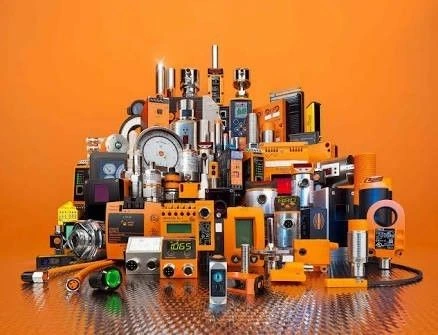
IFM sensors are a family of industrial sensing devices designed to detect physical parameters such as proximity, position, pressure, flow, level, and temperature. They are engineered for integration into automated systems, including PLC-controlled machinery, conveyor systems, hydraulic and pneumatic circuits, and process monitoring equipment. As an established IFM, Evaflux offers access to a full catalog of these devices, supporting both new equipment builds and maintenance replacement needs.
These sensors are typically constructed from robust housing materials such as stainless steel or reinforced polymer, allowing them to withstand exposure to moisture, dust, vibration, and chemical contact in industrial environments. Connectivity options generally include M8, M12, and M18 connector formats, along with IO-Link communication protocols that allow real-time parameter monitoring and diagnostics.
Technical Specifications
IFM sensors are available across several product families, each suited to specific measurement tasks. While specifications vary by model, the following ranges are representative of the category:
- Operating Voltage: 10–30V DC (standard across most inductive, capacitive, and photoelectric models)
- Protection Rating: IP65, IP67, and IP69K, depending on the housing configuration
- Sensing Range: From sub-millimeter detection in inductive sensors to several meters in photoelectric and ultrasonic models
- Output Signal: PNP/NPN switching outputs, analog 4–20mA or 0–10V, and IO-Link digital communication
- Operating Temperature: Typically -25°C to +80°C, with extended-range variants available for high-heat or cold-storage applications
- Response Time: Millisecond-level switching for high-speed detection tasks
- Housing Material: Stainless steel (V2A/V4A), nickel-plated brass, or PBT/PA plastic
These specifications make IFM sensors suitable for both light-duty commercial equipment and heavy-duty industrial machinery, and they form the basis for product selection when working with an IFM Sensor Supplier on a specific application.
Reliability and Precision
Reliability is a defining characteristic of IFM sensor technology. The devices are manufactured with sealed electronics and vibration-resistant components, reducing the likelihood of drift or failure over extended operating cycles. Many models undergo testing for electromagnetic compatibility (EMC) and mechanical shock resistance, which supports stable operation in environments with heavy machinery, welding equipment, or variable frequency drives nearby.
Precision is achieved through consistent repeatability tolerances, often within fractions of a millimeter for position and proximity sensors, and calibrated accuracy for pressure and flow measurement devices. IO-Link enabled models additionally allow for parameter adjustment and diagnostic feedback without physical recalibration, which reduces downtime during maintenance cycles. For procurement teams comparing suppliers, working with a knowledgeable IFMSensorensures that sensor selection matches both the required tolerance levels and the environmental conditions of the installation site.
Typical Use Cases
IFM sensors are deployed across a wide range of industrial sectors, including:
- Automotive Manufacturing: Position detection on assembly lines, robotic end-effector monitoring, and part presence verification
- Food and Beverage Processing: Level and flow monitoring in hygienic environments requiring IP69K-rated housings
- Material Handling and Logistics: Object detection on conveyor systems and automated guided vehicles (AGVs)
- Hydraulics and Pneumatics: Pressure monitoring in fluid power systems for mobile and stationary equipment
- Water and Wastewater Treatment: Flow and level sensing in pump stations and treatment tanks
- Packaging Machinery: High-speed photoelectric detection for product counting and jam detection
Because these use cases span nearly every industrial sector, sourcing decisions often depend on the technical support and inventory depth offered by the supplier, which is a core consideration when evaluating an IFM Sensor for long-term procurement relationships.
Worldwide Applicability
Industrial automation standards are broadly consistent across regions, and IFM sensors are engineered to comply with international certifications, including CE, UL, and CSA, allowing deployment in facilities across Europe, North America, Asia-Pacific, and other regions. Voltage compatibility (10–30V DC) and standardized connector formats (M8/M12) further support cross-border equipment integration without significant redesign.
For multinational manufacturers and OEMs, working with a global IFM Sensor simplifies procurement logistics by consolidating sourcing across multiple facility locations. Evaflux supports this need by maintaining a product catalog structured for international buyers, including documentation and specification sheets suited to regional compliance requirements. This approach reduces sourcing complexity for companies managing production lines in more than one country and supports standardized maintenance practices across distributed facilities.
Selecting the Right Sensor
When evaluating sensor options, procurement managers and engineers typically consider the following factors:
- Application Environment — exposure to moisture, chemicals, temperature extremes, or vibration
- Sensing Technology — inductive, capacitive, photoelectric, ultrasonic, or pressure-based, depending on the target material and distance
- Output Type — discrete switching versus analog or IO-Link communication for integration with existing control systems
- Mechanical Fit — housing size, thread type, and mounting configuration compatible with existing equipment
- Certification Requirements — regional compliance standards relevant to the facility’s location
A qualified supplier can help match these criteria to the correct product family, reducing the risk of premature sensor failure or incompatibility with existing control architecture.
Frequently Asked Questions
What industries commonly use IFM sensors? IFM sensors are used in automotive manufacturing, food and beverage processing, material handling, water treatment, hydraulics, and packaging machinery, among other industrial sectors.
What is the typical protection rating for IFM sensors? Most models are rated IP65, IP67, or IP69K, allowing operation in environments exposed to dust, moisture, or washdown procedures.
Do IFM sensors support IO-Link communication? Yes, many IFM sensor models include IO-Link connectivity, enabling real-time diagnostics, remote parameter configuration, and integration with modern control systems.
Can IFM sensors be used internationally? Yes. IFM sensors generally comply with CE, UL, and CSA certifications, and standardized voltage and connector specifications support deployment across multiple regions.
How do I choose the right IFM sensor for my application? Sensor selection depends on the application environment, required sensing range, output type, mechanical fit, and applicable regional certifications. Consulting technical documentation or a knowledgeable supplier is recommended.
Where can I source IFM sensors for a global operation? Evaflux serves as an IFM Sensor Supplier with a catalog structured to support procurement across multiple regions and facility types.
Conclusion
IFM sensors provide a technically robust, internationally recognized solution for industrial detection and measurement needs. Their range of sensing technologies, durable construction, and compliance with global standards make them suitable for facilities operating across diverse regulatory and environmental conditions. Evaflux, as a dedicated IFM Sensor Supplier, provides access to this product range along with the technical documentation needed to support informed procurement decisions for engineers and buyers worldwide.