
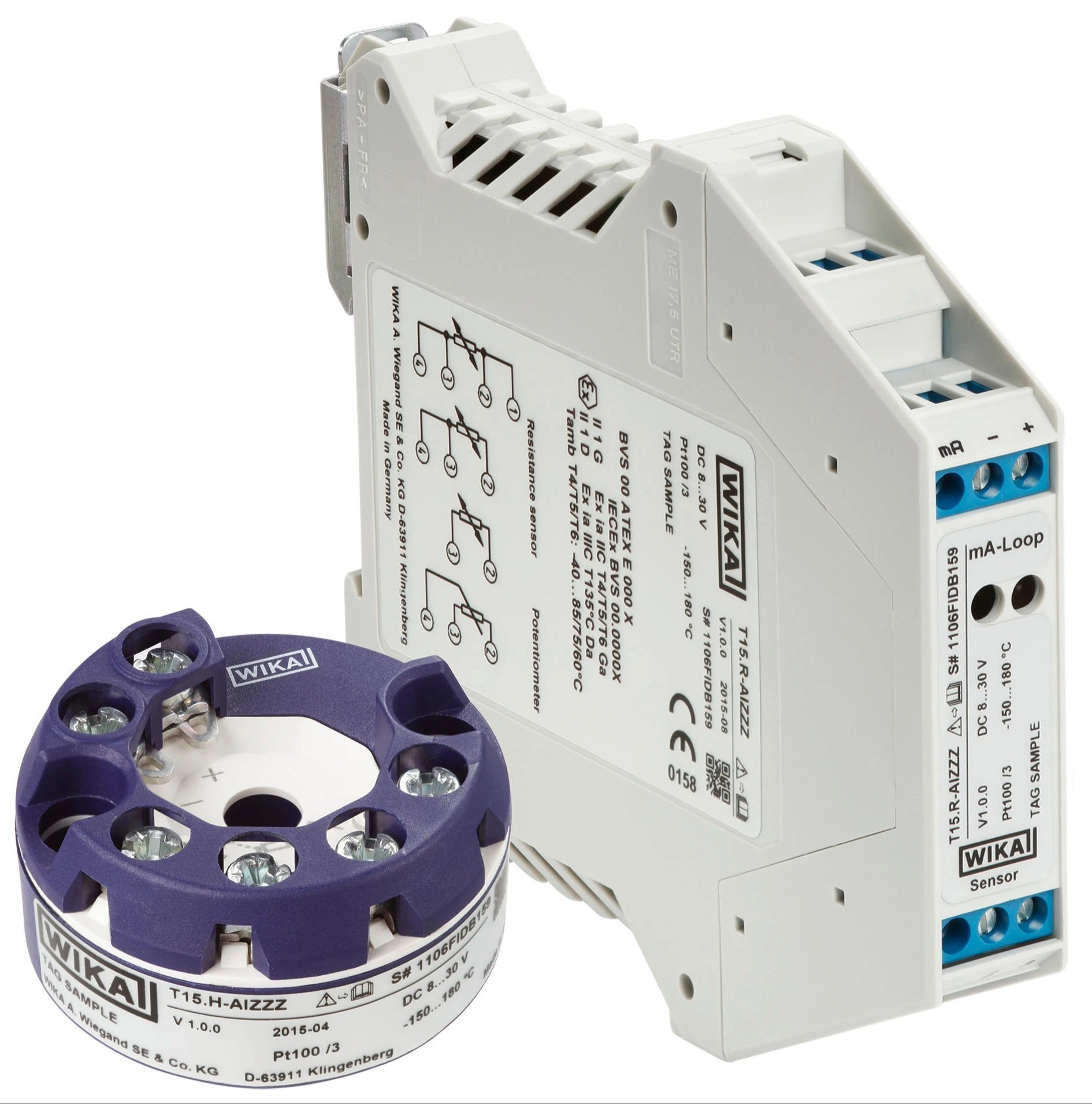
Accurate temperature measurement is a fundamental requirement across process industries, from petrochemical refining to power generation, food processing, and water treatment. Selecting the right instrument — and sourcing it from a reliable partner — directly affects plant safety, product quality, and regulatory compliance. As a WIKA Temperature Gauge Supplier, Evaflux provides engineers, technicians, and procurement teams with access to a full range of dial thermometers engineered for demanding industrial environments, backed by documentation, calibration support, and worldwide logistics.
This guide outlines the technical characteristics of WIKA temperature gauges, their operating principles, typical applications, and the reasons organizations across multiple regions choose Evaflux as their WIKAfor both routine procurement and project-based instrumentation packages.
Understanding WIKA Temperature Gauges
WIKA temperature gauges are mechanical dial thermometers used to monitor process temperature in pipelines, vessels, tanks, and machinery. Unlike electronic sensors that require external power and signal conditioning, these gauges provide a direct, self-contained visual reading, making them a dependable choice where simplicity and durability are priorities.
The measuring system typically consists of a stem, an internal sensing element (bimetal strip, gas-filled capillary, or liquid-filled expansion system), and a Bourdon tube or pointer mechanism housed within a protective case. Depending on the working principle, WIKA gauges are broadly categorized as:
- Bimetal thermometers – Use two metal strips with different thermal expansion coefficients bonded together. Temperature changes cause mechanical deformation that is transmitted through a pointer shaft to the dial.
- Gas-actuated thermometers – The measuring system is filled with an inert gas under pressure, with temperature transmitted through a capillary tube, allowing remote installation between the sensing point and the display.
- Expansion (liquid-filled) thermometers – Rely on the volumetric expansion of a liquid-filled system to indicate temperature, often used where high accuracy over a specific range is required.
Technical Specifications
Because process conditions vary widely, WIKA temperature gauges are available across a broad range of specifications. Working with an established WIKAensures the correct configuration is selected for each application rather than a generic off-the-shelf substitute.
- Measuring range: Approximately -70 °C to +600 °C for standard bimetal models, extending up to -200 °C to +700 °C across the wider WIKA portfolio depending on the working principle.
- Accuracy class: Class 1 or Class 2 in accordance with EN 13190, or 1% of full-scale value per ASME B40.3 for models built to North American standards.
- Dial sizes: Common nominal sizes include 63, 80, 100, and 160 mm (2.5″, 3″, 4″, and 6″).
- Case and stem materials: Stainless steel (304 or 316Ti) construction is standard for corrosion resistance in aggressive process media.
- Stem lengths: Individually configurable, typically from 63 mm up to 1,000 mm, to suit varying insertion depths and thermowell designs.
- Filling options: Silicone oil-filled versions are available for applications with high vibration, which also limits maximum operating temperature to approximately 250 °C.
- Process connections: Threaded, flanged, or plain stem designs, with axial (back-mount), radial (lower-mount), or adjustable configurations.
- Ingress protection: Hermetically sealed cases are available for outdoor and washdown environments.
- Window material: Instrument glass or, for higher-impact resistance, laminated safety glass or acrylic.
Reliability and Precision
Instrument reliability in industrial settings depends on mechanical robustness as much as measurement theory. WIKA gauges are engineered with features that support long-term, low-maintenance operation:
- External reset functionality allows technicians to recalibrate the reference point in the field without dismantling the instrument.
- Anti-parallax (dished) dials improve reading accuracy by minimizing the visual offset between the pointer and scale markings.
- Over-range protection allows the instrument to tolerate short-term temperature excursions beyond the rated scale — typically up to 110% of full-scale value — without permanent damage.
- Thermowell compatibility protects the sensing element from direct process contact, pressure, and flow-induced stress, while allowing gauge removal without process shutdown.
These design features are why procurement managers sourcing from a specialized WIKA Temperature Gauge Supplier can expect consistent performance across large instrument populations, which is particularly important for multi-site operators managing standardized maintenance programs.
Typical Use Cases
WIKA temperature gauges are deployed across a wide range of industrial sectors, including:
- Oil, gas, and petrochemical processing – Monitoring temperature in pipelines, reactors, and storage tanks, often in hazardous or corrosive environments.
- Power generation – Steam and feedwater temperature monitoring in boilers, turbines, and heat exchangers.
- Chemical manufacturing – Process temperature control where media compatibility and accuracy are critical to product quality.
- Water and wastewater treatment – Monitoring temperature in treatment basins, pumping stations, and distribution systems.
- HVAC and refrigeration – Air and refrigerant temperature monitoring using compact, purpose-built models.
- Food and beverage production – Sanitary-grade instruments for pasteurization, storage, and processing lines.
- Laboratory and OEM applications – Compact, economical models for equipment integration and quality testing.
Worldwide Applicability and Relevance
Temperature measurement requirements do not stop at national borders, and neither does the demand for a dependable WIKATemperature. Evaflux supports customers across multiple regions with:
- Standards compatibility – Instruments configured to EN 13190 for European and Middle Eastern markets, and ASME B40.3 for North American operations, ensuring compliance regardless of project location.
- Multi-unit scale options – Dual-scale dials (°C/°F) simplify use for international engineering teams working across different measurement conventions.
- Documentation and traceability – Calibration certificates traceable to recognized national standards bodies, supporting audits and quality management systems (ISO 9001 and industry-specific frameworks).
- Global logistics – Sourcing and shipping support for single-unit laboratory orders as well as large-volume industrial procurement for EPC (engineering, procurement, and construction) projects.
- Technical consultation – Assistance in selecting the correct measuring principle, accuracy class, stem length, and connection type based on process conditions, regardless of the customer’s geographic location.
This combination of standards alignment and logistics capability is why engineering and procurement teams across different continents rely on Evaflux as their WIKAfor both replacement parts and new installation projects.
Selecting the Right Gauge: Key Considerations
When specifying a temperature gauge, procurement and engineering teams should evaluate:
- Process temperature range and expected fluctuations
- Response time requirements (gas-actuated systems typically respond faster than bimetal designs)
- Media compatibility and corrosion resistance requirements for the stem and wetted parts
- Vibration exposure, which may require liquid-filled dampening
- Installation geometry, including insertion length and thermowell requirements
- Applicable regional standard (EN 13190 vs. ASME B40.3)
Working with a knowledgeable WIKATemperaturehelps ensure these variables are matched correctly the first time, reducing the risk of premature instrument failure or inaccurate readings.
Frequently Asked Questions
What is the difference between a bimetal and a gas-actuated temperature gauge? Bimetal gauges use two bonded metal strips that deform mechanically with temperature change, while gas-actuated gauges use a sealed, gas-filled system connected via a capillary. Gas-actuated types generally offer faster response and support remote-mounted displays.
What accuracy class do WIKA temperature gauges typically offer? Most industrial models meet Class 1 or Class 2 accuracy per EN 13190, or 1% of full-scale value per ASME B40.3, depending on the standard applicable to the region and model.
Can these gauges be used in high-vibration environments? Yes. Silicone oil-filled versions are available to dampen pointer oscillation in high-vibration applications, though this typically limits maximum operating temperature to around 250 °C.
Do temperature gauges need to be used with a thermowell? It is recommended for most industrial applications. A thermowell protects the sensing element from direct process pressure and flow while allowing the gauge to be removed or replaced without interrupting the process.
What documentation is available when ordering from Evaflux? Evaflux provides datasheets, calibration certificates traceable to recognized standards, and material certification where required, supporting quality assurance and regulatory documentation needs.
Does Evaflux ship internationally? Yes. As a WIKA Temperature Gauge Supplier serving customers across multiple regions, Evaflux supports both single-unit and bulk industrial orders with international shipping and standards-compliant documentation.
Conclusion
Selecting the correct temperature gauge — and the right supplier — has a direct impact on process safety, measurement accuracy, and maintenance efficiency. With a broad range of bimetal, gas-actuated, and expansion-type instruments built to international standards, Evaflux serves as a dependable WIKA Temperature Gauge Supplier for engineers, technicians, and procurement professionals managing instrumentation needs across industrial sectors worldwide. For technical guidance or a project-specific quotation, contact the Evaflux team directly through evaflux.com.