
Introduction
The Siemens SIMATIC S7-300 is one of the most widely deployed modular programmable logic controller (PLC) platforms in industrial automation history. Since its introduction, it has been installed across manufacturing plants, process industries, water treatment facilities, packaging lines, and building automation systems in virtually every region of the world. Because many of these installations remain in continuous operation decades after commissioning, the availability of genuine and compatible S7-300is a critical factor for maintaining uptime, ensuring process safety, and protecting long-term capital investment. This article provides a factual, technical overview of the S7-300 platform, its components, and the considerations procurement teams and engineers should evaluate when sourcing Siemens S7-300 Spare Parts.
What Is the Siemens S7-300 System?
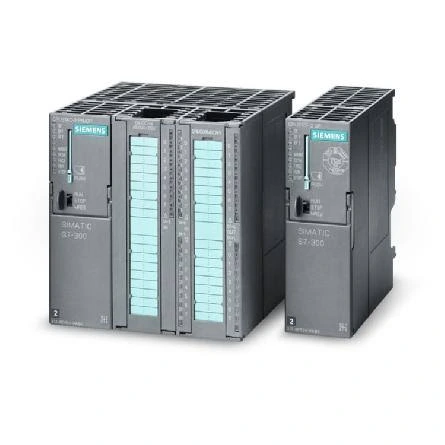
The S7-300 is a modular PLC family built around a rack-based architecture. A typical configuration includes a central processing unit (CPU), a power supply module (PS), signal modules (digital and analog input/output), communication processors (CP), and function modules (FM). This modularity allows engineers to scale a control system to match specific process requirements without redesigning the entire architecture. Because the platform was designed for interchangeability, individual modules can typically be replaced without reprogramming the entire system, provided the replacement part matches the original specification or is a verified compatible equivalent.
Core Components Covered Under Siemens S7-300
When technicians refer to S7-300, they are generally referring to the following component categories:
- CPU Modules – including the 312, 313, 314, 315, 316, 317, and 319 series, which differ in memory capacity, processing speed, and integrated communication interfaces.
- Power Supply Modules (PS 307) – available in multiple current ratings (2A, 5A, 10A) to match load requirements.
- Digital Input/Output Modules (SM 321/322) – handling on/off signal processing for sensors, relays, and actuators.
- Analog Input/Output Modules (SM 331/332/334/335) – used for temperature, pressure, flow, and other continuous process variables.
- Interface Modules (IM 360/361/365) – used to connect expansion racks in multi-rack configurations.
- Communication Processors (CP 340/341/343) – enabling PROFIBUS, Industrial Ethernet, and point-to-point communication.
- Front Connectors and Bus Connectors – required for wiring termination and rack-to-rack signal continuity.
- Memory Cards (MMC) – used for program storage and firmware retention.
Each of these components has a defined mean time between failures (MTBF), but field conditions such as electrical surges, vibration, temperature extremes, and dust ingress can shorten service life, making spare part availability an operational necessity rather than a contingency plan.
Technical Specifications
While specifications vary by exact module and CPU variant, the S7-300 family generally shares the following characteristics:
- Supply Voltage: 24V DC nominal (power modules step down from 120/230V AC where applicable)
- Operating Temperature Range: 0°C to 60°C horizontal mounting; 0°C to 40°C vertical mounting
- Protection Rating: IP20 (requires enclosure for higher ingress protection)
- Bus System: Backplane bus integrated into the module housing, supporting rack expansion via interface modules
- Communication Protocols: MPI, PROFIBUS DP, and Industrial Ethernet (on select CPUs and CPs)
- Programming Software Compatibility: STEP 7 (Classic) and, in migration scenarios, TIA Portal via appropriate conversion
- Digital I/O Density: Typically 8, 16, or 32 channels per module depending on type
- Analog Resolution: Commonly 12-bit to 14-bit depending on module series
- Mounting: DIN rail or profile rail mounting on standard S7-300 racks
These specifications matter directly to procurement decisions: a replacement part must match not only the physical form factor but also the voltage class, channel count, and firmware compatibility of the original installation to avoid configuration conflicts.
Reliability and Precision
Reliability in the S7-300 platform stems from its design heritage as an industrial-grade system rather than a commercial or office-grade electronic product. Modules are built to withstand continuous operation in environments with electrical noise, mechanical vibration, and moderate temperature fluctuation. Analog modules in particular are engineered for signal precision, with calibrated input ranges that minimize drift over time — a factor that is especially important in process industries where small measurement errors can compound into significant quality or safety issues.
For Siemens S7-300 Spare Parts, precision also extends to compatibility tolerances. A replacement module must maintain identical timing behavior on the backplane bus, identical voltage thresholds on digital inputs, and identical analog scaling to prevent discrepancies in control logic execution. This is why sourcing from suppliers who can verify part authenticity, firmware version, and hardware revision is a meaningful part of the procurement process, not merely a formality.
Typical Use Cases
The S7-300 platform and its associated spare parts remain relevant across a broad range of industrial sectors, including:
- Manufacturing and Assembly Lines – controlling conveyor systems, robotic interfaces, and quality inspection stations
- Water and Wastewater Treatment – managing pump stations, filtration cycles, and chemical dosing systems
- Oil, Gas, and Petrochemical Facilities – monitoring process variables in hazardous or classified environments
- Food and Beverage Processing – controlling batching, mixing, and packaging equipment
- Building Automation – integrating HVAC, lighting, and access control subsystems
- Material Handling and Logistics – operating sorting systems, palletizers, and automated storage equipment
Because many of these facilities were commissioned when the S7-300 was Siemens’ primary mid-range PLC offering, replacement parts continue to be requested even as newer platforms such as the S7-1500 have entered the market. Full migration to a newer platform often involves significant reprogramming, revalidation, and downtime costs, which is why many operators choose to extend the operational life of existing S7-300 systems through targeted spare parts replacement.
Worldwide Relevance and Sourcing Considerations
The global installed base of the S7-300 spans North America, Europe, the Middle East, Asia-Pacific, and Latin America, reflecting decades of industrial deployment across multiple continents and regulatory environments. This worldwide distribution means that demand for Siemens S7-300 Spare Parts is not confined to any single region — a facility in Germany, a refinery in the Middle East, and a manufacturing plant in Southeast Asia may all require the same module family to maintain continuous operation.
For procurement managers operating multinational facilities, this creates a practical need for suppliers capable of consistent part verification, cross-border logistics, and documentation that meets varying regional compliance requirements. Evaluating a supplier’s ability to source, test, and ship S7-300 internationally — with attention to lead times, customs documentation, and part traceability — is a key part of maintaining automation continuity across a distributed industrial footprint.
Conclusion
The Siemens S7-300 remains a foundational platform in industrial automation, and its continued operation in facilities around the world depends on reliable access to compatible, verified components. Understanding the technical specifications, module categories, and precision requirements associated with Siemens S7-300 Spare Parts allows engineers and procurement teams to make informed decisions that minimize downtime and preserve system integrity. As global industry continues to rely on this platform well beyond its original service projections, the availability of well-documented, quality-verified spare parts remains a practical necessity for facilities across every region.