
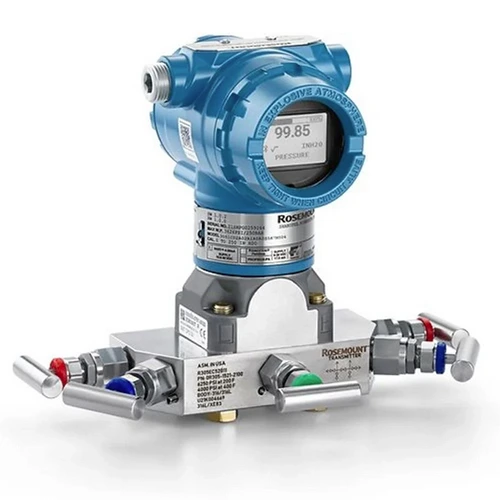
Accurate pressure measurement is a foundational requirement across process industries, from oil and gas facilities to pharmaceutical manufacturing plants. As a dedicated Rosemount Pressure Transmitter Supplier, Evaflux provides instrumentation professionals, procurement teams, and engineering departments with dependable access to a product line recognized for consistent performance in demanding industrial environments. This article outlines the technical characteristics, application scope, and procurement considerations relevant to Rosemount pressure transmitters, with particular attention to their applicability across global markets.
Understanding Rosemount Pressure Transmitters
Rosemount pressure transmitters are field instruments engineered to measure differential, gauge, or absolute pressure and convert that measurement into a standardized electronic signal for use in process control and monitoring systems. These devices form a core part of instrumentation architecture in industries where pressure data directly influences safety, product quality, and operational efficiency.
The transmitters typically operate using capacitance-based or piezoresistive sensing technology, which allows them to detect minute changes in process pressure and translate these into 4-20 mA analog signals or digital outputs compatible with HART, FOUNDATION Fieldbus, or Profibus PA protocols. This flexibility in communication protocols makes the product line adaptable to a wide range of control system architectures already installed in facilities worldwide.
Technical Specifications
When evaluating pressure transmitters for procurement, technical specifications determine suitability for a given application. Rosemount transmitters are generally characterized by the following attributes:
- Measurement Range: Depending on the model, units can measure pressures from a few inches of water column up to several thousand psi, covering both low-pressure and high-pressure process requirements.
- Accuracy: Many models achieve reference accuracy within ±0.04% to ±0.075% of span, which supports tight process control tolerances.
- Output Signal: Standard 4-20 mA with HART protocol is common, with additional options for wireless communication using WirelessHART in installations where cabling is impractical.
- Static Pressure Effects: High-performance models are designed to minimize the effects of static line pressure on measurement accuracy, an important factor in high-pressure differential applications such as flow measurement.
- Temperature Compensation: Digital sensor technology allows for compensation across a broad ambient and process temperature range, typically from -40°C to 85°C for the electronics housing, with process temperature limits varying by diaphragm and fill fluid selection.
- Enclosure Rating: Housings are commonly rated IP66/IP68 and NEMA 4X, supporting outdoor and washdown environments.
- Hazardous Area Certifications: Depending on regional requirements, transmitters are available with ATEX, IECEx, FM, and CSA certifications for use in classified hazardous locations.
- Wetted Materials: Diaphragm and wetted parts are typically available in 316L stainless steel, Hastelloy C, or tantalum for compatibility with corrosive process media.
These specifications allow the product line to serve a broad spectrum of process conditions without requiring custom engineering for most standard applications.
Reliability and Precision in Industrial Settings
Reliability is a primary consideration for any pressure measurement device deployed in continuous process operations, where instrument failure can result in unplanned downtime or safety incidents. Rosemount pressure transmitters are built around sensor designs that have undergone extensive field validation across decades of industrial use, contributing to long mean-time-between-failure (MTBF) statistics reported by end users in refining, chemical processing, and power generation sectors.
Precision is achieved through a combination of sensor stability over time and minimal drift under varying environmental conditions. Long-term stability specifications, often expressed as a percentage of upper range limit over a multi-year period, allow facilities to extend calibration intervals without compromising measurement confidence. This reduces the maintenance burden on instrumentation teams and supports predictive maintenance strategies increasingly adopted in modern plants.
Diagnostic capabilities built into digital transmitters also contribute to reliability. Many models provide self-diagnostic alerts that flag sensor drift, electronics faults, or process abnormalities before they affect control loop performance, allowing maintenance teams to address issues proactively rather than reactively.
Typical Use Cases
Rosemount Pressure Transmitter Supplier under the Rosemount product line are deployed across a range of industrial applications, including:
- Oil and Gas: Wellhead monitoring, pipeline pressure measurement, and custody transfer applications requiring high accuracy and compliance with API standards.
- Chemical and Petrochemical Processing: Reactor pressure monitoring and corrosive fluid measurement using specialized wetted materials.
- Power Generation: Boiler and steam system pressure monitoring, where high-temperature and high-pressure tolerance is required.
- Water and Wastewater Treatment: Level measurement via hydrostatic pressure in tanks and reservoirs.
- Pharmaceutical and Food Processing: Sanitary-rated transmitters for hygienic process environments requiring frequent washdown and cleaning cycles.
- Flow Measurement: Differential pressure transmitters paired with primary flow elements such as orifice plates or venturi tubes for volumetric flow calculation.
Each of these applications places different demands on accuracy, material compatibility, and certification requirements, which is why product selection typically involves matching transmitter specifications to the specific process conditions of the intended installation.
Global Applicability and Sourcing Considerations
Process facilities operate under varying regional standards, environmental conditions, and regulatory frameworks, and pressure instrumentation must be specified accordingly. As a Rosemount Pressure Transmitter Supplier, Evaflux supports procurement teams operating across multiple regions by providing access to transmitter configurations suited to differing certification requirements, including ATEX for European installations, IECEx for international hazardous area compliance, and FM or CSA approvals common in North American facilities.
This global relevance extends to project types as well. Multinational engineering, procurement, and construction (EPC) contractors sourcing instrumentation for cross-border projects benefit from working with a supplier familiar with regional documentation requirements, lead times, and logistics considerations that affect delivery schedules. Facilities in the Middle East, Asia-Pacific, Europe, and the Americas each have distinct environmental and regulatory profiles, and transmitter selection should reflect ambient temperature extremes, humidity levels, and applicable safety codes specific to the installation region.
For procurement managers evaluating suppliers, working with an established supplier also means access to documentation support, including calibration certificates, material test reports, and compliance documentation often required for audit and commissioning purposes on international projects.
Selecting the Right Transmitter
Choosing an appropriate pressure transmitter involves reviewing several factors beyond baseline accuracy figures. Engineers should consider the process media’s corrosivity, the required pressure range with adequate margin above expected maximum operating pressure, ambient installation conditions, and the communication protocol compatible with existing control systems. Additionally, hazardous area classification at the installation site determines which certification variant is required.
Working with a supplier that understands these variables helps reduce the risk of specifying an incompatible or oversized instrument, which can lead to reduced measurement accuracy or unnecessary cost. A knowledgeable supplier can assist in cross-referencing existing installed base instrumentation with current product offerings, particularly useful during plant upgrades or replacement projects where legacy models may have been discontinued.
Conclusion
Rosemount pressure transmitters remain a widely specified instrumentation choice for facilities requiring dependable pressure measurement across diverse process conditions. Their combination of documented accuracy, long-term stability, broad certification availability, and material options makes them applicable to a wide range of industries and geographic regions. Evaflux, as a Rosemount Pressure Transmitter Supplier, provides engineers, technicians, and procurement professionals with access to this product line along with the technical and documentation support needed for successful specification, procurement, and commissioning on projects worldwide.