
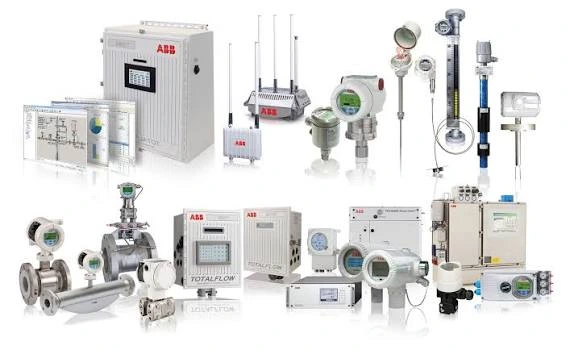
Process industries across the European Union and the wider EEA depend on measurement instrumentation that is accurate, certified, and readily available. Pressure transmitters, temperature sensors, flow meters, and analytical instruments form the backbone of process control in refineries, chemical plants, power stations, water treatment facilities, and manufacturing lines. Among the manufacturers most commonly specified for these applications is ABB, whose Measurement & Analytics portfolio covers nearly every core measurement requirement found in a modern industrial facility. This article provides a technical overview of ABB Instrumentation Europe offerings, their specifications, reliability characteristics, and the regional considerations that matter to engineers and procurement teams sourcing instrumentation for projects on the continent.
Product Overview
ABB’s instrumentation range spans four principal categories: pressure measurement, temperature measurement, flow measurement, and process analytics. Pressure transmitters, such as the 266 and 2600T series, are used for gauge, absolute, and differential pressure applications, with output signals typically available as 4–20 mA with HART communication, Foundation Fieldbus, or Profibus PA. Temperature transmitters and RTD/thermocouple assemblies from the TSP and SensyTemp families are designed for head-mounted or rail-mounted installation, supporting both single and dual sensor configurations for redundancy. Flow instrumentation includes electromagnetic flowmeters (ProcessMaster, WaterMaster), Coriolis meters (CoriolisMaster), and vortex meters, each suited to different fluid types and process conditions. Analytical instruments, including continuous emissions monitoring systems (CEMS) and gas analyzers, support regulatory compliance reporting in industries subject to environmental monitoring obligations.
For buyers and specifiers working with this instrumentation range, it is important to note that many of these devices are also supplied as genuine, factory-original spare and replacement parts through established distributors, which can shorten lead times for maintenance, retrofit, and shutdown projects compared with ordering directly through long manufacturer supply chains.
Technical Specifications
Specifications vary by product family, but several parameters are consistent points of comparison across the range:
- Accuracy: Pressure transmitters commonly achieve reference accuracy between 0.065% and 0.1% of calibrated span, with premium models reaching tighter tolerances for custody transfer or fiscal metering applications.
- Process connections: Standard threaded, flanged, and sanitary tri-clamp connections are available depending on the model and target industry (e.g., hygienic connections for food and pharmaceutical use).
- Signal output: 4–20 mA analog with HART protocol is the most widely deployed output, with digital fieldbus options (Foundation Fieldbus, Profibus PA, Modbus) available for integrated DCS/PLC architectures.
- Ambient operating range: Typical ambient temperature ratings span from −40°C to +85°C, with process temperature limits depending on diaphragm material and seal type.
- Ingress protection: Housings are generally rated IP66/IP67 or NEMA 4X, suitable for outdoor and washdown environments.
- Hazardous area certification: ATEX and IECEx certified variants are available for Zone 0, 1, and 2 installations, which is a standard requirement across European oil & gas, chemical, and pharmaceutical sites.
- Functional safety: Select transmitter models carry SIL 2 or SIL 3 certification under IEC 61508 for use in safety instrumented systems (SIS).
Because European projects frequently require documentation packages — calibration certificates, material certificates, and declarations of conformity — buyers should confirm that any supplied unit, whether new or a certified spare part, includes the appropriate paperwork for CE marking and, where relevant, the Pressure Equipment Directive (PED) or Measuring Instruments Directive (MID).
Reliability and Precision
Reliability in instrumentation is generally assessed through long-term measurement stability, resistance to drift, and mean time between failures (MTBF). ABB’s pressure and flow instruments are engineered with robust diaphragm and sensor designs intended to minimize drift under repeated pressure cycling and exposure to abrasive or corrosive process media. Electromagnetic flowmeters use lined measuring tubes resistant to chemical attack, which supports consistent accuracy over extended service intervals in wastewater and chemical processing applications. Coriolis meters offer direct mass flow measurement independent of fluid density and viscosity changes, which is useful where process fluids vary in composition.
Precision is closely tied to correct sizing, installation, and periodic recalibration. Instruments installed within manufacturer-specified straight-run requirements (for flowmeters) or correct orientation (for level and pressure devices) will maintain published accuracy specifications more consistently over their service life. For critical loops, many European operators schedule recalibration on 12- to 24-month intervals, aligned with plant turnaround schedules, to verify continued compliance with process safety and quality requirements.
Typical Use Cases
ABB instrumentation is specified across a broad range of European industrial sectors:
- Oil & gas: Pressure and flow measurement on offshore platforms and onshore processing facilities, including ATEX-rated instruments for hazardous zones.
- Chemical and petrochemical processing: Flow and level measurement on corrosive or high-temperature media, with materials selected for chemical compatibility.
- Power generation: Turbine control instrumentation, boiler feedwater measurement, and emissions monitoring for regulatory reporting.
- Water and wastewater treatment: Electromagnetic flowmeters and level instruments for influent/effluent monitoring, aligned with EU Water Framework Directive compliance needs.
- Pharmaceutical and food processing: Hygienic-rated transmitters and flowmeters for batch processing under GMP conditions.
- Manufacturing and process automation: Integration with PLC and DCS platforms (including legacy ABB Harmony and 800xA systems) for closed-loop process control.
Why Europe Applicability Matters
Instrumentation specified for European facilities must satisfy a distinct regulatory framework that differs from other regions. CE marking is mandatory for equipment placed on the EU market, confirming conformity with applicable directives. ATEX certification governs equipment used in explosive atmospheres, a common requirement in oil & gas and chemical plants across the North Sea, the Rhine-Ruhr industrial corridor, and Mediterranean refining hubs. The Pressure Equipment Directive applies to pressure-containing instruments above defined thresholds, and the Measuring Instruments Directive applies where fiscal or custody transfer accuracy is legally required. Buyers sourcing ABB Instrumentation Europe products should verify that documentation matches the specific directive requirements of their installation country, since national implementing regulations can vary slightly even under a shared EU framework.
Regional sourcing also affects project timelines. Facilities undertaking planned maintenance, unplanned repairs, or control system retrofits often need replacement modules and transmitters on short notice. Distributors that stock genuine ABB instrumentation and legacy automation parts within Europe, or with fast logistics into the region, can reduce downtime risk compared with relying solely on new-build lead times from original equipment channels.
Sourcing ABB Instrumentation Through Evaflux
Evaflux supplies original, brand-new ABB automation and instrumentation components, alongside parts from other major automation manufacturers, to industrial customers including those operating in Europe. For engineers and procurement managers managing plant reliability programs, working with a distributor that maintains verified stock of genuine parts helps ensure compatibility with existing control architecture and supports faster turnaround on both routine replacements and emergency repairs.
Conclusion
ABB Instrumentation Europe covers a wide and technically mature product range built around accuracy, certified safety performance, and compatibility with modern control systems. For engineers specifying new installations and procurement teams sourcing replacement parts, understanding the relevant technical specifications, certification requirements, and regional compliance obligations is essential to selecting the right instrument for a given application. Working with a supplier that understands both the product range and the European regulatory landscape helps reduce project risk and supports long-term plant reliability.