
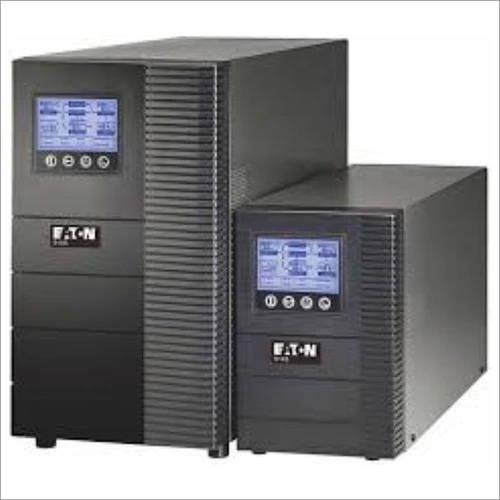
When critical infrastructure, data centers, manufacturing lines, or medical facilities depend on continuous power, the choice of an uninterruptible power supply (UPS) becomes a decision that affects uptime, safety, and equipment longevity. As a recognized Eaton UPS Supplier, Evaflux provides engineers, technicians, and procurement teams with access to a full range of Eaton UPS systems designed for demanding environments across multiple industries and regions.
This article provides a factual, technical overview of Eaton UPS systems — their design principles, specifications, reliability characteristics, and typical applications — to help buyers evaluate the right solution for their operational needs.
Why Organizations Choose an Eaton UPS Supplier
Power interruptions, voltage fluctuations, and grid instability remain persistent risks in industrial and commercial operations. A trusted distribution partner bridges the gap between end users and a globally established power management brand known for engineering rigor and long-term product support.
Eaton has built its UPS product line around three core engineering priorities: continuity of power, protection of sensitive electronics, and scalability for growing infrastructure. Working with an established supplier ensures buyers receive genuine components, accurate technical documentation, and systems configured to match their site’s electrical requirements.
Technical Specifications of Eaton UPS Systems
Eaton UPS Supplier units span a wide power range, generally available from 500VA for small workstations up to several megawatts for enterprise data centers. Key technical characteristics typically include:
- Topology: Double-conversion (online), line-interactive, and standby configurations depending on load sensitivity
- Power Range: 500VA to 6600kVA across the Eaton 5 Series, 9 Series, and 93 Series product lines
- Efficiency: Up to 99% in energy-saving or ESS (Energy Saver System) mode
- Input Voltage Tolerance: Wide input windows that reduce battery dependency during minor grid fluctuations
- Battery Options: Valve-regulated lead-acid (VRLA), lithium-ion, and extended battery modules (EBMs)
- Runtime: Configurable from a few minutes for orderly shutdown to several hours with extended battery cabinets
- Communication Protocols: SNMP, Modbus, and BACnet support for integration with building management and data center infrastructure management (DCIM) systems
- Form Factor: Tower, rack-mount, and modular designs to suit space-constrained or scalable installations
These specifications allow a qualified Eaton UPS Supplier to match unit selection precisely to load profiles, whether for a single server rack or a full industrial facility.
Reliability and Precision Engineering
Reliability in UPS systems is measured through metrics such as Mean Time Between Failures (MTBF), harmonic distortion control, and transfer time during power switching events. Eaton UPS systems are engineered to maintain output voltage regulation within tight tolerances, typically ±1% to ±3%, minimizing stress on connected electronics.
Double-conversion topology, used in many Eaton 9 Series and 93PM models, provides a zero-transfer-time output by continuously regenerating clean AC power rather than switching to battery only during outages. This design reduces the risk of voltage sags, surges, and frequency variations reaching connected equipment.
Precision extends to load management as well. Adaptive battery management extends battery lifespan by reducing unnecessary charge cycles, while predictive diagnostics — available through Eaton’s Intelligent Power Manager (IPM) software — allow facility teams to monitor battery health and system status remotely. A knowledgeable supplier can guide buyers through configuring these monitoring tools during installation.
Typical Use Cases
Eaton UPS systems are deployed across a broad range of sectors:
Data Centers: Modular and scalable UPS units support N+1 or 2N redundancy configurations, critical for maintaining uptime service-level agreements.
Healthcare Facilities: Hospitals and diagnostic centers rely on UPS backup to protect imaging equipment, laboratory systems, and life-support devices from power interruptions.
Manufacturing and Industrial Plants: Programmable logic controllers (PLCs), robotics, and production line equipment require stable power to avoid costly downtime or product defects.
Commercial Buildings: Server rooms, security systems, and elevator controls in office buildings and retail environments benefit from line-interactive or online UPS protection.
Telecommunications: Network switching centers and base stations use compact UPS units to maintain connectivity during grid outages.
Because these use cases span nearly every industry and climate zone, sourcing through a capable supplier with global logistics experience becomes essential for consistent product availability and technical support.
Worldwide Applicability and Relevance
Power infrastructure standards vary by region — voltage frequencies (50Hz vs. 60Hz), plug and socket types, ambient temperature tolerances, and regulatory certifications (CE, UL, RoHS) all differ across markets. Eaton designs its UPS product lines to accommodate these regional variations, making the product category relevant for buyers in North America, Europe, the Middle East, Asia-Pacific, and beyond.
As a global Eaton UPS Supplier, Evaflux supports procurement teams operating across multiple countries by providing region-specific product configurations, compliance documentation, and shipping coordination. This is particularly relevant for multinational organizations standardizing their power protection infrastructure across several facilities in different countries, where consistency in equipment, firmware, and support processes simplifies maintenance and training.
Buyers researching this product category should note that availability, lead times, and certification requirements can vary by destination country, so early engagement with a supplier familiar with international distribution is advisable.
Selecting the Right Eaton UPS Model
When evaluating options, procurement managers and engineers should consider:
- Load Requirements — total kVA/kW needed, including headroom for future expansion
- Runtime Needs — how long systems must sustain power during an outage
- Topology — online double-conversion for critical loads; line-interactive for less sensitive applications
- Environmental Conditions — operating temperature range and altitude at the installation site
- Regulatory Compliance — regional certifications required for the destination market
- Monitoring Integration — compatibility with existing building or IT management systems
A specification sheet review, combined with a site power audit, typically provides the data needed to select an appropriately sized unit.
Frequently Asked Questions
What is the typical lifespan of an Eaton UPS system?
Most Eaton UPS hardware is designed for a service life of 10 to 15 years, while internal batteries generally require replacement every 3 to 5 years depending on usage and ambient temperature.
What is the difference between online and line-interactive Eaton UPS units?
Online (double-conversion) units continuously regenerate output power for zero transfer time, suited to sensitive equipment. Line-interactive units regulate voltage without full conversion and switch to battery only during outages, offering a lower-cost option for less critical loads.
Can Eaton UPS systems be scaled as power demand grows?
Yes. Many Eaton models, particularly in the 9 Series and 93 Series, support modular expansion and parallel unit configurations to increase capacity without full system replacement.
Are Eaton UPS units suitable for use outside North America?
Yes. Eaton manufactures region-specific configurations to meet local voltage, frequency, and certification standards, making the product line applicable to markets worldwide.
How do I determine the right UPS size for my facility?
Sizing depends on total connected load, desired runtime, and future capacity needs. A load audit and consultation with a qualified supplier is recommended before purchase.
What monitoring options are available with Eaton UPS systems?
Eaton’s Intelligent Power Manager (IPM) software, along with SNMP and Modbus connectivity, allows remote monitoring of load status, battery health, and system alerts.