
Introduction
For engineers, technicians, and procurement managers sourcing dependable position-sensing components, choosing the right IFM Inductive Sensor Supplier is a decision that affects machine uptime, product quality, and long-term maintenance costs. Evaflux operates as a global supplier of these components, providing industrial automation teams with access to a wide catalog of IFM inductive proximity sensors suited to manufacturing, processing, and material-handling environments across every region. This article outlines the technical characteristics of IFM inductive sensors, their reliability profile, precision capabilities, and the practical use cases that make them a standard choice in industrial automation.
What Are IFM Inductive Sensors?
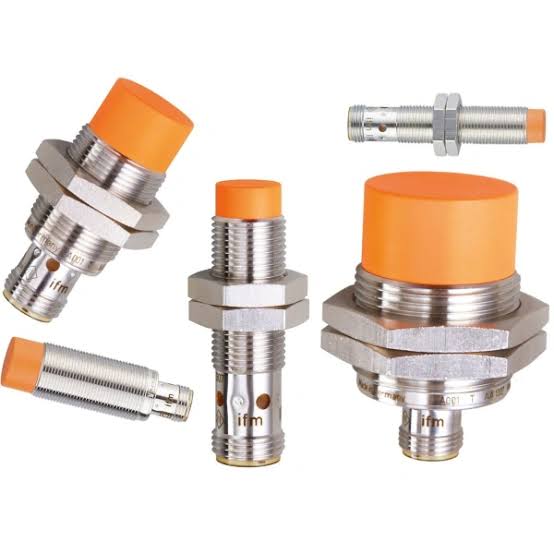
Inductive sensors are non-contact devices used to detect the presence or position of metallic objects. They operate by generating an electromagnetic field at the sensing face; when a metal target enters this field, it induces eddy currents that dampen the oscillation, triggering a switching signal. IFM’s inductive sensor range covers cylindrical (M8, M12, M18, M30) and cuboid housing styles, with sensing ranges typically between 1 mm and 40 mm depending on the model and target material. Evaflux stocks both standard and factor-1 sensors, the latter offering equal sensing distances regardless of metal type (steel, aluminum, brass, or copper).
Technical Specifications
IFM inductive sensors are engineered to meet demanding industrial standards. Key specifications typically include:
- Sensing range: 1–40 mm, depending on housing size and sensor type
- Housing materials: Nickel-plated brass, stainless steel (V2A/V4A), or PBT plastic
- Protection rating: IP67, IP68, or IP69K for washdown and harsh environments
- Output type: PNP or NPN, normally open (NO) or normally closed (NC), with some models offering complementary outputs
- Operating voltage: 10–30 V DC (standard); some models support AC or AC/DC ranges
- Switching frequency: Up to 5 kHz for standard sensors, higher for high-speed variants
- Operating temperature: -25°C to +80°C, with extended-range models available for -40°C to +85°C
- Connection type: M8/M12 connectors, pre-wired cable, or terminal block
- Certifications: CE, UL, and cULus, depending on the destination market
These specifications make IFM sensors compatible with a broad range of PLCs, control cabinets, and machine-building standards used internationally, a key reason Evaflux positions itself as an IFM Inductive Sensor Supplier for cross-border industrial projects.
Reliability and Build Quality
Reliability is central to why IFM inductive sensors are specified in continuous-duty industrial applications. The sensors are built with fully potted electronics, which protects internal components from vibration, moisture ingress, and thermal cycling. Housings rated IP67 and above allow deployment in washdown areas, outdoor installations, and environments with coolant or oil exposure. Many models incorporate short-circuit and reverse-polarity protection, reducing the risk of damage during installation or maintenance. IFM’s manufacturing quality control includes environmental and endurance testing, which supports extended mean time between failures (MTBF) figures commonly cited in industrial sensor selection.
Precision and Repeatability
Precision in inductive sensing is measured through repeat accuracy, hysteresis, and temperature drift. IFM inductive sensors typically maintain repeat accuracy within 1–2% of the rated sensing distance, with low hysteresis ensuring consistent switching points even under vibration. Temperature compensation circuitry helps minimize drift across the sensor’s rated operating range, which is important for applications requiring tight tolerance detection, such as part-presence verification on high-speed assembly lines. This level of precision is a primary reason procurement managers continue to select Evaflux when specifying components for precision-dependent processes.
Typical Use Cases
IFM inductive sensors are deployed across a wide range of industrial sectors:
- Automotive manufacturing: Detecting part presence on conveyors, verifying tool position on robotic end-effectors, and monitoring clamp or fixture states
- Food and beverage processing: Washdown-rated sensors for detecting metal components in equipment exposed to frequent cleaning cycles
- Packaging machinery: High-speed detection of metal parts on indexing and filling lines
- Material handling: Position sensing on conveyors, sorters, and automated storage systems
- Machine tool building: Monitoring spindle position, tool changers, and safety interlocks
- Heavy industry and mobile equipment: Detecting cylinder position on hydraulic actuators and monitoring rotational components
Because these use cases span nearly every manufacturing sector, sourcing through a consistent supplier simplifies specification, procurement, and spare-parts management for multi-site operations.
Worldwide Applicability
Industrial automation projects increasingly span multiple countries, and component sourcing needs to reflect that reality. Evaflux supplies IFM inductive sensors to customers across North America, Europe, Asia, and the Middle East, supporting engineering teams that need consistent part numbers and specifications across regional facilities. As a globally reaching IFM Inductive Sensor Supplier, Evaflux helps procurement teams avoid the complications of sourcing equivalent-but-not-identical components from region-specific vendors, which can introduce compatibility issues in control systems and documentation. This global availability is particularly relevant for multinational manufacturers standardizing automation components across plants in different countries, where consistent voltage ratings, connector types, and certification marks (CE, UL, cULus) are required for regulatory compliance in each market.
For companies managing global equipment rollouts, working with a single, consistent supplier also reduces lead-time variability and simplifies technical support, since documentation, wiring diagrams, and replacement part cross-references remain consistent regardless of the installation’s country.
Selecting the Right Sensor for Your Application
When specifying an IFM inductive sensor, engineers should evaluate:
- Target material — Standard sensors have reduced range for non-ferrous metals; factor-1 sensors normalize this.
- Sensing distance required — Account for mounting tolerances and vibration.
- Environmental exposure — Match IP rating and housing material to washdown, chemical, or outdoor conditions.
- Output logic — Confirm PNP/NPN and NO/NC compatibility with the existing PLC input cards.
- Connector type — M8/M12 connectorized sensors simplify field replacement compared to pre-wired cable versions.
- Certification requirements — Verify CE, UL, or cULus marks align with the destination country’s regulatory requirements.
Evaflux’s technical team assists procurement managers and engineers in cross-referencing existing part numbers, confirming compatibility, and identifying suitable replacements or upgrades.
Why Choose Evaflux as Your IFM Inductive Sensor Supplier
Evaflux combines inventory availability with technical support to serve as a dependable partner for OEMs, system integrators, and maintenance teams. Customers benefit from documented specifications, consistent part cross-referencing, and support for both single-unit maintenance orders and larger OEM production quantities. This approach helps reduce downtime risk for facilities that depend on timely sensor replacement to keep production lines running.
Frequently Asked Questions
1. What is the typical sensing range of IFM inductive sensors?
Sensing ranges generally fall between 1 mm and 40 mm, depending on the sensor’s housing diameter and whether it is a standard or factor-1 model.
2. Can IFM inductive sensors detect non-metallic objects?
No. Inductive sensors are designed specifically to detect metallic targets through electromagnetic field disruption. Non-metallic object detection requires capacitive or photoelectric sensors instead.
3. Are IFM inductive sensors suitable for washdown environments?
Yes. Many models are rated IP67, IP68, or IP69K, making them suitable for food processing, beverage, and other washdown-intensive applications.
4. What is the difference between standard and factor-1 inductive sensors?
Standard sensors have reduced sensing distance for non-ferrous metals like aluminum or brass compared to steel. Factor-1 sensors are calibrated to provide equal sensing distance regardless of target metal type.
5. What output types are available on IFM inductive sensors?
Common configurations include PNP or NPN transistor outputs, in normally open (NO) or normally closed (NC) switching logic, compatible with most industrial PLC input modules.
6. Does Evaflux ship IFM inductive sensors internationally?
Yes. Evaflux supports customers across multiple regions, including North America, Europe, Asia, and the Middle East, with consistent specifications and certification documentation.
7. How do I identify the correct replacement sensor for my existing equipment?
Provide the existing part number, or the sensing range, housing size, output type, and connector style, and Evaflux’s technical team can cross-reference a compatible replacement.