
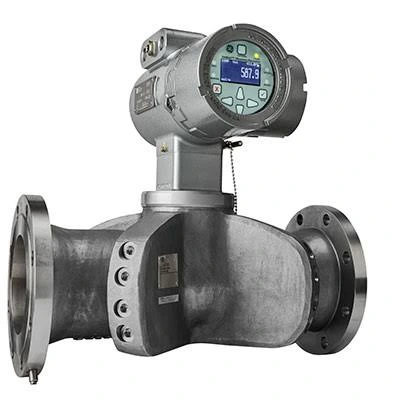
Accurate flow measurement is a core requirement across process industries, from oil and gas terminals in the Middle East to water utilities in Europe and chemical plants in Southeast Asia. The Panametrics Ultrasonic Flow Meter line, engineered under the Baker Hughes Panametrics brand, has become a widely specified solution for liquid, gas, and steam flow measurement because it combines non-intrusive sensing with consistent long-term accuracy. This article provides a technical overview of the product family, its specifications, reliability characteristics, and typical deployment scenarios for engineers, technicians, and procurement teams evaluating flow instrumentation on a global scale.
What Is an Ultrasonic Flow Meter?
An ultrasonic flow meter measures fluid velocity using sound waves rather than mechanical components. The most common method used across the Panametrics range is the transit-time (also called time-of-flight) technique. Two transducers are positioned along a pipe, one upstream and one downstream. Each transducer alternately sends and receives an ultrasonic pulse through the flowing fluid. Because fluid motion speeds up the pulse traveling downstream and slows the pulse traveling upstream, the difference in transit time is directly proportional to flow velocity. The meter’s electronics convert this velocity reading into volumetric or mass flow rate based on the pipe’s internal geometry.
Since there are no moving parts in contact with the fluid, this method avoids the wear, fouling, and pressure drop associated with mechanical meters such as turbine or positive-displacement types.
Product Overview
The Panametrics portfolio covers both clamp-on and wetted (inline) configurations, allowing the same core ultrasonic technology to be applied across different installation requirements:
- Clamp-on models (such as the PT878 and GS868 series) mount externally on the outside of an existing pipe, requiring no process shutdown, cutting, or welding. This is particularly valuable for retrofits, spot-checks, and temporary flow verification.
- Inline/wetted models (such as the DF868, GS868 fixed installations, and the multi-path PanaFlow Z3) are installed permanently within the pipeline and are typically selected where the highest measurement accuracy and repeatability are required.
- Transmitter-mounted designs (such as the PanaFlow XMT1000) place the electronics directly at the measurement point, simplifying wiring and reducing installation complexity in tight or hazardous locations.
- Safety-rated models (such as the PanaFlow HT) are certified to IEC 61508 as SIL2-rated instruments, with SIL3 achievable in redundant configurations, making them suitable for critical safety-instrumented systems in refining and petrochemical processes.
Across all configurations, this product family is designed to measure liquids, gases, and steam, including clean, dirty, and multiphase fluids containing entrained gas bubbles or solids that would challenge Doppler-based instruments.
Technical Specifications
While exact specifications vary by model and application, the following characteristics are representative of the Panametrics ultrasonic flow meter range:
- Measurement principle: Correlation transit-time ultrasonic technology
- Fluid types: Liquids (including hydrocarbons, water, chemicals), industrial gases, and saturated or superheated steam
- Installation types: Clamp-on (non-invasive) and wetted/inline
- Pipe size range: From small-bore process lines up to large-diameter transmission pipelines, depending on the model
- Typical accuracy: Approximately ±1% to ±2% of reading on larger pipe diameters, with slightly wider tolerances (±2% to ±5%) on smaller pipes for certain clamp-on models
- Signal paths: Single-path, dual-path, and multi-path (three-path) configurations, with multi-path designs improving accuracy under non-ideal flow profiles
- Hazardous area certification: Available in versions rated for use in classified hazardous locations, suited to petrochemical and chemical processing environments
- Cable run: Transducers can be located a significant distance from the electronics console (up to several hundred feet, depending on model), allowing flexible installation
- Diagnostics: Built-in signal quality and diagnostic monitoring to support predictive maintenance programs
Procurement teams should confirm exact tolerances, pressure/temperature ratings, and certifications against the specific model datasheet, as performance parameters differ between the clamp-on and wetted product lines.
Reliability and Precision
Reliability is one of the primary reasons the Panametrics Ultrasonic Flow Meter is specified for continuous, unattended operation in industrial settings. Because the sensing technology has no moving parts and, in clamp-on form, no wetted parts at all, it avoids the mechanical wear that limits the service life of turbine, vane, or positive-displacement meters. This translates into lower maintenance frequency and reduced risk of unplanned downtime.
Precision is supported by digital signal processing that filters out noise and compensates for variations in fluid composition, temperature, and flow profile. Multi-path models further improve measurement precision by sampling velocity at several points across the pipe cross-section rather than relying on a single chord, which reduces the sensitivity of the reading to profile distortion caused by upstream elbows, valves, or reducers.
For safety-critical applications, SIL-rated models such as the PanaFlow HT provide third-party-certified design validation, giving process safety engineers a documented basis for using the instrument within a safety-instrumented system.
Typical Use Cases
The Panametrics Ultrasonic Flow Meter is applied across a broad range of industries and process conditions, including:
- Oil and gas: Custody transfer support, flare gas measurement, upstream and midstream pipeline monitoring, and crude oil transfer
- Refining and petrochemicals: Process liquid measurement in delayed coker units, fluid catalytic cracking, vacuum distillation, hydrotreaters, and visbreakers
- Power generation: Steam flow measurement for saturated and superheated steam systems, boiler feedwater monitoring
- Water and wastewater: Bulk water transfer, treatment plant flow monitoring, and non-invasive verification on existing pipelines
- Chemical processing: Flow measurement of clean, corrosive, or particulate-laden liquids where mechanical meters would degrade quickly
- Industrial gases and compressed air: Natural gas, nitrogen, air separation gases, and other compressed gas applications, often using portable clamp-on units for spot verification
Worldwide Applicability
Flow measurement requirements do not stop at national borders, and this product platform is built to support that reality. The product range is manufactured to accommodate multiple regional hazardous-area certification schemes, various pipe material and sizing standards, and a wide span of ambient operating conditions, from cold-climate installations to high-ambient-temperature regions. This makes the product line relevant to procurement teams sourcing instrumentation for projects across North America, Europe, the Middle East, Asia-Pacific, and other regions where consistent, standardized flow measurement technology simplifies specification, spares management, and technician training across a multinational asset base. For distributors and stockists like Evaflux, this global consistency is a key reason it is positioned as a core product category for international buyers.
Conclusion
The Panametrics Ultrasonic Flow Meter family offers a well-documented, non-intrusive approach to flow measurement across liquids, gases, and steam. With multiple configurations spanning clamp-on portability to SIL-rated wetted installations, the product range is suited to applications ranging from routine utility monitoring to safety-critical refinery processes. For engineers and procurement managers evaluating flow instrumentation for global projects, the combination of documented accuracy, low-maintenance operation, and broad model coverage makes this a practical, technically sound category to specify.
Frequently Asked Questions
1. What is the working principle of this instrument?
It uses transit-time (time-of-flight) ultrasonic technology, measuring the difference in travel time between upstream and downstream sound pulses to calculate fluid velocity and flow rate.
2. Can it be installed without cutting the pipe?
Yes. Clamp-on models mount externally on the pipe wall and do not require process shutdown, cutting, or welding, making them suitable for retrofits and temporary verification.
3. What fluids can it measure?
Depending on the model, it can measure clean and dirty liquids, industrial gases, compressed air, and saturated or superheated steam, including fluids with entrained gas bubbles or solids.
4. Is it suitable for hazardous areas?
Several models are available with certifications for classified hazardous locations, making them appropriate for petrochemical, refining, and chemical processing environments.
5. How accurate are these meters? Typical accuracy ranges from approximately ±1% to ±2% of reading for larger pipe sizes and wetted/multi-path configurations, with somewhat wider tolerances possible on smaller-bore clamp-on installations.
6. What maintenance do they require?
Because there are no moving parts and, in clamp-on designs, no wetted parts, maintenance requirements are generally low compared to mechanical flow meters. Built-in diagnostics support predictive maintenance planning.
7. Are these meters suitable for safety-instrumented systems?
Select models, such as the PanaFlow HT, are IEC 61508 certified as SIL2-rated instruments, with SIL3 achievable in redundant system configurations.