
Accurate flow measurement is a foundational requirement across process industries, from chemical manufacturing to water treatment and oil and gas operations. Among the instruments engineers and procurement teams rely on globally, this product stands out as a well-established platform used across a wide range of industrial sectors. This article provides a factual, technical overview of the product line, covering its specifications, precision, reliability, and typical applications, to help buyers evaluate whether it fits their operational requirements.
What Is the Endress Hauser Proline Flow Meter?
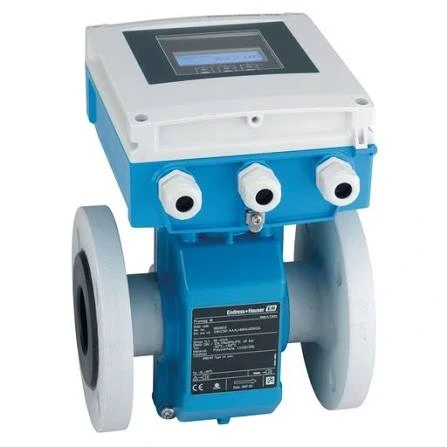
This instrument family is a group of flow measurement devices manufactured under the Proline product line, covering multiple measurement technologies including electromagnetic, Coriolis, vortex, ultrasonic, and thermal mass flow principles. Rather than a single device, “Proline” refers to a modular platform where transmitters and sensors can be paired according to the specific process medium, pipe size, and measurement accuracy required. This modularity allows the same transmitter electronics to be used across different sensor types, simplifying spare-parts management and reducing training requirements for maintenance staff working across multiple plant sites.
The devices are designed to measure parameters such as volume flow, mass flow, density, and temperature, depending on the sensor technology selected. This makes the Proline series applicable to liquids, gases, and steam, covering a broad spectrum of industrial fluid-handling needs.
Technical Specifications
While exact specifications vary by sensor type (electromagnetic, Coriolis, vortex, or ultrasonic) and by model generation, the Proline platform generally shares the following characteristics:
- Measurement Principles Covered: Electromagnetic (Promag), Coriolis (Promass), Vortex (Prowirl), Ultrasonic (Prosonic Flow), and Thermal Mass (Proline t-mass)
- Process Connections: Flanged, wafer, sanitary/hygienic (Tri-Clamp), and threaded connections, compatible with DIN, ANSI, and JIS standards
- Nominal Diameters: Ranging from small bore sizes (a few millimeters) up to large pipe diameters exceeding DN2000, depending on sensor type
- Process Temperature Range: Typically from -200°C to +400°C, depending on the sensor and liner material selected
- Process Pressure Rating: Up to PN 100 / ANSI Class 600 or higher on select models
- Accuracy: Commonly within ±0.5% to ±0.15% of measured value for volume flow, with Coriolis variants often achieving ±0.05% to ±0.1% for mass flow measurement
- Communication Protocols: HART, PROFIBUS PA/DP, FOUNDATION Fieldbus, Modbus RS485, EtherNet/IP, and PROFINET, allowing integration into most existing plant control systems
- Housing Materials and Protection Ratings: Stainless steel or aluminum housings, typically rated IP66/IP67 or IP69 for washdown environments
- Approvals: Devices are commonly certified for hazardous area use under ATEX, IECEx, FM, and CSA standards, depending on the region of deployment
Because specifications differ across the Promag, Promass, Prowirl, and Prosonic sub-families, buyers should confirm exact parameters against the specific datasheet for their selected model before finalizing a purchase.
Precision and Measurement Reliability
Measurement precision is one of the primary reasons the Endress Hauser Proline Flow Meter is specified in applications where custody transfer, regulatory reporting, or tight process control are required. Coriolis-based Proline instruments, for example, measure mass flow directly rather than inferring it from volumetric readings, which reduces the influence of variables such as pressure, temperature, and fluid viscosity on measurement accuracy.
Reliability is supported through several design features common across the product line:
- Diagnostic Capabilities: Built-in self-diagnostics can detect sensor drift, blockages, or installation issues, alerting maintenance teams before measurement quality is compromised.
- Verification Tools: Many Proline models support in-situ verification routines that allow technicians to confirm calibration status without removing the meter from the process line, reducing downtime.
- Robust Construction: Sensor materials such as Hastelloy, tantalum, and PFA/PTFE liners are available for corrosive or abrasive media, extending service life in demanding environments.
- Redundant Signal Processing: Digital signal processing in the transmitter helps maintain stable readings even under conditions of entrained gas, pulsating flow, or electrical noise.
These characteristics contribute to consistent long-term performance, which is a key consideration for procurement managers evaluating total cost of ownership rather than upfront price alone.
Typical Use Cases
The Endress Hauser Proline Flow Meter is used across a range of industries where accurate fluid measurement supports both process efficiency and regulatory compliance:
- Chemical and Petrochemical Processing: Measurement of corrosive or hazardous fluids, often requiring specialized liner and electrode materials
- Water and Wastewater Treatment: Monitoring of raw water intake, treated water output, and chemical dosing lines
- Oil and Gas: Custody transfer applications, pipeline monitoring, and upstream/downstream flow measurement
- Food and Beverage: Hygienic sensor variants suited to CIP/SIP cleaning cycles and sanitary process requirements
- Pharmaceutical Manufacturing: High-precision dosing and batching applications where traceability and validation documentation are required
- Power Generation: Steam and condensate flow measurement in boiler and turbine systems
- Pulp and Paper: Flow measurement in fibrous and abrasive slurries
Given this range of applications, facilities selecting a flow measurement solution often standardize on the Proline platform to reduce the number of instrument types and spare parts held across multiple process areas.
Worldwide Applicability
This flow meter platform is deployed across manufacturing and processing facilities worldwide, supported by a global network of sales, engineering, and service infrastructure. This international presence means the product line is designed to meet regional certification requirements, including hazardous area approvals and regional process safety standards relevant to different markets. For distributors and procurement teams sourcing instrumentation for multi-site or multinational operations, this consistency in specification and support across regions simplifies vendor qualification and reduces the complexity of maintaining varied instrumentation standards across different countries. Availability of documentation, communication protocol support, and spare parts across major industrial regions further supports its suitability as a standard flow measurement solution for globally operating organizations.
Selecting the Right Proline Model
Choosing the appropriate variant of the Endress Hauser Proline Flow Meter depends on several factors specific to the application:
- Fluid Type: Conductive liquids typically favor electromagnetic sensors, while gases and steam are better suited to vortex or thermal mass technologies
- Required Accuracy: Custody transfer and pharmaceutical dosing applications generally require Coriolis-level precision
- Pipe Size and Installation Constraints: Available straight-run length and pipe diameter influence sensor selection
- Process Conditions: Temperature, pressure, and the presence of solids or entrained gas affect which technology performs most reliably
- Communication Requirements: Compatibility with existing plant control and SCADA systems should guide protocol selection
Consulting the relevant datasheet or a qualified instrumentation specialist is recommended before final selection, since incorrect sensor-technology matching can affect both accuracy and instrument lifespan.
Frequently Asked Questions
What is the difference between Promag, Promass, Prowirl, and Prosonic within the Proline series?
These names refer to the measurement technology used: Promag uses electromagnetic induction (for conductive liquids), Promass uses the Coriolis principle (for direct mass flow measurement), Prowirl uses vortex shedding (for liquids, gases, and steam), and Prosonic uses ultrasonic time-of-flight measurement. All are part of the broader Proline platform and can often share compatible transmitter electronics.
Is this flow meter suitable for hazardous area installations?
Yes. Many Proline models are available with ATEX, IECEx, FM, and CSA certifications, allowing them to be installed in classified hazardous areas, subject to confirming the specific approval matches the required zone and gas group for the installation site.
Can Proline flow meters be integrated with existing plant control systems?
Yes. The transmitters typically support common industrial communication protocols such as HART, PROFIBUS, FOUNDATION Fieldbus, Modbus RS485, EtherNet/IP, and PROFINET, allowing integration into most existing SCADA or DCS environments.
What maintenance is required for Proline flow meters?
Maintenance requirements vary by sensor type but generally include periodic calibration verification, visual inspection of process connections, and monitoring of built-in diagnostic alerts. Many models support in-situ verification, reducing the need for physical removal during routine checks.
Are Proline flow meters suitable for hygienic or sanitary applications?
Yes. Sensor variants with Tri-Clamp or other sanitary connections, along with materials suited for CIP/SIP cleaning cycles, are available for food, beverage, and pharmaceutical processing environments.