
Industrial automation systems depend on controllers that can operate reliably under continuous load, often for years without interruption. The Siemens SIMATIC S7-400 series is one of the most established programmable logic controller (PLC) platforms used in process automation, manufacturing, and infrastructure control worldwide. As a Siemens S7-400 PLC Supplier, Evaflux provides engineers, technicians, and procurement teams with access to genuine components, replacement modules, and technical guidance needed to keep these systems running efficiently across industries and regions.
This article provides a factual overview of the S7-400 platform — its architecture, technical specifications, performance characteristics, and typical applications — to help buyers evaluate the product for new installations, system expansions, or maintenance and replacement needs.
Overview of the Siemens S7-400 PLC
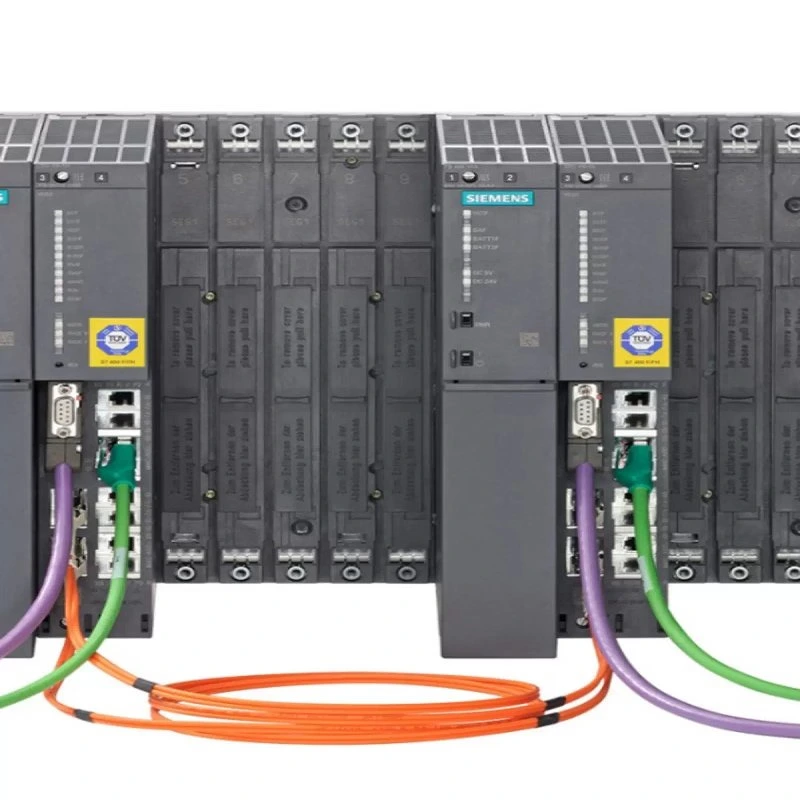
The SIMATIC S7-400 is a modular PLC system designed by Siemens for mid- to high-performance automation tasks. It is built around a rack-based architecture that allows central processing units (CPUs), power supplies, signal modules, communication processors, and function modules to be combined according to the specific requirements of an application. This modularity makes the S7-400 suitable for both compact control cabinets and large, distributed plant-wide systems.
The platform was developed for continuous, unattended operation in demanding industrial environments, including chemical plants, power generation facilities, water treatment systems, and heavy manufacturing lines. Its design emphasizes long-term availability, deterministic processing, and compatibility with a wide range of I/O and communication protocols.
Technical Specifications
Understanding the technical profile of the S7-400 helps procurement and engineering teams match the correct components to their system requirements. Key specifications include:
CPU Range: The S7-400 family includes multiple CPU classes (such as the 412, 414, 416, and 417 series), each offering different combinations of processing speed, memory capacity, and instruction execution time, allowing selection based on program complexity and cycle-time requirements.
Memory Capacity: Work memory ranges from several hundred kilobytes up to multiple megabytes depending on the CPU model, with additional load memory available via memory cards for program storage and data logging.
Processing Performance: Instruction execution times are typically measured in nanoseconds for bit operations, supporting fast, deterministic control loops required in time-critical processes.
I/O Capacity: The system supports a high number of digital and analog input/output points per rack, with expansion possible through additional I/O racks connected via the backplane bus or remote I/O interfaces.
Communication Interfaces: The S7-400 supports PROFIBUS, PROFINET, Industrial Ethernet, and MPI (Multi-Point Interface), enabling integration with distributed control systems, SCADA platforms, and other automation equipment.
Redundancy Options: Certain CPU variants (H-series) support hot-standby redundant configurations, allowing continuous operation even if one CPU fails — a critical feature for processes where downtime is not acceptable.
Power Supply: Modules operate on standard industrial DC voltage ranges, with multiple power supply units available depending on rack load and backup requirements.
Operating Environment: The system is rated for standard industrial temperature, humidity, and vibration tolerances consistent with IEC 61131-2 requirements for programmable controllers.
Reliability and Precision
The S7-400 has a long operational history in industrial settings, and its reliability is a primary reason many facilities continue to use it, even as newer platforms are introduced. Several design characteristics contribute to this:
Deterministic Cycle Times: The CPU executes control logic in fixed, predictable cycles, which is essential for processes requiring precise timing and synchronization between multiple subsystems.
Redundant Architecture Availability: For applications where interruption is costly or unsafe, redundant CPU and power supply configurations reduce the risk of unplanned downtime.
Robust Diagnostics: Built-in diagnostic functions allow technicians to identify module faults, communication errors, and I/O failures quickly, reducing mean time to repair.
Proven Field Performance: Because the platform has been deployed across thousands of installations globally over an extended period, its failure modes, maintenance requirements, and long-term behavior are well understood by engineering teams.
Precision in the S7-400 is closely tied to its analog I/O modules, which offer configurable resolution and measurement accuracy suitable for process variables such as temperature, pressure, flow, and level control. Combined with stable cycle timing, this allows tight control loops in applications where small deviations can affect product quality or process safety.
Typical Use Cases
The S7-400 is applied across a broad range of industrial sectors, including:
- Process Industries: Chemical processing, oil and gas, and pharmaceutical manufacturing, where continuous, high-reliability control is required.
- Power Generation and Utilities: Control of generation units, substations, and water/wastewater treatment facilities.
- Heavy Manufacturing: Automotive, steel, and material handling systems requiring coordination of multiple production lines.
- Building and Infrastructure Automation: Large-scale HVAC, elevator, and facility management systems in commercial and industrial buildings.
- System Retrofits and Expansions: Facilities maintaining legacy S7-400 installations often require replacement CPUs, I/O modules, or communication processors to extend the operational life of existing systems without a full platform migration.
Worldwide Applicability
Industrial facilities on every continent continue to operate S7-400-based control systems, and the demand for genuine replacement parts, new modules, and technical support spans a wide range of regions and industries. As a Siemens S7-400 PLC Supplier, Evaflux supports this global installed base by supplying components suited to differing regional standards, voltage requirements, and integration needs.
Whether a facility is located in North America, Europe, the Middle East, Asia-Pacific, or Latin America, sourcing components from a supplier with international logistics capability and product verification processes helps reduce downtime and ensures compatibility with existing systems. This is particularly relevant for plants that rely on the S7-400 for critical processes and cannot easily switch to alternative platforms without significant re-engineering, testing, and validation work.
For procurement managers coordinating across multiple facilities or regions, working with a consistent, verified component supplier simplifies vendor management, quality assurance, and spare-parts planning — particularly for organizations maintaining standardized automation architectures across multiple plants worldwide.
Sourcing Considerations for Buyers
When evaluating suppliers for S7-400 components, engineers and procurement teams typically assess the following factors:
Product Authenticity: Verification that modules are genuine Siemens components, not counterfeit or unauthorized reproductions, is essential for system safety and warranty compliance.
Compatibility Verification: Confirming firmware versions, hardware revisions, and module compatibility with existing rack configurations avoids integration issues after installation.
Availability of Legacy Components: As Siemens transitions customers toward newer platforms such as the S7-1500, sourcing specific S7-400 modules for maintenance or expansion can become more difficult, making supplier inventory depth and sourcing networks an important consideration.
Technical Support: Access to documentation, configuration assistance, and troubleshooting support reduces commissioning time and operational risk.
Delivery Reliability: For critical process industries, lead time and shipping reliability directly affect maintenance planning and unplanned downtime risk.
Conclusion
The Siemens S7-400 remains a widely used and technically capable PLC platform for demanding industrial automation applications, offering modular architecture, redundancy options, and proven long-term reliability. For engineers maintaining existing installations or specifying components for system expansions, working with an experienced Siemens S7-400 PLC Supplier provides access to verified components, technical guidance, and consistent availability across global markets. Evaflux supports this need by offering S7-400 modules and related automation components to facilities worldwide, helping maintain the continuity and precision that industrial control systems require.