
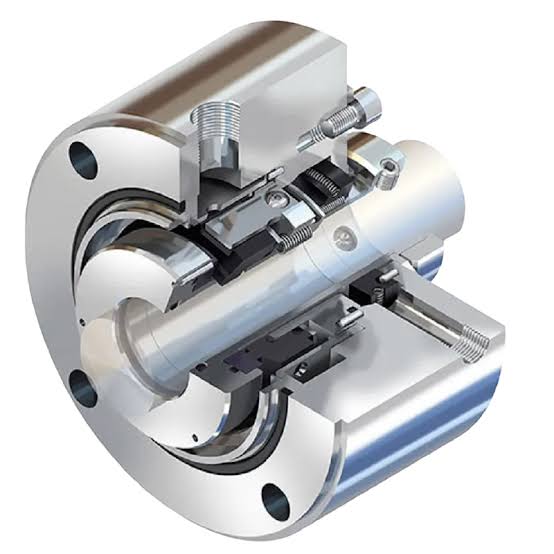
Mechanical seals are a critical component in rotating equipment across the oil and gas, petrochemical, power generation, and water treatment sectors. For plant engineers and procurement teams operating in the UAE, sourcing genuine, application-matched seals from a qualified Flowserve Seal Supplier is essential to minimizing downtime, controlling emissions, and maintaining process integrity. This article provides a technical overview of Flowserve mechanical seals, their specifications, and their relevance to industrial operations across the Emirates.
Why Sourcing Matters: The Role of a Qualified Flowserve Seal
Rotating equipment reliability depends heavily on correct seal selection and installation. Mismatched seal faces, incorrect elastomer compatibility, or counterfeit components are among the leading causes of unplanned seal failure. Working with an authorized Flowserve Seal ensures that procurement teams receive components manufactured to original design tolerances, complete with material certifications and application data sheets. This is particularly important in the UAE, where facilities often operate under demanding conditions — high ambient temperatures, sour service environments, and continuous 24/7 operation in refineries and desalination plants.
An authorized supplier also provides traceability. Each seal ships with documentation that verifies material batch, pressure rating, and compliance with API 682 or ISO 21049 standards, which are the primary reference standards for mechanical seals used in centrifugal pumps and rotating equipment.
Product Overview: Flowserve Mechanical Seal Range
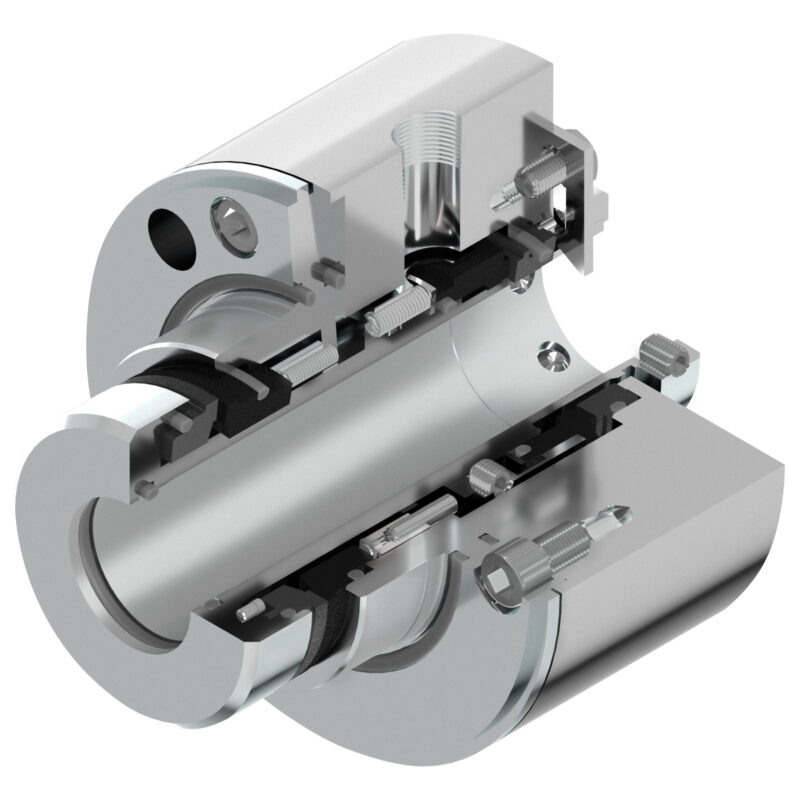
Flowserve manufactures a broad range of mechanical seal types designed for different service conditions:
- Single cartridge seals — used for general-duty pumping applications where a balance of cost and reliability is required.
- Dual (double) seals — used in hazardous or toxic fluid handling, where a barrier fluid isolates the process media from the atmosphere.
- Gas seals — dry-running, non-contacting seals typically used in compressors and high-speed rotating equipment.
- Split seals — designed for maintenance-friendly installation without full pump disassembly, useful in large agitators and mixers.
Each seal type is engineered for specific pressure, temperature, and speed envelopes, and selecting the correct configuration requires a review of the application’s process fluid, operating pressure, shaft speed, and temperature range.
Technical Specifications
While exact specifications vary by seal model and configuration, Flowserve mechanical seals generally fall within the following technical parameters:
| Parameter | Typical Range |
| Operating pressure | Up to 250 bar (depending on seal type) |
| Operating temperature | -40°C to 400°C |
| Shaft speed | Up to 25 m/s (higher for gas seals) |
| Face materials | Silicon carbide, tungsten carbide, carbon graphite |
| Elastomer options | FKM, FFKM, EPDM, depending on fluid compatibility |
| Standard compliance | API 682, ISO 21049 |
These figures illustrate the general performance envelope of the product line; actual limits depend on the specific seal series and its intended duty. A qualified Flowserve Seal Supplier can confirm exact ratings against the pump manufacturer’s data sheet and the process conditions at hand.
Reliability and Precision Engineering
Seal face flatness, squareness, and surface finish are engineered to tolerances measured in microns. Precision-lapped seal faces reduce friction and heat generation at the sealing interface, which directly extends mean time between failures (MTBF). Flowserve seals are also designed with consideration for thermal expansion, shaft runout, and vibration tolerance, all of which affect long-term sealing performance in continuous-duty rotating equipment.
Reliability is further supported by design features such as:
- Balanced seal face geometry to reduce contact pressure at high operating pressures.
- Anti-rotation and torque-transmission devices that prevent slippage under high shaft speeds.
- Secondary seal (O-ring or wedge) materials selected for chemical compatibility with the process fluid.
For UAE-based facilities handling hydrocarbons, brine, or corrosive process streams, correct material selection — often silicon carbide faces paired with FFKM elastomers for high-temperature, chemically aggressive service — is a key reliability factor that a knowledgeable Flowserve Seal helps specify correctly.
Typical Use Cases
Flowserve mechanical seals are used across a wide range of industrial applications, including:
- Oil and gas processing — crude and refined product pumps, where API 682 compliance is often mandatory.
- Petrochemical plants — seals for pumps handling aggressive or hazardous chemicals requiring dual-seal configurations.
- Power generation — boiler feedwater pumps and cooling water systems operating at elevated temperatures and pressures.
- Desalination and water treatment — a significant application area in the UAE, where reverse osmosis and thermal desalination plants rely on continuous pump operation.
- Marine and offshore platforms — seals rated for saltwater exposure and vibration-heavy environments.
UAE Applicability and Regional Relevance
The UAE’s industrial base — spanning Abu Dhabi’s upstream and downstream oil and gas operations, Dubai’s power and water utilities, and the broader region’s petrochemical and desalination infrastructure — creates consistent demand for reliable rotating equipment components. Facilities in this region typically operate under high ambient temperatures, which places additional thermal load on seal faces and elastomers, and often process fluids with high salinity or hydrocarbon content.
Sourcing from a regional Flowserve Seal offers several practical advantages for UAE-based procurement and maintenance teams:
- Reduced lead times compared to importing directly from overseas manufacturing hubs, which matters during unplanned shutdown events.
- Local technical support for seal selection, cross-referencing, and troubleshooting, reducing reliance on remote engineering teams.
- Stock availability of commonly used seal types and spare parts kits for critical rotating equipment, supporting preventive maintenance schedules.
- Familiarity with regional standards and specifications, including ADNOC and other national oil company procurement requirements that often reference API 682 compliance directly.
For plant reliability engineers and procurement managers across the UAE, working with a supplier that maintains inventory and technical expertise regionally reduces the operational risk associated with seal replacement and turnaround planning.
Selecting the Right Seal: Key Considerations
When evaluating seal options, procurement and engineering teams should review:
- Process fluid compatibility — chemical composition, presence of solids, and viscosity.
- Operating envelope — maximum pressure, temperature, and shaft speed.
- Regulatory and safety requirements — emissions compliance, particularly for volatile organic compound (VOC) control in hydrocarbon service.
- Maintenance access — split seal designs may be preferable where equipment downtime must be minimized.
- Original equipment cross-reference — confirming seal dimensions and mounting configuration match the existing pump housing.
A specification review with a technically capable Flowserve Seal Supplier helps ensure the selected seal matches both the equipment design and the actual process conditions, rather than relying solely on catalog part numbers.
Frequently Asked Questions
1. What industries in the UAE most commonly use Flowserve mechanical seals?
Oil and gas, petrochemical processing, power generation, and desalination are the primary sectors relying on Flowserve seals within the UAE, given the continuous-duty and high-temperature nature of their rotating equipment.
2. How do I know which seal type is correct for my pump?
Seal selection depends on process fluid, pressure, temperature, and shaft speed. Reviewing the pump’s original specification sheet alongside the process conditions with a qualified supplier is the recommended approach.
3. Are Flowserve seals compliant with API 682?
Many Flowserve seal models are designed to meet API 682 and ISO 21049 standards, which are widely referenced in oil, gas, and petrochemical procurement specifications.
4. What is the typical lead time for sourcing seals in the UAE?
Lead times vary by seal type and configuration. Sourcing from a regional supplier with local stock generally reduces lead time compared to direct overseas procurement.
5. Can existing seals be cross-referenced to a Flowserve equivalent?
Yes. Seal dimensions, face materials, and mounting configurations can typically be cross-referenced against existing installed seals to identify a suitable Flowserve replacement.
Conclusion
Selecting and sourcing mechanical seals correctly is a technical decision with direct implications for equipment uptime, safety, and maintenance cost. For engineers, technicians, and procurement managers operating in the UAE, partnering with an established Flowserve Seal Supplier provides access to genuine components, proper technical documentation, and regional support that aligns with the operating demands of local oil, gas, power, and water infrastructure. Evaluating seal specifications against actual process conditions — rather than relying on generic part matching — remains the most reliable path to long-term rotating equipment performance.