
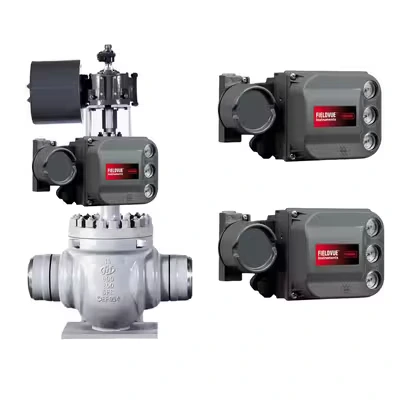
The Fisher DVC6200 Positioner is a digital valve controller widely used across oil and gas, petrochemical, power generation, and water treatment facilities to translate a control signal into precise valve stem or shaft movement. As process plants in the Middle East continue to modernize instrumentation and adopt predictive maintenance practices, this device has become a standard reference point for engineers evaluating digital positioner options. This article outlines the specifications, reliability characteristics, and application scope of the unit, along with its relevance to procurement teams sourcing instrumentation for projects in the UAE.
What Is This Positioner
This positioner is a smart, microprocessor-based valve positioner manufactured by Emerson under the Fisher brand. It mounts directly on a pneumatic control valve actuator and continuously compares the actual valve position to the commanded setpoint from a control system, adjusting air pressure to the actuator to correct any deviation. Unlike older analog positioners, it incorporates onboard diagnostics, configurable alarms, and digital communication protocols that allow bidirectional data exchange with the plant’s asset management system.
The unit is available in single-acting and double-acting configurations and supports several communication options, including 4–20 mA with HART protocol and FOUNDATION Fieldbus. This flexibility allows it to integrate into both legacy analog control loops and modern digital automation architectures without requiring a full instrumentation overhaul.
Technical Specifications
Understanding the specifications helps engineers determine compatibility with existing actuator hardware and control philosophies:
- Input Signal: 4–20 mA DC (HART-enabled) or FOUNDATION Fieldbus digital communication
- Supply Air Pressure: Typically 20–150 psig (1.4–10.3 bar), depending on actuator requirements
- Enclosure Rating: Explosion-proof, flameproof, and intrinsically safe certifications available for hazardous area classifications
- Operating Temperature Range: Approximately -40°C to 85°C, suitable for both extreme cold and high-ambient-heat environments
- Mounting: Rotary and sliding-stem actuator mounting kits, compatible with a broad range of third-party actuators
- Diagnostics: Onboard performance diagnostics including travel deviation, drive signal monitoring, and valve signature testing
- Communication Protocols: HART (versions 5 through 7), FOUNDATION Fieldbus, and support for AMS Device Manager integration
- Feedback Options: Non-contact position sensing technology to reduce mechanical wear over the operational lifespan
These specifications position the device for demanding service conditions, including high-cycling applications and installations where predictive diagnostics reduce the need for manual inspection.
Reliability in Industrial Operations
Reliability is a central consideration when selecting a positioner for critical process loops, where unplanned valve failure can halt production or compromise safety systems. The device uses a non-contact sensing mechanism for feedback, which reduces friction-related wear compared to older potentiometer-based designs. This design choice extends service intervals and lowers the likelihood of drift-related calibration issues over time.
The unit also supports partial stroke testing, a function used in safety instrumented systems to verify that emergency shutdown valves remain operational without taking the valve fully out of service. This capability is particularly relevant for UAE refineries, gas processing plants, and offshore platforms where safety valve testing is a routine compliance requirement under both international and local regulatory frameworks.
Precision and Control Performance
Precision in valve positioning directly affects process stability, energy efficiency, and product quality. The digital control architecture of this positioner allows fine-tuned tuning parameters, including adjustable gain settings and travel calibration, which help minimize overshoot and settling time during setpoint changes.
Because the device continuously monitors actual valve travel against the commanded signal, it can compensate for actuator hysteresis, friction, and changes in process conditions in real time. This closed-loop correction is especially valuable in applications involving variable process dynamics, such as flow control on multiphase streams or pressure regulation in gas transmission networks, both of which are common in the UAE’s hydrocarbon sector.
Typical Use Cases
The positioner is deployed across a range of industrial contexts, including:
- Oil and Gas Production: Wellhead control valves, separator level control, and gas compression stations
- Refining and Petrochemicals: Distillation column control, reactor feed regulation, and utility steam systems
- Power Generation: Feedwater control, steam turbine bypass valves, and boiler control loops
- Water and Wastewater Treatment: Flow modulation and chemical dosing valve control
- District Cooling: Chilled water flow control valves, relevant to UAE urban infrastructure projects
In each of these settings, the combination of diagnostic feedback and digital communication supports condition-based maintenance strategies rather than fixed-interval servicing.
Fisher DVC6200 Positioner in the UAE
The UAE’s industrial base, spanning Abu Dhabi’s upstream and downstream oil and gas operations, Dubai’s district cooling and utility networks, and free zone manufacturing facilities, relies heavily on instrumentation that can withstand high ambient temperatures, sand and dust exposure, and continuous duty cycles. This positioner is engineered to operate within the temperature and environmental tolerances required for these conditions, making it a commonly specified component in EPC project instrumentation lists across the region.
Local and regional distributors, including suppliers based in the UAE, provide access to genuine units along with calibration, mounting kit selection, and spare parts support. For procurement teams managing turnaround schedules or new plant commissioning, sourcing through a regionally established supplier can reduce lead times compared to direct international shipment, which is a practical consideration for time-sensitive maintenance windows.
Why Choose This Positioner for UAE Industrial Projects
For engineers and procurement managers evaluating instrumentation for UAE-based facilities, several factors support specifying this device for local installations:
- Compatibility with both HART and FOUNDATION Fieldbus infrastructure already present in many regional plants
- Certification options suited to hazardous area classifications common in oil, gas, and petrochemical zones
- Diagnostic functions that support the predictive maintenance programs increasingly required under UAE industrial safety and reliability standards
- A long-established service and spare parts network, given the widespread use of Fisher instrumentation across GCC facilities
- Proven field history in high-temperature, high-dust environments typical of the region
These factors make the device a practical, low-risk choice when specifying or replacing positioners on existing or new control valve installations.
Procurement Considerations
When sourcing this positioner for a UAE project, procurement managers should confirm the required communication protocol (HART or Fieldbus), the actuator type and mounting kit compatibility, hazardous area certification requirements specific to the installation site, and whether partial stroke testing functionality is needed for safety valve applications. Verifying these details with the supplier before order placement helps avoid mismatched configurations and delays during installation or commissioning.
Frequently Asked Questions
What communication protocols does this positioner support?
It supports 4–20 mA with HART protocol (versions 5–7) and FOUNDATION Fieldbus digital communication, allowing integration with both conventional and fully digital control systems.
Is this positioner suitable for hazardous areas in UAE oil and gas facilities?
Yes, it is available with explosion-proof, flameproof, and intrinsically safe certifications suited to hazardous area classifications common in regional upstream and downstream facilities.
Can this positioner perform partial stroke testing?
Yes, it supports partial stroke testing, which is used to verify emergency shutdown valve functionality without removing the valve from service, relevant for safety instrumented systems.
What actuator types is it compatible with?
It supports both rotary and sliding-stem actuators through dedicated mounting kits, and is compatible with a wide range of third-party actuator brands in addition to Fisher actuators.
How does non-contact sensing improve reliability?
Non-contact feedback sensing reduces mechanical wear compared to older contact-based potentiometer designs, extending service life and reducing calibration drift over time.
Where can procurement teams source this positioner in the UAE?
fRegional industrial instrumentation suppliers, including UAE-based distributors, offer genuine units along with calibration support, mounting kits, and spare parts to support both new installations and maintenance turnarounds.
Conclusion
The Fisher DVC6200 Positioner remains a widely specified digital valve controller for process industries operating in demanding environmental and operational conditions. Its combination of diagnostic capability, protocol flexibility, and certification options makes it applicable across oil and gas, power, water treatment, and utility sectors in the UAE. For engineers and procurement teams evaluating valve positioner options, understanding these technical characteristics supports more informed specification and sourcing decisions.