
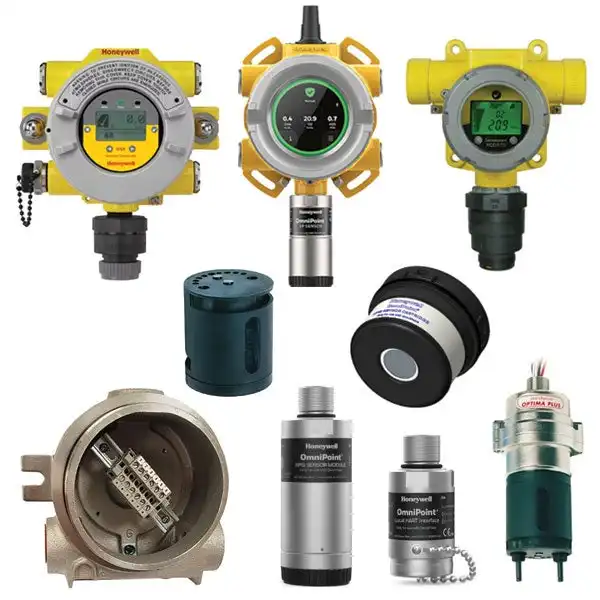
Industrial facilities across the globe depend on reliable gas detection to protect personnel, equipment, and surrounding communities from the risks posed by toxic and combustible gases. Among the most widely adopted solutions in this space are Honeywell Gas Detection Systems, a product line engineered to deliver consistent, accurate, and dependable performance across diverse industrial environments. This article provides a factual, technical overview of these systems for engineers, technicians, and procurement managers evaluating gas detection equipment for their operations.
What Is This Product Line?
These systems encompass a broad portfolio of fixed and portable devices designed to monitor ambient air for the presence of toxic gases, combustible gases, and oxygen deficiency or enrichment. They are used in industries such as oil and gas, chemical processing, mining, water treatment, pharmaceuticals, and manufacturing, where undetected gas leaks can lead to explosions, poisoning, asphyxiation, or long-term health hazards.
The product line includes point detectors, open-path infrared detectors, ultrasonic gas leak detectors, and portable multi-gas monitors, each engineered to address specific detection scenarios—from confined space entry to perimeter monitoring of large industrial sites.
Technical Specifications
While exact specifications vary by model, the general technical characteristics of this product line include:
- Detection Technologies: Electrochemical, catalytic bead, infrared (IR), photoionization detection (PID), and ultrasonic sensing, depending on the target gas and application.
- Gas Coverage: Detection capability for a wide range of substances, including hydrogen sulfide (H2S), carbon monoxide (CO), methane and other hydrocarbons, oxygen, ammonia, chlorine, and volatile organic compounds (VOCs).
- Response Time: Typically rated in the range of T50 and T90 response times of a few seconds to under a minute, depending on sensor type and gas concentration.
- Operating Temperature Range: Many models are rated for operation between approximately -40°C to +75°C, supporting deployment in extreme climates.
- Ingress Protection: Housings commonly rated IP66 or IP67, providing resistance to dust and water ingress for outdoor and harsh industrial environments.
- Certifications: Systems are typically certified to international safety standards such as ATEX, IECEx, CSA, and SIL2, enabling compliance with regional and global regulatory frameworks.
- Output Signals: Configurable outputs including 4–20mA analog, relay contacts, HART protocol, and Modbus communication for integration with plant control systems.
- Power Requirements: Options for loop-powered, line-powered, or battery-operated configurations depending on the model and installation environment.
These specifications allow the systems to be selected and configured according to the specific hazards, environmental conditions, and infrastructure requirements of a given facility.
Reliability and Precision
Reliability is a defining requirement for any gas detection system, as false negatives can result in undetected hazardous conditions while false positives can disrupt operations unnecessarily. These devices are engineered with sensor technologies designed to maintain calibration stability over extended periods, reducing the frequency of required maintenance while sustaining measurement accuracy.
Precision is achieved through the use of application-specific sensor elements—such as electrochemical cells calibrated for particular toxic gases or infrared sensors optimized for hydrocarbon detection—paired with signal-processing algorithms that minimize drift and cross-sensitivity to non-target gases. Many models also incorporate self-diagnostic functions that continuously monitor sensor health and alert technicians to calibration needs or component faults before they affect detection accuracy.
This combination of stable sensing elements, diagnostic monitoring, and rugged enclosure design contributes to the sustained accuracy that facilities require for continuous, unattended operation in critical safety applications.
Typical Use Cases
These systems are deployed across a wide range of industrial contexts, including:
- Oil and Gas Facilities: Monitoring for methane, H2S, and other hydrocarbons at wellheads, refineries, and pipeline stations.
- Chemical Processing Plants: Detecting toxic and corrosive gases such as chlorine, ammonia, and VOCs in production and storage areas.
- Mining Operations: Monitoring oxygen levels and combustible gases in underground and surface mining environments.
- Water and Wastewater Treatment: Detecting hydrogen sulfide and other hazardous gases generated during treatment processes.
- Confined Space Entry: Portable monitors used by technicians before and during entry into tanks, vessels, and enclosed spaces.
- Manufacturing and Pharmaceutical Facilities: Monitoring for solvent vapors and other process-related gas hazards.
These use cases illustrate the versatility of the product line, which is engineered to function reliably whether installed as a fixed point in a processing unit or carried as a portable device by field personnel.
Worldwide Applicability
Honeywell Gas Detection Systems are engineered to meet the regulatory and environmental demands of markets around the world. Compliance with international certification standards—including ATEX for the European Union, IECEx for global harmonized certification, and regional standards across North America, the Middle East, and Asia-Pacific—allows these systems to be specified and installed in projects spanning multiple jurisdictions without requiring fundamentally different equipment for each region.
The environmental ruggedness of these systems, including wide operating temperature ranges and high ingress protection ratings, supports deployment in a broad spectrum of climates, from arid desert installations in the Middle East to humid coastal facilities in Southeast Asia and cold-climate operations in North America and Northern Europe. This consistency in performance and certification makes this product line a practical choice for multinational organizations seeking to standardize safety equipment across geographically distributed operations.
For procurement teams managing projects across multiple countries, this global applicability simplifies vendor qualification, spare parts logistics, and technician training, since the same core product architecture can often be applied across different regional facilities with configuration adjustments rather than complete product substitution.
Selecting the Right System
When evaluating this equipment for a specific application, procurement managers and engineers typically consider several factors: the target gases and their expected concentration ranges, the physical layout of the monitored area, ambient environmental conditions, required certifications for the installation region, and integration requirements with existing plant control and safety systems. Working with a qualified supplier to match sensor type and system configuration to these operational parameters helps ensure the detection system performs reliably under real-world conditions.
Conclusion
Honeywell Gas Detection Systems provide a technically robust and globally applicable solution for industrial gas monitoring needs. With a broad range of detection technologies, strong certification coverage, and proven reliability across diverse operating environments, these systems support the safety requirements of facilities in oil and gas, chemical processing, mining, water treatment, and manufacturing sectors worldwide. For engineers and procurement professionals seeking dependable gas detection infrastructure, this product line offers a well-documented and internationally recognized option built on established sensing technology and rigorous safety standards.
Frequently Asked Questions (FAQ)
Q1: What gases can these systems detect?
These systems can detect a range of gases including hydrogen sulfide (H2S), carbon monoxide (CO), methane and other hydrocarbons, oxygen levels, ammonia, chlorine, and various volatile organic compounds, depending on the sensor configuration selected.
Q2: Are these systems suitable for hazardous locations?
Yes. Many models are certified to international standards such as ATEX, IECEx, CSA, and SIL2, which qualify them for use in classified hazardous locations across different regions.
Q3: How often do these systems require calibration?
Calibration intervals vary by sensor type and application but are typically recommended on a periodic basis as specified by the manufacturer and local regulatory requirements. Many models include diagnostic features that alert technicians when calibration is due.
Q4: Can these systems be integrated with existing plant control systems?
Yes. Depending on the model, outputs such as 4–20mA analog, HART, Modbus, and relay contacts allow integration with distributed control systems (DCS) and programmable logic controllers (PLC).
Q5: Are fixed and portable options both available?
Yes. The product line includes fixed point detectors, open-path detectors, ultrasonic leak detectors, and handheld portable multi-gas monitors to address different monitoring scenarios.
Q6: Do these systems perform reliably in extreme climates?
Yes. Most models are rated for a wide operating temperature range, commonly between -40°C and +75°C, and carry ingress protection ratings such as IP66 or IP67 for durability in harsh outdoor and industrial environments.