
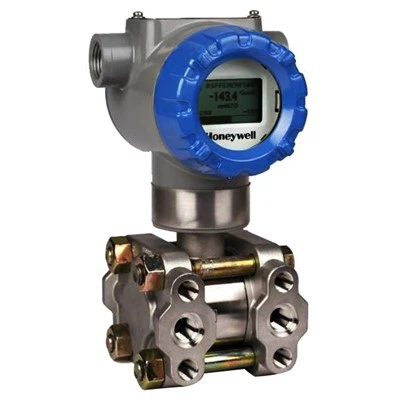
Accurate pressure measurement is a foundational requirement across process industries, from oil and gas refineries to water treatment plants and pharmaceutical manufacturing facilities. Among the instruments engineers and procurement teams rely on globally, this transmitter stands out as a proven solution for demanding industrial environments. This article provides a factual, technical overview of the device, covering its specifications, performance characteristics, and application scope for buyers evaluating it for projects anywhere in the world.
What Is the Honeywell ST800 Pressure Transmitter?
It is part of Honeywell’s SmartLine family of process instrumentation, designed to measure gauge, absolute, and differential pressure in industrial process loops. It converts sensed pressure into a standardized output signal — typically 4 to 20 mA, with digital communication available through HART, Honeywell Digitally Enhanced (DE) protocol, or FOUNDATION Fieldbus — allowing seamless integration with distributed control systems (DCS), programmable logic controllers (PLC), and supervisory control and data acquisition (SCADA) platforms.
The transmitter family is built on a modular architecture. Sensor modules, electronics, and terminal blocks are interchangeable across variants, which simplifies spare-parts management, reduces inventory complexity, and shortens maintenance downtime for plant operations teams working across multiple sites and regions.
Technical Specifications
Buyers evaluating the ST800 series for a purchase order or engineering specification sheet should note the following characteristic parameters:
- Measurement types: Gauge pressure (STG800), absolute pressure (STA800), and differential pressure (STD800) variants
- Output/Communication protocols: 4–20 mA analog, HART (version 7.0), Honeywell DE, and FOUNDATION Fieldbus
- Pressure ranges: Vary by model — differential pressure models span from roughly 10 inH₂O (25 mbar) up to 3000 psi (210 bar); absolute pressure models range up to approximately 3000 psia (210 barA)
- Accuracy: High-performance terminal-based accuracy, with reference accuracy commonly cited around ±0.04% of calibrated span on premium configurations
- Static and overpressure limits: Designed to withstand high static line pressures, with select models rated up to 4500 psi MAWP depending on configuration
- Display: Modular LCD supporting alphanumeric or advanced graphical readouts, with configurable engineering units and multiple screen views
- Enclosure rating: Type 4X/IP66/IP67, suitable for outdoor and washdown environments
- Hazardous area certifications: FM, CSA, ATEX, IECEx, NEPSI, KOSHA, EAC, CCoE, and other regional approvals, along with SIL 2/3 functional safety certification under IEC 61508 for select models
- Wetted materials: 316 stainless steel as standard, with Hastelloy C-276, Monel 400, and other alloys available for corrosive service
- Power supply: Typically 11 to 42 VDC loop-powered configuration
Because the ST800 platform is offered in multiple sub-models and options (process connections, fill fluids, flange materials, and approval packages), buyers should confirm the exact model code and datasheet parameters relevant to their specific process conditions before finalizing a purchase order.
Reliability and Precision
Reliability is one of the primary reasons process engineers specify the Honeywell ST800 Pressure Transmitter for critical control loops. The instrument uses a field-proven piezoresistive or capacitive sensor design, depending on variant, which is engineered to maintain stable output over long operating periods with minimal drift. This directly supports tighter process control, fewer unplanned recalibrations, and reduced total cost of ownership over the instrument’s service life.
Precision matters most in applications where small measurement errors translate into significant operational or financial consequences — such as custody transfer metering, energy balance calculations, and safety instrumented systems. The ST800 series is engineered for high turndown ratios, meaning a single transmitter can accurately cover a wide span of pressure ranges without requiring recalibration or hardware changes, which adds flexibility for plants that experience variable process conditions.
The modular electronics architecture also contributes to reliability. Because internal modules can be replaced without removing the transmitter from the process line or breaking the loop calibration in some configurations, maintenance teams can reduce process downtime during servicing — an important consideration for continuous, 24/7 industrial operations.
Typical Use Cases
The versatility of the ST800 series means it is deployed across a broad range of industries and applications, including:
- Oil and gas: Wellhead pressure monitoring, pipeline pressure control, and custody transfer measurement
- Petrochemical and refining: High-pressure reaction vessel monitoring, distillation column control, and vacuum process measurement
- Power generation: Boiler pressure monitoring and fuel feed system control, particularly in high-temperature process conditions
- Water and wastewater treatment: Tank level measurement via hydrostatic pressure, filtration system monitoring
- Pharmaceutical and food & beverage: Sanitary process pressure monitoring where hygienic design and corrosion-resistant materials are required
- Chemical processing: Differential pressure flow measurement across orifice plates, and safety-critical pressure interlocks
In each of these contexts, the combination of accuracy, robust enclosure ratings, and hazardous-area certifications makes the transmitter suitable for both indoor process areas and harsh outdoor or offshore installations.
Worldwide Applicability and Relevance
Procurement teams sourcing instrumentation for multinational projects will find that the Honeywell ST800 Pressure Transmitter is designed with global deployment in mind. Its certification portfolio spans major regional hazardous-area standards — including North American (FM, CSA), European (ATEX), international (IECEx), Chinese (NEPSI), Korean (KOSHA), Indian (CCoE), and Eurasian Conformity (EAC) approvals — along with marine classification society approvals such as ABS, BV, DNV, KR, and LR. This broad certification coverage allows the same core transmitter platform to be specified consistently across projects in North America, Europe, the Middle East, Asia-Pacific, and other regions, simplifying engineering standardization for companies operating multi-site or multinational facilities.
Communication protocol support (HART, FOUNDATION Fieldbus, and Honeywell DE) further ensures compatibility with the control system architectures commonly deployed across different regions and industries, reducing integration friction for EPC contractors and system integrators working on cross-border projects. For procurement managers, this global standardization can also support consolidated vendor relationships and simplified spare-parts strategies across geographically distributed operations.
Evaflux supplies this instrument to customers across multiple regions, supporting engineering teams, technicians, and procurement managers who require dependable sourcing, documentation, and technical support regardless of project location.
Selecting the Right ST800 Model
Given the range of sub-models within the ST800 family, buyers should evaluate the following before ordering:
- Pressure type required — gauge, absolute, or differential
- Process pressure range and expected turndown
- Process fluid compatibility with wetted materials
- Hazardous area classification applicable to the installation site
- Required communication protocol to match existing control system infrastructure
- Mounting configuration — in-line, remote seal, or flanged options
Consulting the specific model datasheet and, where necessary, a Honeywell-authorized distributor or technical specialist is recommended to confirm suitability for the intended process conditions.
Frequently Asked Questions
1. What does the ST800 in the product name refer to?
ST800 refers to Honeywell’s SmartLine 800 series, a high-performance pressure transmitter platform that includes gauge, absolute, and differential pressure variants (STG800, STA800, and STD800 respectively).
2. What accuracy can be expected from this transmitter?
Accuracy varies by model and configuration, with premium configurations commonly rated near ±0.04% of calibrated span. Exact figures should be confirmed against the datasheet for the specific model ordered.
3. Is the transmitter suitable for hazardous locations?
Yes. The series holds multiple hazardous-area certifications, including FM, CSA, ATEX, and IECEx, along with SIL 2/3 functional safety ratings on applicable models, making it suitable for classified areas in oil and gas, chemical, and power generation facilities.
4. Which communication protocols does it support?
It supports 4–20 mA analog output along with digital communication via HART, Honeywell DE, and FOUNDATION Fieldbus, depending on the model ordered.
5. Can the same transmitter be used across different countries?
Yes. Its broad international certification portfolio allows the same core platform to be specified for projects in North America, Europe, the Middle East, and Asia-Pacific, subject to confirming the correct regional approval on the specific unit ordered.
6. What industries commonly use this transmitter?
Typical industries include oil and gas, petrochemical refining, power generation, water and wastewater treatment, pharmaceuticals, food and beverage, and general chemical processing.
Conclusion
For engineers, technicians, and procurement managers evaluating pressure measurement instrumentation for industrial process control, the Honeywell ST800 Pressure Transmitter offers a well-documented combination of accuracy, reliability, and broad regulatory certification suitable for projects worldwide. Its modular design, multi-protocol communication support, and wide range of pressure measurement options make it applicable across diverse industries and process conditions. Buyers are encouraged to review the specific datasheet for the exact model variant required and consult with a qualified supplier to confirm fit for their application.