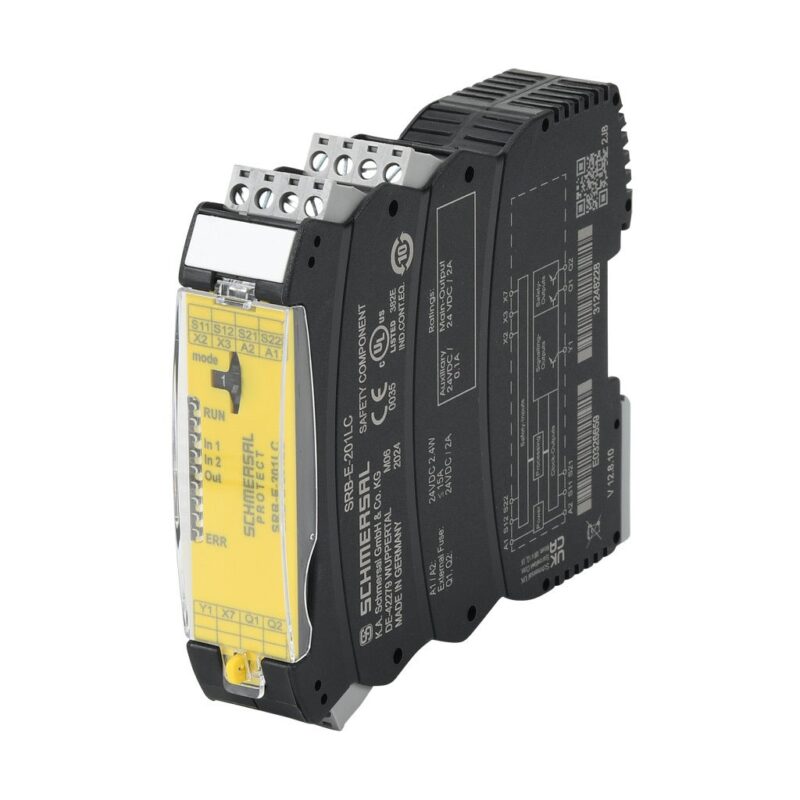

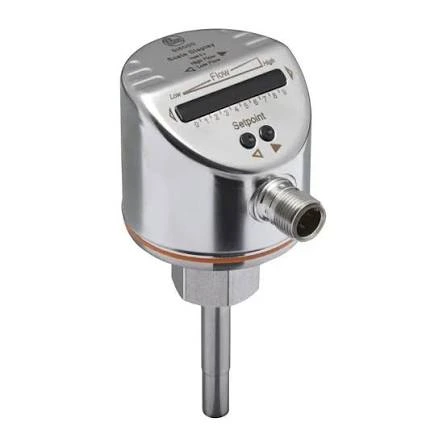
Accurate flow measurement is a foundational requirement across manufacturing, process automation, water treatment, HVAC, and countless other industrial sectors. Selecting the right instrumentation partner determines not only measurement accuracy but also long-term system reliability, maintenance costs, and operational uptime. As a trusted IFM Flow Sensor Supplier, Evaflux provides engineers, technicians, and procurement teams with dependable access to precision flow sensing technology backed by technical expertise and global logistics support.
This guide provides a comprehensive, factual overview of IFM flow sensors — their working principles, technical specifications, typical applications, and the value of sourcing them through an established, internationally capable distribution partner.
Understanding IFM Flow Sensors
IFM flow sensors are industrial-grade instruments designed to monitor and measure the flow rate, flow velocity, or total volume of liquids and gases moving through pipes and process lines. These sensors are widely used in closed-loop cooling systems, hydraulic circuits, chemical dosing lines, compressed air networks, and general fluid-handling applications.
Most IFM flow sensors operate using one of the following measurement principles:
- Calorimetric (thermal) measurement — detects flow based on heat dissipation between two temperature sensors, commonly used for monitoring cooling water and compressed air.
- Magnetic-inductive measurement — suitable for conductive liquids, offering high accuracy with minimal pressure loss.
- Ultrasonic measurement — non-invasive detection for applications requiring no direct contact with the medium.
- Vortex shedding — used for steam, gas, and liquid flow in demanding process environments.
Each measurement principle serves distinct industrial needs, and part of the value an experienced flow instrumentation partner brings is helping customers match the correct sensor type to their specific process medium, pipe diameter, and operating conditions.
Technical Specifications
While exact specifications vary by model and series, IFM flow sensors generally share the following characteristic ranges:
- Flow rate range: Typically from 0.01 m/s to 10 m/s (model-dependent), suitable for both low-flow monitoring and high-throughput industrial lines.
- Operating pressure: Commonly rated up to 16 bar, with select models supporting higher pressure environments.
- Medium temperature range: Approximately -25°C to +90°C, depending on sensor housing material and application.
- Output signals: Analog (4–20 mA, 0–10 V), switching outputs (PNP/NPN), and digital communication protocols such as IO-Link for integration with modern automation systems.
- Process connections: Threaded fittings, flanged connections, and welded-in adapters compatible with standard industrial pipe sizes.
- Housing materials: Stainless steel and PVDF options for chemical resistance and durability in harsh environments.
- Protection rating: IP65/IP67-rated enclosures for use in washdown and outdoor industrial settings.
- Display options: Many models include integrated LED or LCD displays for local flow rate readouts, simplifying diagnostics without requiring a separate control panel connection.
These specifications make IFM sensors adaptable to a wide range of industries, from food and beverage processing to heavy manufacturing and chemical handling.
Sensor sizing is also influenced by pipe material and installation geometry. Straight-run requirements upstream and downstream of the sensor — often specified as a minimum number of pipe diameters — help ensure stable flow profiles and consistent readings, particularly for inline and insertion-style sensors.
Reliability and Precision
Reliability is a primary consideration for any procurement manager evaluating flow instrumentation. IFM flow sensors are engineered with robust housings, corrosion-resistant materials, and sealed electronics designed to withstand vibration, temperature fluctuation, and continuous duty cycles in demanding industrial environments.
Precision is achieved through calibrated sensing elements and, in many models, temperature-compensated algorithms that maintain measurement accuracy even as ambient or process conditions shift. This is particularly important in applications such as cooling circuit monitoring, where even minor flow deviations can indicate equipment wear, blockages, or impending failure.
Because these sensors are frequently deployed in condition-monitoring and predictive maintenance systems, consistent accuracy over long operational periods directly affects an organization’s ability to prevent unplanned downtime. Working with an established IFM Flow Sensor Supplier ensures customers receive genuine, correctly calibrated units supported by proper documentation and traceability.
Typical Use Cases
IFM flow sensors are deployed across a broad spectrum of industrial applications, including:
- Machine tool cooling systems — monitoring coolant flow to protect spindles and cutting tools from overheating.
- Hydraulic power units — verifying oil flow to prevent pump cavitation and system damage.
- Compressed air monitoring — identifying leaks and inefficiencies in pneumatic networks to reduce energy costs.
- Chemical dosing and water treatment — ensuring accurate additive ratios in treatment processes.
- Food and beverage production — monitoring CIP (clean-in-place) cycles and ingredient flow with hygienic-rated sensors.
- HVAC systems — tracking chilled water and heating circuit flow for building automation systems.
- Automotive and general manufacturing — integrating flow data into PLC-based process control and SCADA systems.
These use cases span both OEM equipment design and retrofit applications, reflecting the versatility of IFM’s sensor portfolio. In OEM settings, machine builders often specify flow sensors during the design phase to enable built-in condition monitoring, while in retrofit scenarios, technicians select sensors that can be installed into existing piping with minimal process disruption, such as clamp-on or insertion-style models.
Why Global Availability Matters
Manufacturing supply chains today are rarely confined to a single region. Equipment builders, system integrators, and end users often operate facilities across multiple countries, requiring consistent component sourcing regardless of location. This is where the role of a globally capable, well-stocked distributor becomes significant.
Evaflux supports customers internationally, offering:
- Access to a wide catalog of IFM flow sensor models suited to diverse regional industrial standards.
- Documentation and technical support aligned with international compliance requirements.
- Logistics capabilities that reduce lead times for customers outside of IFM’s primary manufacturing regions.
- Consistent product availability for OEM production lines that depend on component continuity.
For procurement managers sourcing components for projects spanning multiple facilities or countries, working with a single, reliable IFMsimplifies vendor management, standardizes technical specifications across sites, and reduces the administrative overhead associated with juggling multiple regional distributors.
Selecting the Right Flow Sensor: Key Considerations
When evaluating flow sensors for a specific application, engineers and technicians should consider:
- Medium type — liquid, gas, or steam, and whether the fluid is conductive, viscous, or contains particulates.
- Flow range — matching the sensor’s measurement range to expected minimum and maximum flow rates.
- Pipe diameter and installation orientation — ensuring compatibility with existing piping infrastructure.
- Output and communication requirements — analog, switching, or IO-Link, depending on the control system architecture.
- Environmental conditions — temperature extremes, washdown requirements, or hazardous area classifications.
- Certification needs — hygienic standards for food-grade applications or ATEX ratings for explosive atmospheres.
A knowledgeable supplier can guide customers through these considerations, helping avoid costly misapplication or premature sensor failure.
Conclusion
IFM flow sensors combine proven measurement technologies with rugged industrial design, making them a dependable choice for process monitoring across manufacturing, water treatment, HVAC, and OEM equipment applications. Their range of measurement principles, output options, and material configurations allows them to serve highly specific technical requirements across industries.
For organizations seeking a dependable IFM Flow Sensor Supplier, Evaflux offers global product access, technical guidance, and consistent supply chain support — helping engineers and procurement teams source the right sensor for their application, wherever their operations are located.
Frequently Asked Questions
Q1: What is the difference between calorimetric and magnetic-inductive flow sensors?
Calorimetric sensors measure flow based on heat transfer and are typically used for gases or liquids in cooling and compressed air applications. Magnetic-inductive sensors measure flow in electrically conductive liquids and are known for high accuracy with minimal pressure drop.
Q2: Can IFM flow sensors integrate with existing PLC or SCADA systems?
Yes. Most IFM flow sensors offer analog (4–20 mA, 0–10 V), switching (PNP/NPN), or IO-Link outputs, allowing straightforward integration with standard industrial control systems.
Q3: Are IFM flow sensors suitable for hygienic or food-grade applications?
Certain IFM flow sensor models are designed with hygienic-rated materials and connections suitable for food and beverage processing, including CIP-compatible designs.
Q4: What maintenance do IFM flow sensors typically require?
IFM flow sensors are generally low-maintenance due to their sealed construction and lack of moving parts in most models. Periodic calibration checks and visual inspection of process connections are recommended for long-term accuracy.
Q5: Does Evaflux ship IFM flow sensors internationally?
Yes. As a global IFM Flow Sensor Supplier, Evaflux supports customers across multiple regions with consistent product availability and technical documentation.