
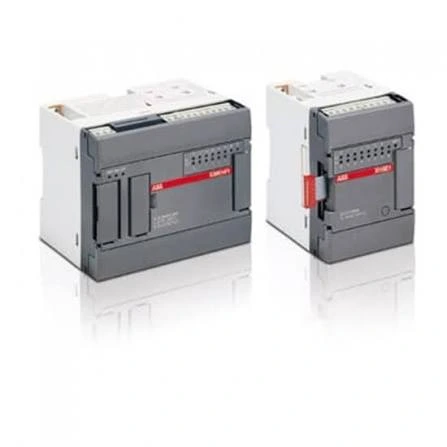
Industrial automation engineers, control system integrators, and procurement teams frequently search for reliable replacement and upgrade components for legacy ABB systems. Among these, the ABB 07KT97 PLC Module remains a widely referenced part number due to its role in the ABB Advant Controller 31 (AC31) platform. This article provides a factual, technical overview of the module — covering its specifications, design characteristics, and typical deployment scenarios — to help engineers and buyers evaluate its suitability for their applications.
What Is the ABB 07KT97 PLC Module?
The ABB 07KT97 is a central processing unit within ABB’s AC31 (Advant Controller 31) family, identified under the order code GJR5253000R0200. It functions as the programmable logic controller’s central unit, operating on a 24V DC supply and handling program execution, I/O management, and communication tasks within a broader industrial control architecture. The AC31 series was developed as part of ABB’s Advant Controller lineup, which has historically been deployed across manufacturing, process, and building automation environments.
Because ABB automation equipment has a long service life — often spanning decades in operational plants — the 07KT97 continues to be sourced today, primarily for maintenance, replacement, and system continuity purposes in facilities that have not yet migrated to newer control platforms.
Technical Specifications
Understanding the exact specifications of the ABB 07KT97 is essential for engineers verifying compatibility with existing control cabinets and I/O configurations. Based on manufacturer and distributor documentation, the module’s key characteristics include:
- Type Designation: 07KT97
- Order/Product Code: GJR5253000R0200
- Function: PLC Central Unit
- Power Supply: 24V DC
- Program Memory: 480 kB user program capacity
- Data Memory: 256 kB user data capacity
- Memory Technology: Flash EPROM and non-volatile RAM, with SMC (memory card) support
- Analog Inputs: 8 channels, configurable across ranges including 0–5V, ±5V, 0–10V, ±10V, 0–20mA, 4–20mA, and PT100 (2- or 3-wire), with 12-bit bipolar resolution; these channels can also function as digital inputs
- Analog Outputs: 4 channels, supporting ±10V (11-bit + sign) and 0–20mA (12-bit) ranges
- Output Current Rating: 0.5 A
- Ambient Operating Temperature: 0°C to +55°C
- Storage Temperature: −25°C to +75°C
- Communication: RS232 serial interface for programming and ASCII communication, plus CS31 bus connectivity
- Additional Features: Integrated real-time clock
On the expandable and decentralized side of the AC31 architecture, the platform supports configurations with up to approximately 1,000 inputs/outputs when combined with remote I/O units, binary inputs rated at 24V DC, relay outputs rated at 250V AC / 2A, and transistor outputs rated at 24V DC / 0.5A. These figures apply to the broader AC31 I/O ecosystem in which the 07KT97 central unit typically operates.
Reliability and Compliance
Reliability is a central consideration for any component used in continuous industrial operations, and the ABB 07KT97 was engineered with this in mind. Units within the AC31 family are developed, tested, and manufactured in accordance with IEC 1131-2, the international standard governing programmable controller hardware requirements. The platform also carries CE marking and has received approvals from major classification and certification bodies, including Bureau Veritas (France), Germanischer Lloyd (Germany), Lloyd’s Register (Great Britain), RINA (Italy), and DNV (Norway).
These certifications are particularly relevant to procurement managers sourcing equipment for marine, offshore, and heavy industrial applications, where third-party classification approval is often a contractual or regulatory requirement. The non-volatile memory architecture, combined with flash-based program storage, contributes to data retention during power interruptions, an important characteristic for process continuity in industrial settings.
Precision and I/O Performance
Precision in analog signal handling is a defining feature of the 07KT97’s design. The module’s 12-bit bipolar analog input resolution allows for accurate measurement across a range of sensor types, including voltage, current, and RTD (PT100) temperature inputs. This flexibility means a single hardware configuration can often accommodate multiple sensor and instrumentation types without requiring separate signal-conditioning modules for each input type.
On the output side, 11-bit plus sign resolution for voltage outputs and 12-bit resolution for current outputs provide the granularity needed for closed-loop control applications, such as valve positioning, drive speed regulation, or actuator control, where small variances in output signal can meaningfully affect process outcomes.
Typical Use Cases
The ABB 07KT97 PLC Module has historically been deployed across several categories of industrial automation, including:
- Discrete Manufacturing: Controlling production lines, assembly stations, and material handling equipment
- Process Control: Managing chemical, petrochemical, and food and beverage production processes that require stable analog and digital control loops
- Machine Control: Operating and monitoring pumps, compressors, conveyors, and similar equipment
- Building Automation: Managing HVAC and lighting systems in commercial and industrial facilities
Because the module supports both centralized processing and decentralized I/O expansion via the CS31 bus, it has also been used in facilities requiring distributed control architectures across multiple physical zones within a plant.
Worldwide Applicability
ABB’s Advant Controller platform, including the 07KT97, was distributed and installed in industrial facilities across multiple continents, spanning manufacturing plants in Europe, process facilities in North America, and utility and building automation systems in Asia-Pacific markets. As a result, demand for replacement units, spares, and technical support for this module is not confined to a single region — it reflects a global installed base that continues to require maintenance and component sourcing.
For procurement teams operating multinational facilities or supporting legacy ABB installations abroad, sourcing a verified, genuine ABB 07KT97 from a supplier with international shipping and documentation capabilities (including certificates of origin and conformance) is often a practical requirement rather than a convenience. Evaflux supports this need by offering sourcing, verification, and logistics for industrial automation components across global markets.
Sourcing Considerations for Procurement Managers
When evaluating suppliers for the ABB 07KT97, procurement managers should confirm several factors: authenticity of the unit (original ABB manufacture versus refurbished or gray-market stock), availability of test and inspection reports, warranty terms, and lead time for urgent replacement scenarios. Given that this module supports legacy systems, availability can vary, and working with a supplier that maintains verified stock and traceability documentation reduces the risk of receiving counterfeit or non-functional components.
Conclusion
The ABB 07KT97 PLC Module remains a relevant and actively sourced component for organizations maintaining ABB AC31-based control systems. Its defined memory capacity, multi-range analog I/O, industrial certification profile, and compatibility with distributed control architectures make it suitable for continued use in discrete manufacturing, process control, machine control, and building automation environments worldwide. Engineers and procurement teams evaluating this module should verify exact compatibility with existing system configurations and prioritize sourcing from suppliers capable of providing documentation and support across international markets.