


Introduction
The industrial world is changing fast. From manufacturers to power plants, oil and gas projects, process industries to infrastructure projects everyone is trying to improve productivity, lower costs, enhance safety and make sure the systems work without any interruptions.
To do this businesses are investing more in Robotic Automation Systems for Industries that use intelligent control, advanced monitoring and precision-driven operations. Today automation is not about replacing manual work.
Automation gives businesses increased efficiency, higher product quality, lower downtimes, optimised resource utilisation and more.
Evaflux is committed to helping this change by providing a wide range of industrial automation parts and components spare parts for PLC and DCS robotic automation solutions, turbine control systems, monitoring equipment and technical support services to industries around the globe.
Why Industrial Automation Is Becoming Essential
The demand for automation is increasing.
Industrial automation is becoming more popular and necessary.
There are issues that affect the efficiency of industries, such as:
● Increasing production demands
● Maintenance of equipment and systems
● Rising labor costs
● Stringent safety regulations
● Complex process requirements
● Equipment failures
● The need for energy efficiency gains
Manual methods may not be appropriate to address these requirements.
Addressing these challenges is possible through automation, which allows the system to execute efficiently, accurately, quickly and repeatedly.
Businesses can track plant operations in real time, minimize mistakes, optimize manufacturing workflows and enhance overall plant productivity by using the advanced automation solutions.
These capabilities make automation one of the investments in modern industrial facilities.
What Are Robotic Automation Systems for Industries?
This course covers the basics of Robotic Automation Systems in industries.
Robotic Automation Systems for Industries combine all the equipment, industrial controllers, sensors, communication networks, software platforms and monitoring systems in a coordinated working environment.
These systems are designed to perform repetitive or very accurate operations in industrial processes with the same quality of products.
Modern robotic automation solutions can accomplish tasks, such as:
● Material handling
● Assembly operations
● Welding applications
● Packaging processes
● Product inspection
● Machine tending
● Palletizing
● Sorting operations
● Quality control procedures
● Process automation
With the assistance of PLCs, DCS platforms, HMIs, SCADA systems and field instrumentation industrial robots integrate with these systems to develop manufacturing environments with a dynamic response to changing operational conditions.
Core Components of Industrial Robotic Automation Systems
Programmable Logic Controllers (PLCs)
Many industrial automation systems are based on PLCs.
These controllers control motors, valves, actuators and production equipment continuously running programmed instructions.
Reliable PLC solutions improve product accuracy, productivity and simplify machine control.
Distributed Control Systems (DCS)
In applications, especially large-scale facilities, DCS platforms are often employed to control complex processes in a centralized control environment.
DCS technology supports process monitoring, alarm management, data acquisition, historical reporting, system diagnostics, operational optimization and more.
Industrial Robots
Industrial robots are the prominent part of the current automation.
These systems offer high-speed operation, exceptional repeatability, reduced error, improved workplace safety and consistent product quality.
Sensors and Monitoring Equipment
Data is vital to automation systems.
Industrial sensors constantly measure temperature, pressure, flow, vibration, position, speed and level measurement.
The information provides control systems with the possible response to process changes and keeps processes stable.
Communication and Networking Systems
Communications and networking systems are crucial in today’s automation.
Industrial communication networks are used to connect PLCs, DCS systems, SCADA platforms, sensors, drives, robotic controllers and monitoring equipment.
Communication is ensured to be reliable and data is exchanged accurately and the operation is coordinated throughout the facilities.
Applications of Robotic Automation Systems for Industries
Robotic Automation Systems for Industries, including manufacturing, power generation, oil and gas chemical and process industries and food and beverage manufacturing.
Manufacturing automation is a process that is used to improve productivity, reduce defect rate and maintain the quality consistency of products.
Power generation automation helps enhance equipment reliability, safety performance, maintenance planning and efficiency.
Oil and gas automation systems assist exploration, refining, transportation and processing providing process monitoring, equipment protection, safety system integration, data collection and asset management.
Legacy Systems and Modern Automation Integration
Many industrial processes run two sets of technology: the old and the new.
Legacy systems can provide service for years after they have been put in place.
Modern platforms have many benefits, such as enhanced diagnostics, improved connectivity, better cybersecurity, advanced analytics, Industry 4.0 integration and remote monitoring capabilities.
A gradual modernization plan enables companies to maintain their investments in the technology and move to newer technology over time.
Evaflux is compatible with legacy and current automation systems allowing users to work with their infrastructure and plan for upgrades as needed.
Importance of Industrial Automation Spare Parts
In the sector Robotic Automation Systems have emerged as crucial tools for enhancing productivity and efficiency.
Even the most high-tech automation solutions will need to have components that are replaced or maintained over time.
Critical parts, such as PLC modules, DCS cards, communication interfaces, sensors, power supplies, control boards and monitoring devices must perform reliably to ensure continuity of operations.
There are advantages to utilizing authentic industrial automation spare parts, including improved equipment lifespan, reduced downtime, better system compatibility, reliable performance and lower maintenance costs.
Evaflux has a range of products from industry-leading manufacturers making their products easily accessible to customers.
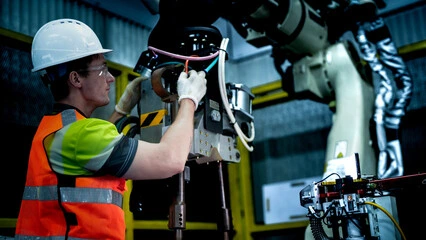
Engineering Support and Industrial Services
Engineering support and industrial services are essential for success with automation.
Typically the industrial plant will need consultation, product identification, system evaluation, repair services, functional testing, certification support, training programs, field services and exchange programs.
An encompassing service approach allows organizations to benefit from the best possible service system performance and minimize operational risk.
Evaflux offers repair, warranty, testing and certifications training, exchange programs and field services to ensure long-term automation reliability.
Leading Automation Brands Supported by Evaflux
Many industrial businesses use products from automation companies knowing that they will be reliable when they need to be.
The popular automation brands are ABB, Siemens, Honeywell, GE, Allen-Bradley, Bently Nevada, HIMA, Yokogawa, Schneider Electric, Triconex, ICS Triplex and Foxboro.
The supply of products from these companies ensures system compatibility and reliability.
Evaflux provides automation solutions from a variety of tier industrial manufacturers throughout power generation, manufacturing, process industries and critical infrastructure applications.
Industry 4.0 and the Future of Robotic Automation
Industry 4.0 and the future of automation are topics.
Key trends include AI-based tools that improve decision-making and process optimization, Internet of Things (IIoT) that gives real-time visibility of operations across facilities, predictive maintenance that predicts potential failures before they impact production, digital twins that simulate and optimize performance and operations collaborative robots that work safely with human operators and smart production that enables continuous improvements.
Businesses opt for Robotic Automation Systems in industries for reasons, including higher productivity, improved quality control, enhanced safety, lower operating costs, reduced downtime, greater operational visibility and better asset utilization.
Organizations are still investing in automation to get business results.
An earlier return on investment is also a factor in the adoption of Robotic Automation Systems, in industries.
Businesses need to stay competitive. They have to be ready for what is coming next in terms of new technologies and possibilities.
Automation is what can help them do that.
Conclusion
Robotic Automation Systems for Industries are changing the way factories and other facilities work. These systems are very good at doing things efficiently. They are also safe and reliable. That is why automation is so important in different areas, such as manufacturing, power generation, oil and gas and infrastructure development.
These areas need automation to keep up with the demands of the world.
Nowadays industrial systems are all connected. Companies need partners they can trust to help them with automation. They need people who can give them parts, good robot solutions and support when they need it.
Evaflux is a company that can do all of that. Evaflux offers different things, including parts for automation systems, robotics and engineering services.
They also offer training and repair programs. Evaflux has products and they are always available to help with any technical problems.
That is how Evaflux helps industries work better and be ready for the future. Industries can operate efficiently and effectively with the help of Evaflux and Industrial Robotic Automation Systems. Evaflux and automation are very important for businesses.