

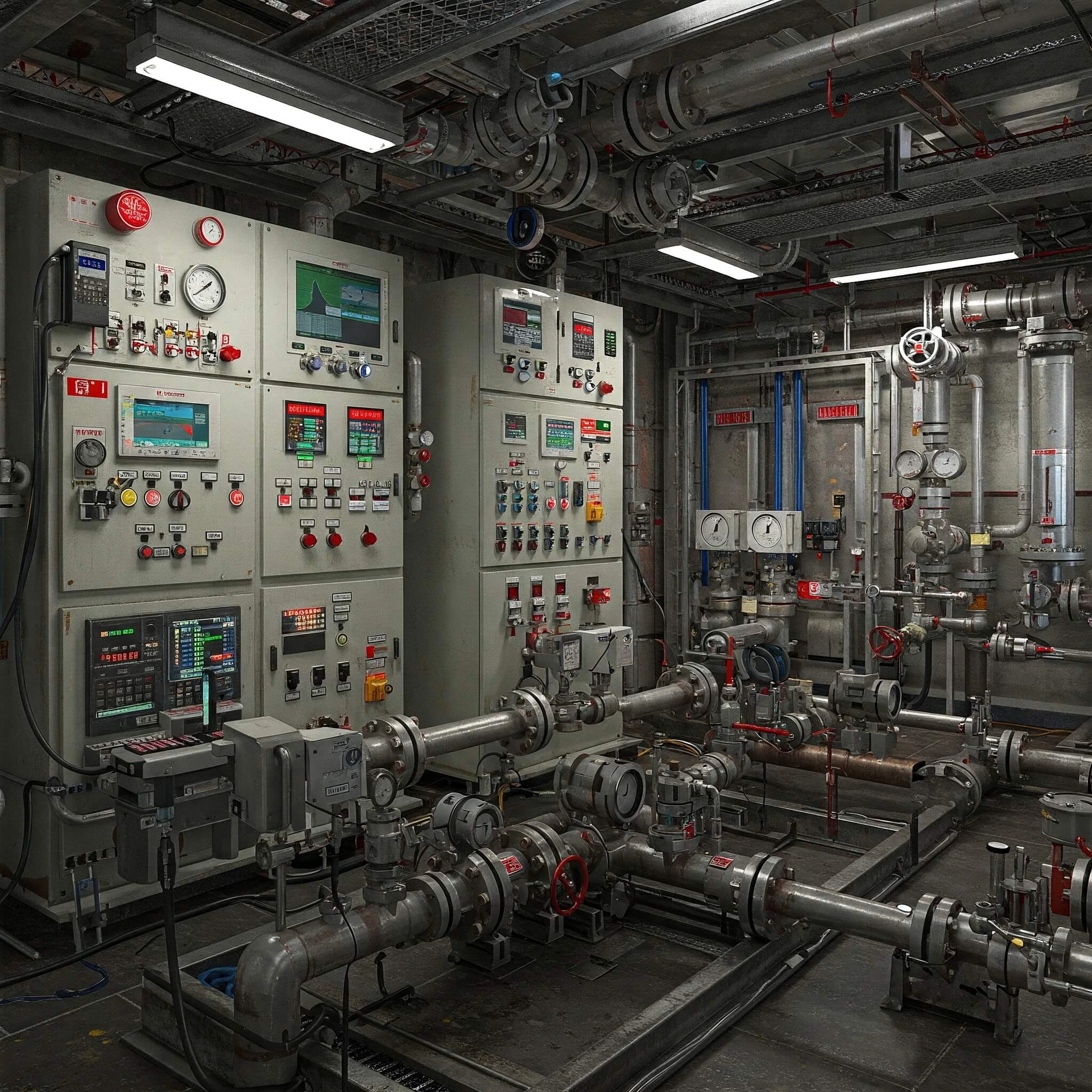
Process instrumentation determines how safely and efficiently an oil and gas facility runs. A single mis-specified transmitter or an out-of-tolerance sensor can affect an entire control loop. That’s why engineering and procurement teams across the UAE consistently look for a dependable Oil & Gas Instrumentation Supplier UAE projects can rely on, rather than sourcing components on an ad-hoc basis from unverified channels.
This guide walks through what instrumentation covers, the specifications that matter, and where it fits across real-world oil and gas operations.
1. What Does “Oil & Gas Instrumentation” Actually Include?
The term covers a wide equipment category, not a single product. In a working facility, it typically includes:
1.1 Measurement Devices
Pressure, temperature, flow, and level instruments that feed continuous data into the control system.
1.2 Safety and Detection Equipment
Flame detectors, gas detectors, and heat detection devices tied into emergency shutdown and fire protection systems.
1.3 Control and Actuation Components
Valve controllers, position transmitters, electric and pneumatic actuators, and signal converters that translate control signals into physical action.
1.4 Control System Hardware
PLC and DCS modules, along with condition monitoring platforms such as Bently Nevada vibration systems, that process field data and protect rotating machinery.
2. Why Do Technical Specifications Matter So Much?
Not every instrument that “fits” a system is actually suitable for it. A few specification categories separate a correct selection from a costly mistake.
Communication compatibility — Field devices need to speak the same protocol as the host system, whether that’s 4–20mA/HART, Foundation Fieldbus, Modbus TCP, or Profinet.
Hazardous area rating — ATEX and IECEx certification is required for any device installed in a classified Zone 0, 1, or 2 area, which describes most process areas in oil and gas facilities.
Environmental resilience — IP66/IP67 enclosure ratings and 316 stainless steel construction address the humidity, salt exposure, and heat common across Gulf-based sites.
Measurement accuracy — Transmitter tolerances in the ±0.075% to ±0.1% of span range are standard for applications where control stability or custody transfer accuracy is at stake.
Temperature tolerance — Instruments need to hold their rated performance in ambient conditions that regularly exceed 50°C, in addition to whatever process-side temperature rating applies.
3. How Do Reliability and Precision Show Up in Daily Operation?
Reliability is what keeps a transmitter reading accurately after months of continuous duty, without drift or unexpected failure. Precision is what keeps repeated readings tight and consistent under the same conditions, which matters directly for process control and product quality.
Safety instrumented systems make this distinction especially important. A gas detector with a slow or inconsistent response, or a pressure transmitter that has drifted since its last calibration, weakens the entire safety loop it belongs to. This is one reason genuine components with documented calibration history are worth insisting on, rather than treating origin as a minor procurement detail.
4. Where Is This Instrumentation Actually Used?
Upstream — Wellhead pressure monitoring, choke valve control, and instrumentation built to operate reliably in remote, often unmanned drilling locations.
Midstream — Pipeline flow measurement, tank gauging, and leak detection, where custody transfer accuracy has direct financial and regulatory consequences.
Downstream — Dense instrumentation networks across refining and petrochemical operations, typically integrated into a plant-wide DCS.
Power generation supporting oil and gas assets — Turbine control, excitation systems, and vibration monitoring that protect rotating machinery from unplanned outages.
In each of these settings, an instrumentation failure translates into lost production time at minimum, and a safety risk at worst — which is exactly why parts availability throughout the asset’s operating life matters as much as the original commissioning specification.
5. Why Does Sourcing Region Matter for UAE Facilities?
UAE operations run under a specific set of pressures: sustained high ambient temperatures, coastal corrosion exposure, and tight maintenance windows that leave little room for extended equipment downtime. A capable Oil & Gas Instrumentation Supplier UAE teams can call on locally addresses several of these pressures directly:
- Shorter lead times for legacy parts from manufacturers like GE, Bently Nevada, Honeywell, Siemens, and Foxboro, which often remain in service long after their original production run ends.
- Verified, brand-new stock rather than components of uncertain origin, which matters given the safety role instrumentation plays.
- Technical cross-referencing support for matching an obsolete part number to a current equivalent or confirming compatibility with an existing control architecture.
- Regional logistics that shorten delivery timelines for both planned turnarounds and urgent replacements.
Evaflux stocks genuine, brand-new PLC, DCS, and control system components from manufacturers including Allen Bradley, Bently Nevada, Honeywell, ABB, GE Fanuc, Siemens, Invensys Triconex, ICS Triplex, Foxboro, Yokogawa, Schneider Electric, and HIMA — covering the transmitters, actuators, sensors, and control modules that keep oil, gas, and power generation facilities running.
6. Frequently Asked Questions
What certifications should oil and gas instrumentation carry? At minimum, ATEX or IECEx certification for the relevant hazardous area zone, along with IP66/IP67 ingress protection where the installation environment demands it.
How is a genuine replacement part identified for a legacy control system? Through technical cross-referencing against the original part number and system revision, ideally supported by a supplier familiar with the specific OEM platform.
Why does sourcing from a specialized supplier matter more than using a general distributor? Because instrumentation for oil and gas applications carries safety, compliance, and compatibility requirements that a general industrial distributor may not evaluate as closely as a supplier focused on this equipment category.
What should a procurement team confirm before placing an order? Exact part number match, hazardous area certification for the intended zone, availability of calibration and origin documentation, and delivery timelines aligned with the maintenance schedule.
7. Choosing a Supplier: What to Verify
Before finalizing an order, it’s worth confirming:
- The part number matches the exact system revision in use
- Hazardous area certification is documented for the intended installation zone
- Calibration certificates and origin traceability are available on request
- Compatibility with the existing PLC or DCS architecture has been confirmed
- Delivery timelines fit the maintenance or turnaround window
- Technical support is available for installation and integration questions
Conclusion
Instrumentation reliability shapes every layer of oil and gas operations, from wellhead measurement through to refinery process control. For engineering and procurement teams in the UAE, partnering with a specialized Oil & Gas Instrumentation Supplier UAE operations can depend on genuine parts, technical support, and regional delivery reduces both risk and downtime. Evaluating suppliers against clear technical and certification criteria remains the most reliable way to keep instrumentation performing under the demanding conditions typical of the region’s energy sector.