

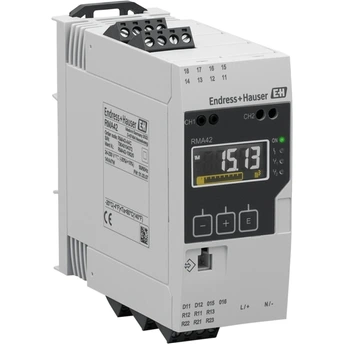
Process industries around the world depend on accurate, reliable field instrumentation to keep operations safe and efficient. As a recognized Endress Hauser Instrumentation Supplier, Evaflux provides engineers, technicians, and procurement teams with access to a broad portfolio of measurement devices engineered for demanding industrial environments. This article outlines the technical characteristics, application scope, and global relevance of these instruments, offering a factual reference for buyers evaluating instrumentation solutions.
Overview of the Product Line
Endress+Hauser instrumentation covers a wide range of measurement disciplines, including level, flow, pressure, temperature, and analytical measurement. These devices are used across oil and gas, chemical processing, water and wastewater treatment, food and beverage, pharmaceuticals, and power generation sectors. Working with a dependable Endress Hauser ensures that plants receive genuine, calibrated equipment backed by proper documentation, which is essential for regulatory compliance and process safety audits.
The product range typically includes:
- Level measurement instruments — guided wave radar, non-contact radar, and capacitance-based transmitters for liquids, solids, and interface detection.
- Flow measurement devices — electromagnetic, Coriolis, vortex, and ultrasonic flowmeters for liquids, gases, and steam.
- Pressure transmitters — absolute, gauge, and differential pressure sensors for process monitoring and control loops.
- Temperature sensors and transmitters — RTDs, thermocouples, and multi-point assemblies for accurate thermal monitoring.
- Analytical instruments — pH, conductivity, dissolved oxygen, and turbidity sensors for water quality and process analytics.
Technical Specifications
Instruments sourced through a qualified Endress Hauser typically meet stringent international standards. Common technical parameters include:
- Accuracy: Many devices achieve accuracy levels of ±0.1% to ±0.5% of measured value, depending on the sensor type and application.
- Process connections: Available in standard flange, threaded, and tri-clamp configurations to suit diverse piping systems.
- Materials of construction: Stainless steel (316L), Hastelloy, and PVDF options for compatibility with corrosive or hygienic media.
- Temperature range: Operating ranges commonly span from -196°C to +450°C, depending on sensor design.
- Pressure ratings: Instruments are rated for applications up to 400 bar in high-pressure process lines.
- Output signals: 4–20 mA with HART protocol, PROFIBUS, FOUNDATION Fieldbus, and Modbus communication options.
- Certifications: ATEX, IECEx, FM, and SIL 2/3 safety ratings for use in hazardous and safety-critical environments.
- Ingress protection: IP66/IP67/IP68 ratings for outdoor and washdown-prone installations.
These specifications make the equipment suitable for both standard industrial monitoring and safety instrumented systems where functional reliability is non-negotiable.
Reliability and Precision
Reliability is a defining characteristic of instrumentation supplied through an authorized Endress Hauser Instrumentation Supplier. Devices are engineered with redundant diagnostic capabilities, self-monitoring electronics, and long-term drift compensation to reduce maintenance intervals and unplanned downtime. Many transmitters incorporate Heartbeat Technology, which allows continuous self-verification of measurement performance without interrupting the process.
Precision is achieved through advanced signal processing, temperature compensation algorithms, and factory calibration traceable to national and international standards. This level of measurement integrity supports mass balance accuracy, custody transfer applications, and regulatory reporting requirements where even small deviations can have significant operational or financial consequences.
Typical Use Cases
Instruments obtained from a reputable Endress Hauser are deployed across numerous industrial scenarios, including:
- Custody transfer metering in oil, gas, and fuel distribution terminals.
- Tank level monitoring in storage and blending facilities, including hazardous area installations.
- Flow control in chemical dosing systems requires high repeatability.
- Water and wastewater treatment for influent/effluent flow monitoring and quality analysis.
- Steam and energy metering in power plants and industrial utilities.
- Hygienic processing in food, beverage, and pharmaceutical manufacturing, where sanitary design and CIP/SIP compatibility are required.
- Safety instrumented systems (SIS) for overfill protection and emergency shutdown applications.
Worldwide Applicability for Process Industries
One of the defining strengths of this product category is its global relevance. Facilities across North America, Europe, the Middle East, Asia-Pacific, and Africa rely on standardized measurement technology to maintain consistent process control across multi-site operations. A dependable Hauser Instrumentation supports this need by offering instruments compliant with regional certifications such as ATEX (Europe), FM and CSA (North America), and IECEx (international), along with multilingual documentation and support for varied electrical and communication standards.
This international compatibility is particularly valuable for multinational engineering, procurement, and construction (EPC) firms and industrial operators who require uniform instrumentation specifications across geographically dispersed facilities. Standardizing on a single instrumentation platform simplifies spare parts management, technician training, and long-term maintenance planning, regardless of project location.
For procurement managers sourcing instrumentation for global projects, working with an established Endress Hauser Instrumentation Supplier reduces lead-time uncertainty and ensures consistent product quality across international shipments, an important factor when coordinating multi-country installations or phased plant expansions.
Installation and Maintenance Considerations
Proper installation practices directly affect measurement accuracy and instrument lifespan. Key considerations include:
- Ensuring correct upstream and downstream straight-pipe lengths for flow instruments.
- Selecting appropriate wetted materials based on process media compatibility.
- Verifying hazardous area classification before installing instruments in explosive atmospheres.
- Scheduling periodic calibration checks to maintain measurement traceability.
- Using manufacturer-recommended mounting brackets and shielding for outdoor or high-vibration environments.
Routine preventive maintenance, combined with built-in diagnostic alerts, helps operators identify potential issues before they escalate into process disruptions.
Conclusion
Selecting the right instrumentation partner is a critical decision for engineers, technicians, and procurement managers responsible for process reliability and compliance. Evaflux, as a trusted Hauser Instrumentation, provides access to a comprehensive range of measurement technologies backed by strong technical specifications, proven reliability, and global applicability. Whether the requirement is precision flow metering, level monitoring, or safety-critical pressure measurement, sourcing genuine, certified instrumentation supports long-term operational integrity across industrial projects worldwide.
Frequently Asked Questions
Q1: What types of instruments does an Endress Hauser Instrumentation Supplier typically offer?
A: Suppliers typically offer level, flow, pressure, temperature, and analytical measurement instruments suited for a wide range of industrial process applications.
Q2: Are these instruments suitable for hazardous area installations?
A: Yes, many devices carry ATEX, IECEx, FM, and SIL certifications, making them suitable for use in explosive or safety-critical environments.
Q3: What accuracy levels can be expected from these instruments?
A: Depending on the sensor type, accuracy typically ranges from ±0.1% to ±0.5% of the measured value.
Q4: Can these instruments be used in international, multi-site projects?
A: Yes, the instrumentation is designed to comply with multiple regional certification standards, making it suitable for standardization across global facilities.
Q5: How often should these instruments be calibrated?
A: Calibration intervals vary by application and industry regulation, but periodic verification is recommended to maintain measurement traceability and accuracy.
Q6: What communication protocols are supported?
A: Common protocols include 4–20 mA with HART, PROFIBUS, FOUNDATION Fieldbus, and Modbus, depending on the specific instrument model.